Yes, you can safely use a snow blower on a wooden deck, but it requires selecting the right equipment and following specific operational guidelines to prevent damage. The safest choice is typically a single-stage electric or battery-powered snow blower equipped with rubber or composite augers and adjustable skid shoes, as these features minimize direct contact and reduce the risk of scratching or splintering the wood surface.
This comprehensive guide, informed by years of hands-on experience with various snow blower models, will equip you with the knowledge to make informed decisions. We’ll examine the types of snow blowers, essential buying considerations, safe operation techniques, and maintenance tips to ensure your wooden deck remains pristine and safe throughout the winter season.
Overview of Snow Blowers
Snow blowers are indispensable tools for managing winter’s snowfall, designed to rapidly clear snow from various surfaces. From light dustings to heavy, compacted drifts, these machines come in several configurations, each suited to different conditions and terrains. Understanding these distinctions is crucial, especially when considering their use on a more delicate surface like a wooden deck. For expert snow blower reviews on this site.
The most common types include single-stage, two-stage, and three-stage models. Single-stage snow blowers feature a single auger that both collects and expels snow. These are typically lighter, more compact, and often use rubber or composite augers that make direct contact with the surface. This design is less aggressive, making them generally better suited for paved driveways and, with proper care, wooden decks. They excel in lighter to moderate snowfalls, usually up to 8-10 inches.
Two-stage snow blowers employ an auger to break up and feed snow into a separate impeller, which then powerfully discharges it through the chute. These machines are heavier, more robust, and designed for deeper, heavier snow and larger areas. Their metal augers and heavier construction are typically too aggressive for wooden decks, posing a significant risk of scratches, gouges, or splintering. Three-stage snow blowers build upon the two-stage design by adding an accelerator to break up even denser snow and ice, making them even more unsuitable for deck surfaces.
Beyond the stage count, snow blowers are powered by either gasoline, electric cords, or batteries. Gas models offer maximum power and cordless mobility, ideal for large areas and heavy snow. Electric corded snow blowers are lighter, quieter, and require no fuel, but their range is limited by the extension cord. Battery-powered models provide the convenience of cordless operation with the eco-friendliness of electric, balancing power with portability, making them a popular choice for smaller tasks and, increasingly, for deck clearing.
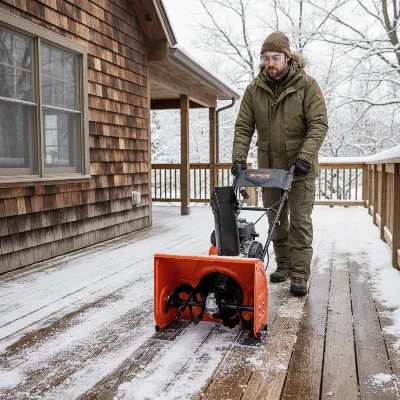 A person carefully operating a single-stage electric snow blower with rubber augers on a wooden deck, showing minimal contact with the surface.
Buying Guide: Choosing a Snow Blower for Your Deck
Selecting the right snow blower for your wooden deck involves more than just picking the most powerful machine. It’s about finding a balance between effectiveness, safety, and suitability for the delicate nature of wood. Thoughtful consideration of your specific needs, essential features, and budget will guide you to the perfect tool.
Determine Your Needs
|
Our Picks for the Best Snow Blower in 2026
As an Amazon Associate I earn from qualifying purchases.
|
||
| Num | Product | Action |
|---|---|---|
| 1 | Brushless Cordless Electric Snow Shovel for use with Makita 21V Battery, 12” Snow Thrower with Adjustable Direction, Lightweight Snow Removal Tool for Driveway,Patio,Walkways |

|
| 2 | VOLTASK Cordless Snow Shovel, 48V | 13.5-Inch Cordless Snow Blower, Battery Snow Blower with Directional Plate (2 * 24V Battery & Dual Quick Charger Included) |
|
| 3 | Westinghouse WSnow11S AC Corded Electric Snow Shovel, 11-inches Wide with 20 ft. Throwing Distance, Plows 300 lbs/min for Driveway/Steps/Sidewalk/Porch |
|
| 4 | SuperHandy Electric Snow Thrower Adjustable Angle 17" Clearing Width 5.7" Intake Height 23' ft Throw Curved Serrated Blade 48V-2Ah Battery Portable Wheels Easy Maneuver Safety Switches Comfort Handle |
|
| 5 | SuperHandy Electric Snow Thrower Walk-Behind Blower Corded AC 120V 15A 18 x 10 Inch Clearing Path 25 Feet Throwing Distance 720 lbs/Min LED Headlights for Driveway Walking Path Yards |
|
| 6 | Cordless Snow Blower(No Battery), Compatible with Dewalt 20V Max Battery, 20" Brushless Snow Thrower with Directional Plate & LED Lights, Electric Snow Blower Ideal for Walkways and Driveways |
|
| 7 | Westinghouse WSnow13S AC Corded Electric Snow Shovel, 13-inches Wide with 20 ft. Throwing Distance, Plows 300 lbs/min for Driveway/Steps/Sidewalk/Porch |
|
| 8 | EGO Power+ Electric Snow Shovel Attachment, Use with Cordless Power Head Multi-Head System, Battery, Charger and Power Head Not Included - SSA1200 |
|
| 9 | EGO Power+ SNT2110 Peak Power 21-Inch 56-Volt Cordless Snow Blower with Steel Auger Battery and Charger Not Included,Black |
|
| 10 | EWORK Corded Snow Shovel 11-Inch 1200W 10A Powerful Electric Snow Shovels, 6-Inch Clearing Depth, 23-Foot Max Throw Distance, Power Snow Blower for Driveway, Steps, Sidewalk, Porch |
|
Before even looking at models, assess the specifics of your deck and typical winter conditions. First, consider the area of your deck that needs clearing. Is it a small patio or a sprawling multi-level structure with intricate railings? Smaller decks benefit from more compact and maneuverable units. Next, evaluate the type of snow you typically encounter. Light, fluffy snow requires less power than wet, heavy, or icy accumulations. If you frequently get heavy, wet snow, you’ll need a machine capable of handling it without being overly aggressive. Finally, think about the frequency of use. If you only need to clear a few times a season, a basic model might suffice, but frequent, heavy use might warrant a more robust, albeit still deck-friendly, option.
Essential Features
When choosing a snow blower for a wooden deck, certain features become paramount for safety and efficiency. Engine power should be sufficient for your snow conditions, but not excessive to the point of being unwieldy or damaging. Lighter, less powerful single-stage models are often ideal. The clearing width and height are important; narrower widths (e.g., 18-21 inches) allow for better maneuverability in tight spaces and around deck furniture.
A critical feature is the type of auger and scraper bar. Look for machines with rubber or composite augers and adjustable skid shoes. These components are designed to minimize or eliminate direct contact with the deck surface, preventing scratches and gouges. Metal augers, common in two-stage blowers, are generally unsuitable for wood. An electric start system offers convenience, especially in cold weather, though pull-start is common on smaller gas models. Finally, consider helpful features like headlights for early morning or late evening clearing, and heated handgrips for operator comfort in frigid temperatures, though these don’t directly impact deck safety.
Budget
Your budget will naturally influence your choice, but investing in a suitable machine can save you from costly deck repairs down the line. Entry-level snow blowers, typically corded electric or smaller battery-powered single-stage units, are generally the most affordable. They are perfect for light snowfalls and smaller decks. As you move into mid-range options, you’ll find more powerful battery-powered models or compact gas single-stage blowers, offering a good balance of features and performance for moderate snow. Premium snow blowers might include high-end battery systems with extended run times or specialized, very light two-stage models with extensive height adjustments, though extreme caution is still advised with any two-stage on wood. Always compare the features offered against the price, prioritizing those that directly contribute to safe deck operation.
Snow Blower Price Segments for Decks
The market for snow blowers offers a wide range of options, each falling into different price categories that often reflect their power, features, and intended use. When it comes to clearing a wooden deck, understanding these segments can help you align your budget with the safest and most effective choice.
Entry-Level Segment (Typically under $400)
This segment primarily includes corded electric and smaller battery-powered single-stage snow blowers. These machines are characterized by their lightweight design, ease of use, and relatively quiet operation. They typically feature rubber or plastic augers that are gentle on surfaces, making them a viable option for wooden decks, especially for light to moderate snowfalls (up to 6-8 inches).
- Pros: Highly affordable, easy to store, low maintenance, zero emissions (electric), rubber augers are deck-friendly.
- Cons: Limited power for heavy, wet snow; corded models have restricted range; battery models have limited run time.
- Ideal for: Small decks, occasional light snow, homeowners seeking an eco-friendly and low-effort solution.
Mid-Range Segment (Approximately $400 – $800)
In this category, you’ll find more robust battery-powered single-stage models with longer run times and wider clearing paths, as well as some compact gas-powered single-stage blowers. These offer a step up in power and capability, handling deeper snow (up to 10-12 inches) more efficiently while still maintaining a relatively gentle approach suitable for decks. Many battery models here boast advanced battery technology for extended operation.
- Pros: Better power and clearing capacity than entry-level, cordless convenience (battery models), often more durable, still feature deck-safe rubber augers.
- Cons: Higher initial cost, gas models require fuel and more maintenance.
- Ideal for: Medium-sized decks, areas with moderate and frequent snowfall, users who need more power and durability without the bulk of a two-stage machine.
Premium Segment (Above $800)
The premium segment for deck clearing typically focuses on high-performance battery-powered single-stage snow blowers with advanced features, or very carefully selected, compact, lightweight two-stage models with highly adjustable skid shoes and unique auger designs. It’s crucial to exercise extreme caution with any two-stage machine on a deck, even in this segment, as metal augers can still pose a risk if not properly managed. These high-end single-stage units prioritize maximum battery life, enhanced maneuverability, and additional comfort features like heated handles.
- Pros: Exceptional power and run time (battery), premium build quality, advanced features, potentially handle heavier snow more effectively (with caution on two-stage).
- Cons: Significant investment, two-stage models carry inherent risks for wooden surfaces.
- Ideal for: Large decks, areas experiencing heavy, wet snow frequently, users prioritizing top-tier performance, cordless convenience, and comfort, and who are willing to apply meticulous care with any two-stage model.
Top Snow Blower Characteristics for Wooden Deck Use
While specific model recommendations can change rapidly with new product releases, understanding the key characteristics of a snow blower suitable for a wooden deck will help you choose wisely. The focus is always on minimizing damage to the deck surface while effectively removing snow.
The ideal snow blower for a wooden deck will almost always be a single-stage electric or battery-powered unit. These machines are designed with rubber or composite augers that sweep the surface without the rigid, damaging contact of metal. Their lighter weight also makes them easier to maneuver in the often confined and obstacle-laden space of a deck. Look for models with adjustable skid shoes that allow you to fine-tune the clearance between the auger and the deck boards. This feature is paramount for preventing the auger from scraping the wood. A compact design and narrower clearing width (e.g., 18 to 21 inches) enhance maneuverability, enabling you to navigate around railings, furniture, and other deck features without bumping or scratching.
> “When it comes to wooden decks, gentleness is key. A single-stage electric blower with rubber paddles is your best friend, offering efficient snow removal without the harsh impact that can scar your beautiful outdoor space.” – Maria Chen, Landscape Design Specialist
Beyond the mechanics, consider user-friendly features. Electric start (either push-button for battery/corded or key-turn for gas) simplifies cold-weather starts. Directional chute control, easily accessible from the operator’s position, allows you to accurately direct snow away from the deck, house, or other sensitive areas. Battery-powered options with long run times or interchangeable batteries are excellent for larger decks, providing uninterrupted clearing without the hassle of cords or refueling.
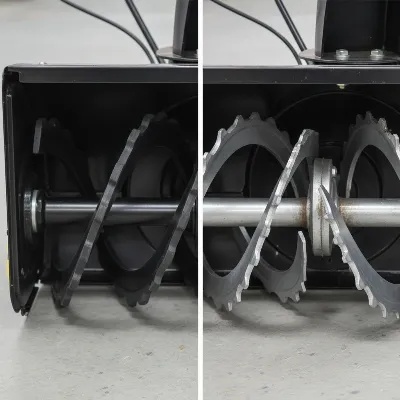 An illustrative comparison showing a snow blower with a rubber auger and one with a metal auger, highlighting the difference in material suitable for delicate surfaces.
Comparison Table of Snow Blower Characteristics for Deck Use
Choosing the right snow blower is critical for preventing damage to your wooden deck. This table highlights key characteristics, contrasting what’s ideal versus what’s less suitable for deck clearing.
| Feature | Ideal for Deck Use | Less Ideal for Deck Use |
|---|---|---|
| Blower Type | Single-stage (electric or battery) | Two-stage, Three-stage (gas or heavy electric) |
| Auger Material | Rubber or composite paddles | Steel/metal augers |
| Contact with Surface | Designed for minimal to no contact; gentle sweep | Direct contact with rigid metal; aggressive scraping |
| Weight | Lightweight, easy to lift and maneuver | Heavy, bulky, difficult to control in tight spaces |
| Maneuverability | High, good for tight corners and around obstacles | Lower, best for open, straight paths |
| Power Source | Battery-powered, Corded Electric | Gasoline (unless very light and single-stage) |
| Clearing Width | Smaller (18-21 inches) for precision | Wider (24+ inches) for large, open areas |
| Skid Shoes/Runners | Adjustable, preferably plastic or composite, to set height | Often fixed or less adjustable, typically metal |
| Noise & Emissions | Quieter, zero emissions (electric/battery) | Louder, exhaust fumes (gas) |
| Damage Risk to Deck | Low, if operated correctly | High, can scratch, gouge, or splinter wood |
Using and Maintaining Your Snow Blower on a Wooden Deck
Even with the perfect deck-friendly snow blower, safe operation and diligent maintenance are paramount. Improper use can still lead to damage or, more importantly, injury. Follow these guidelines to ensure both your deck and yourself remain safe.
Safe Operation Guidelines
Safety must always be your top priority. Before you even start the machine, perform a quick pre-use inspection of your deck. Look for any loose boards, protruding nails, or screws that could catch the auger or be thrown by the blower. Clear away any obstacles like welcome mats, potted plants, furniture, or toys. Ensure the deck surface is free of debris that could become projectiles.
Always dress appropriately for winter weather, wearing multiple layers, warm gloves, a hat, and sturdy, non-slip waterproof boots to maintain good footing. Protective eyewear is essential to shield your eyes from flying snow or debris.
When operating, maintain a slow, steady pace. Do not try to force the machine through deep snow, as this can strain the engine, clog the auger, or cause you to lose control. For wooden decks, it’s often best to work parallel to the deck boards to minimize the chance of catching an edge and causing splinters. Angle the chute carefully to direct snow away from the house, windows, and back onto areas that still need clearing. Keep both hands firmly on the handles at all times and never leave a running snow blower unattended.
A common cause of injury is attempting to clear a clogged chute with your hands. Never, under any circumstances, use your hands or feet to clear a jam. Always turn off the snow blower, disengage the clutch (if applicable), and wait at least five seconds for all moving parts to come to a complete stop before using a special clearing tool or a broom handle to dislodge snow.
Routine Maintenance for Deck-Friendly Use
Consistent maintenance not only prolongs the life of your snow blower but also ensures it performs safely and effectively on your wooden deck. After each use, clean the machine thoroughly. Remove any lingering snow, ice, or debris from the auger housing, chute, and underside. This prevents corrosion and ensures optimal performance for the next snowfall.
Regularly inspect and adjust your skid shoes. These sacrificial parts lift the auger slightly off the surface. For decks, you want them set to provide minimal clearance, enough to prevent the rubber auger from digging into the wood, but still allowing it to clear most of the snow. Replace worn skid shoes promptly. Also, check the rubber auger paddles for wear and tear; damaged paddles will be less effective and could potentially expose harder components to the deck.
For battery-powered units, follow the manufacturer’s guidelines for battery charging and storage to maximize battery life. Gas-powered units will require checking and changing the oil, spark plug, and air filter as recommended by the manual. Always store your snow blower in a dry, protected area when not in use.
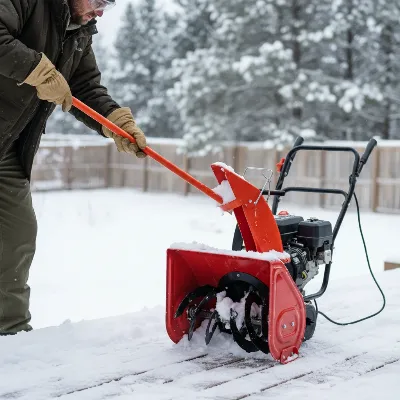 A person safely clearing a snow blower clog using a stick or clearing tool, with the machine turned off and wearing safety gear.
Alternatives to Snow Blowers for Deck Snow Removal
While a single-stage snow blower can be a time-saving tool for deck clearing, it’s not the only option, nor is it always the most appropriate. Understanding alternatives can help you choose the safest and most effective method for varying snow conditions and to minimize risk to your wooden deck.
For light, fluffy snowfalls (typically under 4 inches), a simple push broom or a leaf blower (especially a powerful electric one) can be remarkably effective. A broom allows you to gently sweep the snow away without any risk of damaging the deck surface. Similarly, a leaf blower can push light, dry snow off quickly, leaving your deck clear without any physical contact.
When dealing with moderate snow, a plastic snow shovel is often the safest manual tool. Unlike metal shovels, plastic ones are far less likely to scratch, gouge, or splinter your wooden deck boards. Always shovel parallel to the deck boards to avoid catching edges and causing damage. Avoid chopping at ice or using excessive force.
For thin layers of ice, a plastic ice scraper can be used cautiously. Chemical de-icers, while effective on concrete, are generally not recommended for wooden decks. Many contain salts or other chemicals that can corrode fasteners, stain wood, or accelerate deterioration. If traction is absolutely necessary, a light sprinkling of sand can provide grip, but be aware that sand can be abrasive and potentially scratch the deck surface over time. Professional snow removal services are also an option for those who prefer to avoid the task altogether, ensuring the job is done safely and correctly.
> “There’s a time and place for every tool. For very light snow or tricky ice patches on a wooden deck, sometimes the simplest solution – like a broom or a plastic shovel – is indeed the safest.” – David Miller, Home Maintenance Expert
Conclusion
Clearing snow from your wooden deck is a necessary task to prevent structural damage, maintain safety, and preserve its beauty. The good news is that a snow blower can be a valuable ally in this chore, provided you select the right machine and adhere to stringent safety and operational guidelines. Opting for a single-stage electric or battery-powered snow blower with rubber augers and adjustable skid shoes is the safest bet, as these are designed to be gentler on delicate surfaces.
Always prioritize safety by inspecting your deck for hazards, wearing appropriate gear, and meticulously following proper operating and clearing procedures. Remember that sometimes, a simple broom or plastic shovel might be the best tool for the job, particularly for light snow or ice. By making informed choices and taking a careful, methodical approach, you can keep your wooden deck clear and safe throughout the winter, ensuring it remains a beautiful and functional space for years to come.
What’s your go-to method for keeping your wooden deck snow-free, and what challenges have you encountered?
Frequently Asked Questions
Can I use a gas snow blower on a wooden deck?
You can, but it’s generally not recommended. Most gas snow blowers are two-stage machines with heavy metal augers that can easily scratch, gouge, or splinter wooden deck boards. If you must use a gas model, choose a lightweight, single-stage unit with rubber augers and adjustable skid shoes, and operate with extreme caution to maintain minimal contact.
What kind of damage can a snow blower cause to a deck?
A snow blower can cause several types of damage, including scratches and gouges from direct contact between metal augers or scraper bars and the wood. It can also splinter boards, damage railings, or even dislodge loose deck fasteners if not operated carefully. Improper technique can accelerate wear on the deck’s surface and finish.
How do I protect my deck when using a snow blower?
To protect your deck, choose a single-stage snow blower with rubber augers and adjustable skid shoes. Set the skid shoes to provide a slight clearance from the deck surface. Clear all obstacles, protruding nails, or loose boards before starting. Operate slowly, keep the auger from digging in, and work parallel to the deck boards.
Are electric snow blowers better for decks?
Yes, electric (corded or battery-powered) snow blowers are generally better for wooden decks. They are typically single-stage, lighter, quieter, and come equipped with rubber or composite augers that are much gentler on surfaces compared to the metal augers found in most gas-powered two-stage machines. They reduce the risk of scratching or damaging the wood.
What’s the best way to clear light snow from a deck?
For light, fluffy snow (under 4 inches), the safest and easiest methods are often a push broom or a leaf blower. These tools allow you to clear the snow without any physical contact with the deck surface, eliminating the risk of scratches or other damage that can occur even with a gentle snow blower.
Frequently Asked Questions
Can I use a gas snow blower on a wooden deck?
Using a gas snow blower on a wooden deck is generally not recommended due to the heavy metal augers found in most two-stage models, which can easily scratch or splinter wood. If a gas model is necessary, opt for a lightweight, single-stage unit with rubber augers and adjustable skid shoes, operating with extreme caution to maintain minimal contact with the deck surface.
What kind of damage can a snow blower cause to a deck?
A snow blower can cause various types of damage, including scratches and gouges from direct contact with metal augers or scraper bars. It can also splinter deck boards, damage railings, or dislodge loose fasteners if not operated carefully. Improper technique can accelerate wear on the deck's surface and finish, leading to costly repairs.
How do I protect my deck when using a snow blower?
To protect your deck, choose a single-stage snow blower with rubber augers and adjustable skid shoes, setting them to provide a slight clearance from the deck surface. Before starting, clear all obstacles, protruding nails, or loose boards. Operate the machine slowly, prevent the auger from digging into the wood, and work parallel to the deck boards to minimize damage.
Are electric snow blowers better for decks?
Yes, electric (corded or battery-powered) snow blowers are generally better for wooden decks. They are typically single-stage, lighter, and quieter, and come equipped with rubber or composite augers that are much gentler on surfaces compared to the metal augers found in most gas-powered two-stage machines. This design significantly reduces the risk of scratching or damaging the wood.
What's the best way to clear light snow from a deck?
For light, fluffy snowfalls under 4 inches, the safest and easiest methods are often a push broom or a leaf blower. These tools allow you to clear the snow without any physical contact with the deck surface, eliminating the risk of scratches or other damage that can occur even with a gentle snow blower.
How to Safely Use a Snow Blower on a Wooden Deck
Learn the essential steps to safely clear snow from your wooden deck using a snow blower, minimizing damage and ensuring operator safety.
Before starting, inspect your deck for loose boards, nails, or obstacles like furniture and plants. Dress appropriately for winter, including multiple layers, warm gloves, non-slip boots, and essential protective eyewear to shield against flying debris.
Maintain a slow, steady pace and avoid forcing the machine through deep snow. Work parallel to the deck boards to prevent catching edges and causing splinters. Angle the chute to direct snow away from the house and other sensitive areas, keeping both hands on the handles at all times.
Never use your hands or feet to clear a clogged chute. Always turn off the snow blower, disengage the clutch, and wait at least five seconds for all moving parts to stop completely. Use a specialized clearing tool or a broom handle to dislodge any jammed snow.
After each use, thoroughly clean the machine to remove snow, ice, and debris, preventing corrosion. Regularly inspect and adjust skid shoes to maintain minimal clearance from the deck surface, and check rubber auger paddles for wear. Follow manufacturer guidelines for battery charging or gas engine maintenance.

The guide was mostly good, especially the part about avoiding metal augers. However, I found that even with my composite augers, I still had to be really careful around the railing posts. It’s not as foolproof as it makes it sound, but it did prevent major damage. Just be extra vigilant.
Great info here! I already had a battery-powered snow blower, but I wasn’t sure about using it on my treated pine deck. The section on adjustable skid shoes was super helpful. I raised mine a bit and it worked perfectly, no issues at all. Wish I’d found this before my first snowfall.
This was exactly what I needed! My old gas-powered blower was just too much for my small deck. I ended up buying one of the recommended electric models and it’s a game changer. It’s light, quiet, and the rubber paddles are gentle on the wood. My deck looks great after a heavy snow.
I was really worried about using a snow blower on my new cedar deck, but this guide gave me the confidence to go for it. The advice about using a single-stage electric model with rubber augers was spot on. It cleared the snow quickly without a single scratch. Definitely recommend following these tips!