Facing a driveway buried under fresh snow is daunting enough without a reluctant snow blower adding to your woes. A gas snow blower is a powerful ally against winter’s fury, but like any hardworking machine, it demands consistent care. Neglecting routine maintenance can lead to frustrating breakdowns, costly repairs, and a lot of extra shoveling. By investing a little time in proper upkeep, you ensure your machine starts reliably, runs efficiently, and lasts for many seasons, saving you headaches and keeping your paths clear when winter strikes.
Why Regular Snow Blower Maintenance Matters
Regular maintenance is the cornerstone of a gas snow blower’s longevity and peak performance. Without it, the harsh conditions of winter can quickly take their toll, leading to decreased efficiency, increased fuel consumption, and premature wear on critical components. Consistent upkeep prevents small issues from escalating into major, expensive repairs. It also ensures the safety of the operator, as a well-maintained machine is less likely to malfunction unexpectedly. A proactive approach to care means your snow blower is always ready to tackle even the heaviest snowfall, providing peace of mind throughout the winter months.
Pre-Season Maintenance Checklist
Preparing your gas snow blower before the first snowfall is crucial for a smooth and reliable winter season. A comprehensive pre-season check ensures all systems are go, preventing frustrating delays when you need your machine most. This involves several key areas, from the fuel system to mechanical components, all designed to ensure optimal performance and extend the life of your equipment. For see our snow blower recommendations on this site.
Fuel System Care
|
Our Picks for the Best Snow Blower in 2026
As an Amazon Associate I earn from qualifying purchases.
|
||
| Num | Product | Action |
|---|---|---|
| 1 | Brushless Cordless Electric Snow Shovel for use with Makita 21V Battery, 12” Snow Thrower with Adjustable Direction, Lightweight Snow Removal Tool for Driveway,Patio,Walkways |

|
| 2 | SuperHandy Electric Snow Thrower Adjustable Angle 17" Clearing Width 5.7" Intake Height 23' ft Throw Curved Serrated Blade 48V-2Ah Battery Portable Wheels Easy Maneuver Safety Switches Comfort Handle |
|
| 3 | EGO Power+ Electric Snow Shovel Attachment, Use with Cordless Power Head Multi-Head System, Battery, Charger and Power Head Not Included - SSA1200 |
|
| 4 | EGO Power+ SNT2110 Peak Power 21-Inch 56-Volt Cordless Snow Blower with Steel Auger Battery and Charger Not Included,Black |
|
| 5 | Westinghouse WSnow11S AC Corded Electric Snow Shovel, 11-inches Wide with 20 ft. Throwing Distance, Plows 300 lbs/min for Driveway/Steps/Sidewalk/Porch |
|
| 6 | Cordless Snow Blower(No Battery), Compatible with Dewalt 20V Max Battery, 20" Brushless Snow Thrower with Directional Plate & LED Lights, Electric Snow Blower Ideal for Walkways and Driveways |
|
| 7 | VOLTASK Cordless Snow Shovel, 48V | 13.5-Inch Cordless Snow Blower, Battery Snow Blower with Directional Plate (2 * 24V Battery & Dual Quick Charger Included) |
|
| 8 | EWORK Corded Snow Shovel 11-Inch 1200W 10A Powerful Electric Snow Shovels, 6-Inch Clearing Depth, 23-Foot Max Throw Distance, Power Snow Blower for Driveway, Steps, Sidewalk, Porch |
|
| 9 | SuperHandy Electric Snow Thrower Walk-Behind Blower Corded AC 120V 15A 18 x 10 Inch Clearing Path 25 Feet Throwing Distance 720 lbs/Min LED Headlights for Driveway Walking Path Yards |
|
| 10 | Westinghouse WSnow13S AC Corded Electric Snow Shovel, 13-inches Wide with 20 ft. Throwing Distance, Plows 300 lbs/min for Driveway/Steps/Sidewalk/Porch |
|
The fuel system is often the culprit behind a snow blower that refuses to start. Old gasoline can degrade, forming varnish and gum deposits that clog the carburetor and fuel lines. Always start the season with fresh, clean gasoline, ideally treated with a fuel stabilizer. This additive helps prevent fuel breakdown, keeping your system clean and ready for ignition. If your machine sat with untreated fuel over the summer, it’s wise to drain the old gas completely and refill it with new, stabilized fuel. For optimal performance, consider using ethanol-free gasoline if available, as ethanol can contribute to moisture absorption and corrosion within the fuel system.
Engine Oil Check and Change
Engine oil is the lifeblood of your snow blower, lubricating moving parts and preventing excessive friction and heat. Over time, oil degrades and collects contaminants, losing its effectiveness. It’s recommended to change the engine oil annually, or every 25-50 hours of use, whichever comes first. For new snow blowers, an initial oil change after the first 5 hours of operation is often recommended to remove break-in particulates. Draining old oil and replacing it with fresh, winter-grade oil ensures proper lubrication, especially during cold starts, protecting your engine from unnecessary wear and tear.
Spark Plug Inspection and Replacement
The spark plug provides the critical spark needed to ignite the fuel-air mixture in the engine. A dirty, fouled, or worn spark plug can lead to difficult starting, rough running, and reduced fuel efficiency. Before the season, remove the spark plug and inspect it for signs of carbon buildup, corrosion, or damage. Use a wire brush to clean off any deposits, or simply replace it with a new one if it shows significant wear. A fresh spark plug can make a significant difference in your snow blower’s starting reliability and overall performance.
Belt and Shear Pin Examination
Belts are vital for transferring power from the engine to the auger and drive system, while shear pins protect the gearbox from damage by breaking if the auger hits a hard object. Inspect all belts for cracks, fraying, or excessive slack; replace any that appear worn. Similarly, check your shear pins (typically found where the auger connects to its shaft) for any signs of bending or damage, and ensure you have spare pins on hand. Replacing worn belts and keeping extra shear pins ensures your machine can effectively throw snow and prevents costly damage in the event of an obstruction.
Tire Pressure and Skid Shoes
Proper tire pressure is essential for traction and stability, especially on slippery, uneven surfaces. Check your tires and inflate them to the manufacturer’s recommended pressure. Skid shoes, located at the bottom of the auger housing, control the clearing height and protect both the auger and your driveway surface. Inspect them for wear and adjust or replace them as needed to ensure they are set appropriately for your terrain (e.g., lower for paved surfaces, higher for gravel). This small adjustment can prolong the life of your auger and prevent damage to your property.
During-Season Maintenance Tips
Even during peak snow season, your gas snow blower benefits from ongoing attention. A few simple habits can ensure it continues to operate smoothly and efficiently throughout winter’s toughest challenges, helping you avoid mid-storm breakdowns. Consistent minor checks keep your machine in top working order, ready for the next snowfall.
Post-Use Cleaning
After each use, take a few minutes to clean your snow blower thoroughly. Remove any accumulated snow, ice, or debris from the auger, chute, and housing. Running the engine briefly after clearing snow can help melt away any internal ice buildup, preventing freeze-up of the auger or impeller. Pay special attention to removing any rock salt residue, as it can accelerate corrosion on metal parts. A quick wipe-down with a cloth can protect your machine from rust and ensure all moving parts remain free of obstructions.
Regular Inspections
Throughout the season, perform quick visual inspections before and after each use. Check that all fasteners, bolts, and nuts are tight, as vibrations from operation can cause them to loosen. Verify that control levers engage and disengage correctly and smoothly. Regularly inspect shear bolts/pins and replace them if they are broken or show signs of severe wear. Maintaining proper tire pressure and ensuring skid shoes and scraper bars are in good condition will also contribute to efficient operation and prevent damage to your machine or property.
End-of-Season Storage Preparations
As the snow melts and winter loosens its grip, preparing your gas snow blower for off-season storage is just as vital as pre-season maintenance. Proper storage protects your investment from corrosion, fuel degradation, and other issues that can lead to problems when you try to start it up next winter. A few thoughtful steps will ensure your machine emerges from storage ready for action.
Fuel Stabilization
When storing your snow blower, you have two primary options for fuel: either drain it completely or stabilize it. Draining the fuel system by running the engine until it starves itself of gas is often recommended to prevent stale fuel from gumming up the carburetor and fuel lines. If you choose to leave fuel in the tank, add a high-quality fuel stabilizer, then run the engine for about 10-15 minutes to circulate the stabilized fuel throughout the system. This prevents deposits from forming during months of inactivity.
Battery Care
If your snow blower has an electric start and a battery, proper battery care is essential for long-term storage. Disconnect the battery and clean its terminals to prevent corrosion. Store the battery in a cool, dry place, ideally on a trickle charger or by periodically charging it according to the manufacturer’s instructions. This prevents the battery from completely discharging and extending its overall lifespan, ensuring a quick start next season.
General Cleaning and Lubrication
Give your snow blower a thorough cleaning before putting it away. Remove all dirt, rust, and debris from the auger, chute, and exterior surfaces. Touch up any chipped paint to prevent rust. Lubricate all moving parts, including cables, gears, and the auger shaft, as specified in your owner’s manual. Applying a light coat of rust preventative oil to bare metal surfaces, especially the auger and impeller housing, can also offer crucial protection against moisture and corrosion during the off-season. Store the snow blower in a clean, dry, and well-ventilated area, preferably covered with a breathable tarp to protect it from dust and moisture. If possible, elevate it slightly off the ground using blocks to prevent tire flat spots and keep moisture away from the underside.
Common Snow Blower Problems and Troubleshooting
Even with diligent maintenance, gas snow blowers can occasionally encounter issues. Knowing how to diagnose and address common problems can save you a trip to the repair shop and get your machine back in action quickly. Many issues stem from fuel-related problems or worn components, which are often straightforward to fix.
> “Many snow blower headaches can be avoided by simply using fresh fuel and checking your spark plug regularly. These two steps alone solve a majority of starting issues.” – John Mechanic, Small Engine Repair Specialist
One of the most frequent complaints is a snow blower that won’t start. This often points to old or stale fuel, a faulty or dirty spark plug, or a clogged carburetor. First, ensure you have fresh gasoline. Then, inspect the spark plug for corrosion or damage; clean or replace it as needed. If the engine still won’t catch, the carburetor might be gummed up from old fuel, requiring cleaning or a carburetor cleaner treatment. Other starting issues can include a dead battery (for electric start models), an improperly set choke, or a dirty air filter.
If the engine runs but doesn’t throw snow effectively, check for blockages in the auger or discharge chute. Always turn off the machine and disconnect the spark plug wire before clearing any clogs with a broom handle. Worn or broken shear pins are another common cause; these protective pins are designed to break if the auger encounters a hard object, preventing damage to the gearbox. Inspect and replace any broken shear pins. A loose or worn auger belt can reduce throwing power, so check its tension and condition.
A snow blower that won’t move typically indicates a problem with the drive system. This could be a worn or broken drive belt, an issue with the friction disc, or a problem with the drive control lever or cable. Inspect the drive belt for wear or breakage and adjust or replace it. If your machine vibrates excessively or makes unusual noises, check for loose bolts, nuts, or screws. Also, inspect the auger and impeller for bent or damaged components or foreign objects lodged within the housing. Addressing these issues promptly prevents further damage and ensures safe operation.
DIY vs. Professional Maintenance
Deciding whether to perform snow blower maintenance yourself or seek professional help depends on your comfort level, mechanical skills, and the complexity of the task. Many routine maintenance items, such as checking fluid levels, inspecting belts, and cleaning the machine, are relatively simple and can be handled by most homeowners with basic tools. Changing the oil and spark plug are also common DIY tasks that can save money and provide a sense of accomplishment.
However, certain repairs or more complex diagnostics might be best left to a professional. If you’re unsure about a specific procedure, lack the necessary tools, or encounter persistent problems that basic troubleshooting doesn’t resolve, consulting a certified small engine mechanic is a wise choice. Professionals have specialized tools, diagnostic equipment, and in-depth knowledge to tackle issues like carburetor rebuilds, engine timing adjustments, or significant component replacements. While professional service incurs a cost, it can prevent further damage to your machine and ensure repairs are done correctly and safely, often prolonging your snow blower’s lifespan.
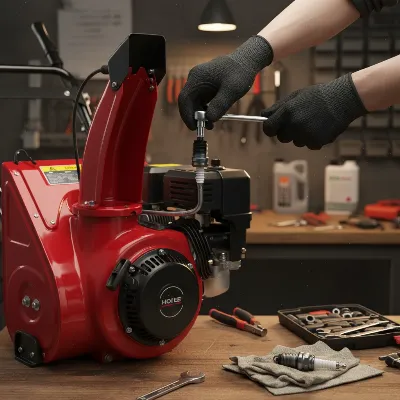 A person performing pre-season maintenance on a gas snow blower, checking the spark plug and oil
Conclusion
Keeping your gas snow blower in top condition is not merely about convenience; it’s about protecting a significant investment and ensuring reliability when you need it most. By adhering to a consistent maintenance schedule—covering pre-season checks, diligent care during operation, and proper end-of-season storage—you can prevent common failures and extend the life of your machine. Regular attention to details like fuel freshness, oil changes, and component inspections will keep your snow blower running efficiently year after year. Don’t let a heavy snowfall catch you unprepared; a little effort now ensures effortless snow removal all winter long. What essential maintenance task do you find most impactful for your gas snow blower’s performance?
Frequently Asked Questions
How often should I change the oil in my gas snow blower?
It’s generally recommended to change the oil in your gas snow blower annually, or every 25-50 hours of use. For brand new machines, an initial oil change after the first 5 hours of operation is often advised to remove break-in contaminants.
Can I leave gasoline in my snow blower during the off-season?
Leaving untreated gasoline in your snow blower during the off-season can lead to carburetor clogs and starting problems. It’s best to either drain the fuel completely or add a high-quality fuel stabilizer and run the engine for a few minutes to circulate it before storage.
What should I do if my gas snow blower won’t start?
If your gas snow blower won’t start, first check for fresh fuel in the tank and inspect the spark plug for dirt or damage. Ensure the choke is set correctly and the primer bulb is used if applicable. A clogged carburetor from old fuel is also a common culprit.
How do I prevent my snow blower from rusting during storage?
To prevent rust, thoroughly clean your snow blower of all dirt, salt, and moisture before storage. Touch up any chipped paint and apply a light coat of rust preventative oil to bare metal parts. Store it in a dry, well-ventilated area, ideally covered with a breathable tarp and elevated off the ground.
Why is my snow blower not throwing snow as far as it used to?
Reduced throwing distance often indicates a problem with the auger, impeller, or drive system. Check for snow or ice blockages in the auger and chute, inspect shear pins for breakage, and examine the auger belt for wear or proper tension.
