Winter brings a serene beauty, but it also brings the formidable task of snow removal. For those living in regions where heavy snowfall is an annual certainty, a reliable gas snow blower isn’t just a convenience—it’s an essential tool for maintaining safety and sanity. Shoveling deep, wet, or icy snow can be back-breaking and time-consuming, transforming what should be a peaceful winter morning into an exhausting ordeal. This comprehensive guide, informed by years of experience with various models, will help you navigate the powerful world of gas snow blowers, ensuring you find a machine perfectly suited to tackle even the most challenging winter conditions in 2026.
Understanding Gas Snow Blowers
What exactly is a snow blower, and how does it manage to clear vast amounts of snow so effortlessly? At its core, a snow blower is a motorized machine designed to remove snow by scooping it up and expelling it through a chute. Gas-powered models, in particular, are renowned for their robust power and ability to handle large areas and heavy snowfall, making them the go-to choice for serious winter warriors.
Gas snow blowers typically come in three main types, each designed for different levels of snowfall and terrain: For more snow blower guides on this site.
- Single-Stage Snow Blowers: These machines use a single auger that touches the ground to both collect and discharge snow. They are lightweight and best suited for light to moderate snow (up to 8 inches) on paved surfaces like small driveways and sidewalks. While some gas single-stage models exist, they are generally less common for heavy snow applications than their multi-stage counterparts.
- Two-Stage Snow Blowers: These are the workhorses of snow removal for most homeowners. A two-stage system features an auger that collects snow and feeds it into a high-speed impeller, which then powerfully discharges it through the chute. Because the auger doesn’t touch the ground, two-stage blowers are ideal for clearing moderate to heavy snow (6 to 18 inches) on various surfaces, including gravel driveways and uneven terrain. They offer superior power and throwing distance compared to single-stage units.
- Three-Stage Snow Blowers: If a two-stage blower is a bulldozer, a three-stage model is a true snow-clearing beast. These machines add a third element: an accelerator that grinds up chunks of ice and heavy, wet snow before the impeller expels it. Three-stage blowers are designed for the toughest conditions, tackling snowfall over 18 inches deep, busting through stubborn plow piles, and handling highly compacted snow and ice with remarkable speed and efficiency. They are typically heavier and more expensive but offer unmatched performance for extreme winter challenges and commercial use.
Each type has its distinct advantages and disadvantages. Single-stage blowers are lighter and more maneuverable, but lack the power for heavy snow. Two-stage models strike a balance between power, versatility, and cost, making them popular for most residential heavy snow needs. Three-stage blowers deliver maximum power for the most extreme conditions, though they come with a higher price tag and greater weight.
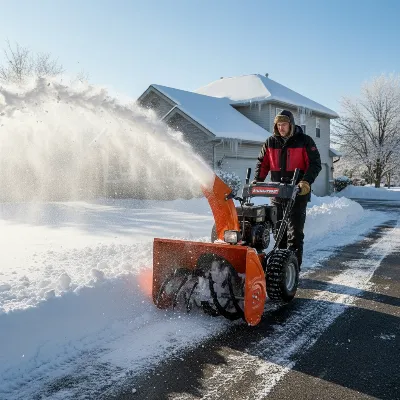 A robust gas two-stage snow blower clearing deep, heavy snow from a wide driveway, highlighting its powerful operation and the volume of snow being moved.
Your Essential Gas Snow Blower Buying Guide
Choosing the right gas snow blower requires careful consideration of several factors. It’s not just about getting the biggest machine; it’s about matching its capabilities to your specific needs and local snow conditions.
Defining Your Usage Needs
Before you even start looking at models, take a moment to assess what you’re up against each winter. This self-assessment is crucial for making an informed decision.
- Area to Clear: How large is the area you need to clear? A small paved walkway and a two-car driveway have vastly different requirements than a long, winding gravel driveway or a commercial parking lot. Wider clearing widths (24-30+ inches) are more efficient for larger areas, reducing the number of passes needed.
- Frequency of Use: Do you experience occasional light dustings or frequent, heavy blizzards? If heavy snowfall is a regular occurrence, you’ll need a more robust and durable machine designed for consistent, demanding use.
- Snow Type: Not all snow is created equal. Light, fluffy powder is easy to move, but wet, heavy, slushy snow or compacted ice demands significantly more power and a specialized auger/impeller design to prevent clogging. Gas blowers excel at handling these tougher snow types. If you frequently deal with the dense, packed snow left by municipal plows at the end of your driveway, a powerful two- or three-stage model is essential.
Key Features to Look For
Once you understand your needs, you can focus on the specific features that contribute to a gas snow blower’s effectiveness in heavy snow.
- Engine Power (CC/HP): For heavy snow, engine power is paramount. Gas snow blowers typically measure power in cubic centimeters (cc). For clearing deep, wet, or icy snow, aim for engines in the 200cc to 400cc range or higher. More CCs generally translate to more horsepower and, crucially, more torque. Torque is the twisting force that keeps the auger and impeller spinning strongly, even when encountering dense, heavy snow or solid ice chunks. A powerful engine ensures the machine won’t bog down or stall under demanding conditions, allowing for faster ground speeds and consistent snow throwing.
- Clearing Width and Intake Height: These dimensions dictate how much snow the machine can clear in a single pass and how deep a drift it can tackle. For heavy snow, look for clearing widths from 24 inches to 30 inches or more. An intake height of at least 20 inches is recommended to handle deep accumulations without having to make multiple vertical passes.
- Starting System: Cold weather can make pull-starting a gas engine a challenge. An electric start feature, often a push-button mechanism, is a game-changer for reliable ignition in freezing temperatures, significantly enhancing convenience.
- Assisted Drive and Steering: Heavy-duty gas snow blowers can be substantial. Self-propelled drive systems, with multiple forward and reverse speeds, make maneuvering the machine through deep snow much easier. Features like trigger-controlled power steering or automatic turning reduce the effort required to change direction, especially in large areas. For extremely uneven terrain, steep slopes, or gravel, a track-driven system offers superior traction and control over wheeled models.
- Additional Features: Modern snow blowers come with numerous comfort and convenience features. Heated hand grips are a blessing in sub-zero temperatures. LED headlights are invaluable for clearing snow in low-light conditions, whether it’s early morning or late evening. A durable, steel chute is more resistant to damage and clogging than plastic, and joystick or remote chute controls allow you to precisely adjust the direction and distance of snow discharge without stopping.
Budget Considerations
Gas snow blowers for heavy snow represent a significant investment, but one that pays dividends in saved time, effort, and reduced physical strain.
- Set a Realistic Budget: Determine the maximum amount you’re willing to spend. This will help narrow down your options within various performance tiers.
- Compare Value: Don’t just look at the upfront price. Consider the long-term value, including durability, features, and the machine’s ability to handle your specific snow conditions effectively. A slightly more expensive model that performs reliably in heavy snow might be a better investment than a cheaper one that constantly struggles.
- Price Segments: Gas snow blowers for heavy snow can range significantly. While specific prices for 2026 models can vary, here’s a general idea of what to expect in USD, providing a rough conversion from typical Vietnamese Dong (VND) price points:
Entry-Level for Heavy Snow (Approx. $600 – $1,000 USD)
- Characteristics: These models often feature 200cc-220cc engines, 24-inch clearing widths, and basic two-stage functionality. They provide good performance for moderate to heavy snow (up to 12 inches) on medium-sized driveways.
- Pros: More affordable, significant upgrade from shoveling, typically include electric start.
- Cons: May struggle with extremely wet or icy snow, less powerful engines can bog down in very deep drifts, fewer advanced features.
- Suitable For: Homeowners with average-sized driveways who face regular, but not extreme, heavy snowfall.
Mid-Range (Approx. $1,000 – $2,000 USD)
- Characteristics: Moving into this range, you’ll find more powerful engines (250cc-300cc), wider clearing widths (26-28 inches), and enhanced features like power steering, heated handgrips, and improved chute control. Many robust two-stage models fall here.
- Pros: Excellent performance for heavy, wet, and icy snow; greater efficiency for larger areas; enhanced comfort and maneuverability.
- Cons: Heavier than entry-level models, higher initial investment.
- Suitable For: Homeowners with large driveways or those frequently dealing with deep, heavy, and varied snow conditions.
Premium/High-End (Approx. $2,000+ USD)
- Characteristics: This segment includes the most powerful two-stage and advanced three-stage snow blowers, often with engines exceeding 300cc, clearing widths of 28-30+ inches, and superior intake heights. Expect professional-grade components, track drive systems, and all available comfort features.
- Pros: Unmatched power and efficiency for extreme heavy snow, ice, and commercial applications; exceptional durability and reliability; advanced features for ultimate ease of use.
- Cons: Highest price point, larger and heavier machines requiring more storage space.
- Suitable For: Those in areas with consistently extreme snowfall, very large properties, or commercial operators who demand the absolute best performance and durability.
Top 10 Gas Snow Blowers for Heavy Snow in 2026
Identifying the perfect gas snow blower for heavy snow involves balancing raw power, efficient design, and user-friendly features. Based on current trends, expert recommendations, and consistent performance in challenging conditions, here are 10 top gas-powered models well-suited for heavy snow removal in 2026.
- Toro 37798 Power Max 824 OE: A highly-regarded two-stage model with a 252cc engine and a 24-inch clearing width. It’s known for its robust power, far throw distance, and ease of control, making it excellent for large driveways with frequent, heavy snowfall.
- Ariens Compact 24-Inch Electric Start Gas Snow Blower: Featuring a 223cc Ariens AX engine, this 24-inch two-stage blower is a solid performer. It consistently moves heavy snow quickly and efficiently, throwing it up to 40 feet, and comes with self-propelled drive and electric start.
- Troy-Bilt Storm Tracker 2890: This track-driven machine, powered by a 277cc engine with a 28-inch clearing width, is a standout for challenging terrain. Its tracks provide superior grip on hills, icy patches, and gravel, allowing it to blast through up to 12 inches of snow in a single pass without spinning out.
- Cub Cadet 2X 30″ Max: A true powerhouse for extensive properties and deep snow. Equipped with a 357cc engine and a massive 30-inch clearing path, this two-stage blower handles deep, wet snow with remarkable ease, significantly reducing clearing time for large driveways.
- Husqvarna ST224P: A capable two-stage blower designed for larger areas and heavy snowfalls. With a 24-inch clearing width and self-propelled functionality, it powers through deep piles, often featuring heated hand grips for added comfort during prolonged use.
- PowerSmart Two-Stage Gas Snow Blower: An excellent “bang for the buck” option, this 212cc two-stage blower offers reliable power for both powdery and wet snow. It’s a budget-friendly choice that still delivers strong performance, often including electric and pull-start options, and sometimes heated handles on select models.
- Honda HSS928: While on the pricier side, the Honda HSS928 is an investment in legendary reliability and performance. Its Honda GX engine ensures easy cold starts and effortlessly tackles heavy, wet snow, compacted plow piles, and icy conditions with consistent, quiet operation, making it potentially the last snow blower you’ll ever need.
- Ariens Deluxe 28: Combining brute power with precise handling, the Ariens Deluxe 28 boasts a 208cc Ariens AX engine, a 28-inch clearing width, and a 21-inch intake height. This machine can move massive amounts of snow quickly, throwing it up to 50 feet, even in heavy or wet conditions.
- Cub Cadet 3X 28″ IntelliPOWER Three-Stage Snow Blower: For those facing extreme heavy, wet, and icy snow, this 3-stage monster with a 357cc IntelliPOWER engine is engineered to conquer winter’s toughest challenges. Its accelerator spins 10 times faster than the augers to pulverize snow and ice, clearing paths up to 28 inches wide and 21 inches deep with superior efficiency.
- Toro Power Max HD 828 OAE: Part of Toro’s heavy-duty lineup, this 2-stage model (often with an engine in the 250-300cc range and a 28-inch clearing width) is built for serious snow removal. It’s recognized for its robust construction and ability to handle significant snow depths, providing powerful and consistent performance for large properties.
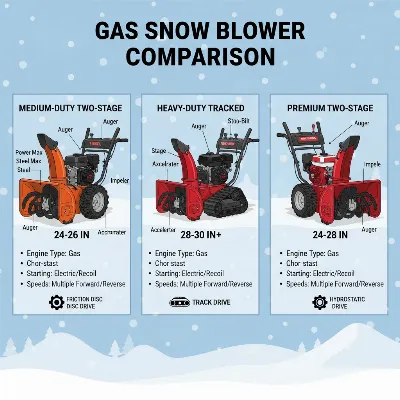 A dynamic side-by-side comparison illustration of three distinct gas snow blowers, showcasing their features and differences for heavy snow removal in 2026.
Gas Snow Blower Comparison Table
To help you quickly compare some of the top gas snow blowers for heavy snow, here’s a detailed table highlighting their key specifications. Note that “Price” indicates a general range, as exact 2026 prices can vary by retailer and region.
| Criteria | Toro 37798 Power Max 824 OE | Ariens Compact 24″ | Troy-Bilt Storm Tracker 2890 | Cub Cadet 2X 30″ Max | Husqvarna ST224P | PowerSmart 2-Stage Gas | Honda HSS928 | Ariens Deluxe 28 | Cub Cadet 3X 28″ IntelliPOWER | Toro Power Max HD 828 OAE |
|---|---|---|---|---|---|---|---|---|---|---|
| Engine (cc) | 252cc | 223cc AX | 277cc | 357cc | ~208cc | 212cc | ~270cc GX | 208cc AX | 357cc IntelliPOWER | ~252-300cc |
| Clearing Width | 24 inches | 24 inches | 28 inches | 30 inches | 24 inches | 24 inches | 28 inches | 28 inches | 28 inches | 28 inches |
| Intake Height | 20 inches | 20 inches | ~21 inches | ~23 inches | ~23 inches | ~21 inches | ~21 inches | 21 inches | 21 inches | ~21 inches |
| Stages | Two-Stage | Two-Stage | Two-Stage | Two-Stage | Two-Stage | Two-Stage | Two-Stage | Two-Stage | Three-Stage | Two-Stage |
| Drive Type | Self-propelled | Self-propelled | Tracked | Self-propelled | Self-propelled | Self-propelled | Tracked | Self-propelled | Self-propelled | Self-propelled |
| Key Features | Far throw distance, easy control, Quick Stick chute | Electric start, Auto-Turn steering | Track system, heated grips, joystick chute | Power steering, heated grips, large path | Heated grips, electric start | Electric start, heated grips (select) | Legendary reliability, hydrostatic drive | Power steering, heated grips, LED | Accelerator, power steering, heated grips | Power steering, Quick Stick chute, anti-clogging |
| Ideal Snow Depth | 12-18+ inches | 12-18+ inches | 12-18+ inches | 18-20+ inches | 12-18+ inches | 6-12 inches | 18-20+ inches | 12-18+ inches | 18-23+ inches | 12-18+ inches |
| Price Range (USD) | $1,000 – $1,500 | $900 – $1,400 | $1,800 – $2,500 | $2,000 – $3,000 | $1,000 – $1,500 | $600 – $900 | $2,500+ | $1,500 – $2,200 | $2,200 – $3,500 | $1,500 – $2,200 |
Operating and Maintaining Your Gas Snow Blower
Owning a gas snow blower for heavy snow comes with the responsibility of proper use and maintenance. Following safety guidelines and performing regular upkeep will ensure your machine runs efficiently for years to come.
Safe Operation Guidelines
Safety should always be your top priority when operating a powerful machine like a gas snow blower. “Always read your operator’s manual thoroughly before the first use each season,” advises Sarah Chen, a long-time outdoor power equipment technician.
- Read the Manual: Familiarize yourself with all controls, safety features, and operating procedures specific to your model.
- Clear the Area: Before starting, remove any debris, rocks, toys, or other objects that could be hidden under the snow and thrown by the auger, causing damage or injury.
- Wear Appropriate Gear: Always wear sturdy footwear with good traction, eye protection, and hearing protection. Avoid loose-fitting clothing that could get caught in moving parts.
- Fuel Safely: Refuel outdoors, away from open flames, and only when the engine is off and cool. Use fresh, high-octane gasoline.
- Maintain a Safe Distance: Keep hands, feet, and clothing away from moving parts, especially the auger and discharge chute. Never attempt to clear a clogged chute with your hands; always use a designated clean-out tool with the engine off and spark plug wire disconnected.
- Be Aware of Surroundings: Pay attention to children, pets, and bystanders. Be mindful of where the discharged snow is going, ensuring it doesn’t hit people, property, or block traffic.
Essential Maintenance Tips
Regular maintenance is crucial for extending the life of your gas snow blower and ensuring it’s ready for every snowfall.
- Oil Changes: Change the engine oil after the first five hours of use for break-in, and then typically every 50 hours of operation or once per season (whichever comes first). Use the type of oil recommended in your owner’s manual.
- Spark Plug Inspection: Inspect the spark plug annually for corrosion or carbon buildup. Replace it if it looks dark, dirty, or shows signs of wear, or if the engine misfires or has trouble starting.
- Belt Checks: Regularly inspect the auger and drive belts for wear, cracks, or fraying. Replace them if they appear damaged or stretched, as worn belts can significantly reduce performance. Keeping spare belts on hand is a smart idea.
- Lubrication: Apply lubricant to all moving parts, such as the chute mechanism, wheel axles, and any control linkages, to prevent rust and ensure smooth operation.
- Fuel Management: This is one of the most critical aspects for gas-powered machines. Always use fresh gasoline, and add a fuel stabilizer to the tank at the start of the season. For long-term storage (over 3-6 months), it’s highly recommended to drain the fuel tank completely and run the carburetor dry to prevent fuel degradation and clogging, especially with ethanol-blended fuels. Alternatively, use ethanol-free premium fuel.
- Post-Use Cleaning: After each use, clear any snow and debris from the auger housing, chute, and around the engine. This prevents snow from freezing and hardening, which can cause damage or impede future operation. Wipe away any accumulated salt to prevent corrosion.
- Shear Pins: Keep a supply of extra shear pins. These small, sacrificial bolts are designed to break if the auger hits a hard object, protecting the transmission and engine from damage. Knowing how to replace them quickly can save a job.
- Storage: When the snow season ends, thoroughly clean the machine, perform all necessary end-of-season maintenance (like fuel treatment/draining and oil change), and store it in a dry, sheltered location away from extreme temperatures and moisture to protect it until the next winter.
Conclusion
Choosing the right gas snow blower for heavy snow in 2026 is about empowering yourself against winter’s harshest elements. By carefully considering your property’s size, typical snowfall, and the key features that offer power, efficiency, and comfort, you can select a machine that transforms the daunting task of snow removal into a manageable chore. The top models highlighted, from the reliable workhorses like the Toro Power Max and Ariens Compact to the extreme power of the Cub Cadet 3X and Honda HSS series, all offer robust solutions for heavy snow. Remember, a powerful snow blower is an investment in your time, safety, and peace of mind through the coldest months. Which gas snow blower features are most important to you for battling heavy snow this winter?
Frequently Asked Questions
What is the primary advantage of a gas snow blower over an electric one for heavy snow?
Gas snow blowers offer significantly more power and longer runtimes than electric models, making them ideal for clearing large areas and tackling deep, wet, or icy heavy snow without worrying about battery life or extension cords.
How much engine power (cc) do I need for heavy snow?
For heavy snow (over 12 inches), aim for a gas snow blower with an engine of 200cc to 400cc or higher. This ensures sufficient horsepower and torque to cut through dense snow and ice without bogging down.
Is a two-stage or three-stage snow blower better for heavy, wet snow?
While two-stage blowers handle heavy, wet snow well, a three-stage snow blower is specifically designed with an additional accelerator to pulverize and clear extremely heavy, wet, and icy snow even more efficiently, making it superior for the toughest conditions.
Can I use a gas snow blower on a gravel driveway?
Yes, two-stage and three-stage gas snow blowers are suitable for gravel driveways because their augers do not make direct contact with the ground. This prevents them from picking up and throwing gravel.
How often should I perform maintenance on my gas snow blower?
Regular maintenance, including oil changes (after first 5 hours, then every 50 hours or annually), spark plug checks, belt inspections, and fuel stabilization, should be performed seasonally and after every 50 hours of use to ensure optimal performance and longevity.
