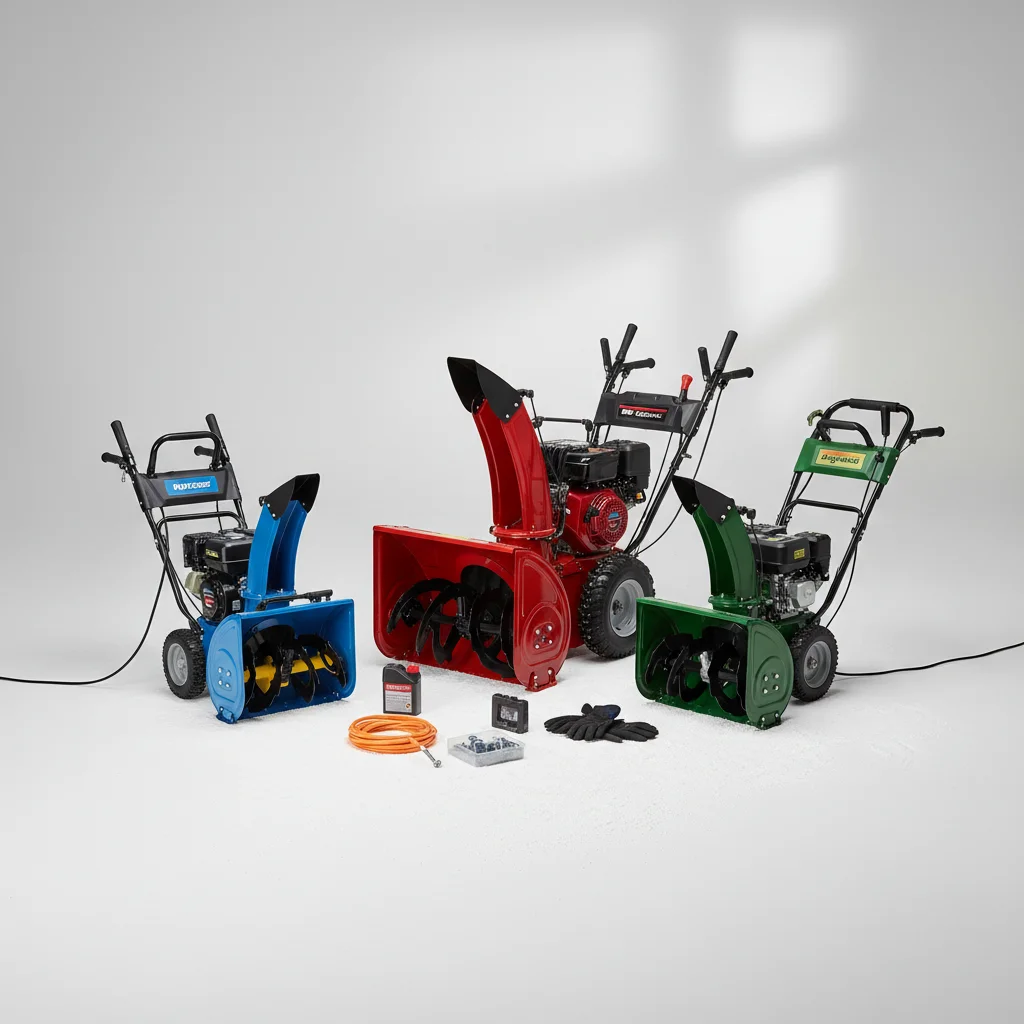
The cost of a snow blower can vary significantly, ranging from approximately $200 for basic electric models to over $4,000 for high-end, commercial-grade gas machines. This wide price range is influenced by factors such as the type of snow blower (electric, single-stage, two-stage, three-stage), engine power, clearing width, features, and brand.
Factors Influencing Snow Blower Price
Several key factors determine the final price tag of a snow blower. Understanding these can help you make an informed decision based on your specific needs and budget. The most significant factors include the type of snow blower, its engine power, and the clearing width. For expert snow blower reviews on this site.
Type of Snow Blower
Electric snow blowers, including corded and cordless battery-powered models, are generally the most affordable, typically ranging from $150 to $800. They are best suited for light to moderate snowfalls and smaller areas. Single-stage gas snow blowers usually fall between $400 and $1,000, offering more power than electric models for slightly heavier snow. Two-stage gas snow blowers, designed for deeper and heavier snow, are priced from $700 to $2,500. For the toughest conditions and large properties, three-stage snow blowers can cost anywhere from $1,500 to $4,500 or more.
Engine Power and Clearing Width
More powerful engines, measured in cubic centimeters (cc) for gas models or volts (V) for battery models, directly correlate with higher prices. A larger engine can handle deeper, wetter snow more efficiently. Similarly, a wider clearing path means fewer passes are needed to clear an area, but it also increases the cost. For instance, a 20-inch clearing width model will be less expensive than a 30-inch model with comparable features.
Additional Features and Brand
|
Our Picks for the Best Snow Blower in 2026
As an Amazon Associate I earn from qualifying purchases.
|
||
| Num | Product | Action |
|---|---|---|
| 1 | Westinghouse WSnow11S AC Corded Electric Snow Shovel, 11-inches Wide with 20 ft. Throwing Distance, Plows 300 lbs/min for Driveway/Steps/Sidewalk/Porch |

|
| 2 | Westinghouse WSnow13S AC Corded Electric Snow Shovel, 13-inches Wide with 20 ft. Throwing Distance, Plows 300 lbs/min for Driveway/Steps/Sidewalk/Porch |
|
| 3 | VOLTASK Cordless Snow Shovel, 48V | 13.5-Inch Cordless Snow Blower, Battery Snow Blower with Directional Plate (2 * 24V Battery & Dual Quick Charger Included) |
|
| 4 | SuperHandy Electric Snow Thrower Adjustable Angle 17" Clearing Width 5.7" Intake Height 23' ft Throw Curved Serrated Blade 48V-2Ah Battery Portable Wheels Easy Maneuver Safety Switches Comfort Handle |
|
| 5 | EGO Power+ Electric Snow Shovel Attachment, Use with Cordless Power Head Multi-Head System, Battery, Charger and Power Head Not Included - SSA1200 |
|
| 6 | SuperHandy Electric Snow Thrower Walk-Behind Blower Corded AC 120V 15A 18 x 10 Inch Clearing Path 25 Feet Throwing Distance 720 lbs/Min LED Headlights for Driveway Walking Path Yards |
|
| 7 | Cordless Snow Blower(No Battery), Compatible with Dewalt 20V Max Battery, 20" Brushless Snow Thrower with Directional Plate & LED Lights, Electric Snow Blower Ideal for Walkways and Driveways |
|
| 8 | EWORK Corded Snow Shovel 11-Inch 1200W 10A Powerful Electric Snow Shovels, 6-Inch Clearing Depth, 23-Foot Max Throw Distance, Power Snow Blower for Driveway, Steps, Sidewalk, Porch |
|
| 9 | Brushless Cordless Electric Snow Shovel for use with Makita 21V Battery, 12” Snow Thrower with Adjustable Direction, Lightweight Snow Removal Tool for Driveway,Patio,Walkways |
|
| 10 | EGO Power+ SNT2110 Peak Power 21-Inch 56-Volt Cordless Snow Blower with Steel Auger Battery and Charger Not Included,Black |
|
Advanced features like electric start, heated handgrips, power steering, headlights, and self-propelled drive systems add to the overall cost. Premium brands known for durability and performance, such as Honda, Ariens, and Toro, often have higher price points compared to entry-level brands. While the initial investment might be higher, these brands often offer better longevity and reliability.
- Electric Start: Eliminates manual pull-starting.
- Heated Handgrips: Provides comfort in cold weather.
- Power Steering: Makes turning and maneuvering easier.
- Headlights: Improves visibility during early morning or late evening use.
- Self-Propelled Drive: Reduces physical effort by moving the machine forward.
Cost of Ownership Beyond Purchase Price
Beyond the initial purchase, consider the long-term cost of ownership. For gas snow blowers, this includes fuel, oil, spark plugs, and occasional maintenance parts like shear pins and belts. Electric models have lower running costs but may require battery replacements for cordless versions, which can be a significant expense. Always factor in potential repair costs and the availability of parts for your chosen model.
For a reliable and powerful two-stage option, consider the. If you’re looking for a more compact and eco-friendly solution, theoffers excellent performance for smaller driveways.
Making the Right Investment
To determine the best snow blower for your budget, assess your typical snowfall amounts, the size and type of your clearing area (driveway, sidewalks, deck), and your physical capabilities. Investing in a snow blower that is slightly more powerful than you think you need can save you frustration and effort during unexpectedly heavy snowfalls. While a higher price often indicates better features and durability, there’s a suitable option for nearly every budget and need.
