Winter’s grip often brings heavy snowfall, turning a picturesque landscape into a daunting task for homeowners. For many, a snow blower is an indispensable tool, but nothing halts snow clearing faster than a broken shear pin. If your snow blower’s auger suddenly stops spinning while the engine hums along, chances are you’ve encountered this common issue. Fortunately, replacing a broken shear pin is a straightforward DIY repair that can save you time and money, getting your machine back in action quickly. This comprehensive guide will walk you through everything you need to know, from understanding what shear pins do to a step-by-step replacement process and tips for preventing future breakages.
Understanding Snow Blower Shear Pins
Shear pins are small, yet critically important components designed to protect your snow blower’s more expensive parts. Think of them as sacrificial heroes, engineered to fail before major damage occurs.
Definition and Purpose
Table is empty.A shear pin, sometimes called a shear bolt, is a deliberately weak metal pin that connects your snow blower’s auger (the rotating blades that scoop snow) to its drive shaft. Its primary purpose is to serve as a mechanical fuse. When the auger encounters a hard object that it cannot process—such as a rock, a chunk of ice, or frozen debris—the shear pin is designed to break or “shear.” This controlled breakage disconnects the auger from the drive shaft, allowing the engine and gearbox to continue spinning freely without resistance, thereby preventing significant, costly damage to components like the gearbox, auger shaft, or engine itself.
Types of Shear Pins
While they all serve the same purpose, shear pins can vary. It’s crucial to use the correct type for your specific snow blower model.
- OEM (Original Equipment Manufacturer) Shear Pins: These are recommended as they are specifically designed and tested by your snow blower’s manufacturer to shear at the precise torque required for optimal protection. Using OEM parts ensures the pin has the correct size, strength, and material composition for your machine.
- Universal Shear Pins: Available from third-party retailers, these are designed to fit a range of models. While they might seem convenient, they may not offer the exact strength specifications of OEM pins, potentially leading to premature breakage or, worse, failing to break when needed, thereby causing damage to other parts.
- Material and Fasteners: Most shear pins are made of soft metal alloys. They are typically secured with either a cotter pin (often a “bow tie” style pin) or a nut, depending on the design.
Why Shear Pins Break
Shear pins break for several reasons, mostly related to protecting your machine from undue stress:
- Hitting Hard Objects: This is the most common cause. Encountering rocks, ice chunks, frozen soil, tree branches, or other foreign objects hidden beneath the snow can instantly jam the auger, causing the pin to snap.
- Overloading the Auger: Trying to clear extremely heavy, wet, or densely packed snow too quickly can put excessive strain on the auger, exceeding the pin’s designed shear strength.
- Elongated Pin Holes: Over time, the holes where the shear pin passes through the auger and shaft can become elongated or egg-shaped due to repeated stress. This allows the auger to “bang” back and forth against the pin, wearing it down and causing premature failure even without hitting a hard object.
- Incorrect Shear Pin Size/Type: Using a shear pin that is too small, too large, or made of a material with different tensile strength than recommended can lead to frequent breakages or, conversely, prevent it from breaking when it should, transferring the impact to the gearbox.
- Over-tightening: If the shear pin is secured with a nut, over-tightening it can stretch or stress the soft metal, making it weaker and prone to breaking prematurely.
Signs of a Broken Shear Pin
Recognizing a broken shear pin is usually straightforward:
- Auger Not Spinning: The most obvious sign is when your snow blower’s engine is running, but the augers are not rotating or throwing snow.
- Free-Spinning Auger: You can easily turn the auger by hand when the engine is off and the spark plug is disconnected, indicating it’s no longer connected to the drive shaft.
- Uneven Snow Clearing: If only one side of a two-stage auger is spinning, or snow is building up on one side of the housing, it indicates a broken pin on the non-spinning side.
- Missing or Visible Breakage: A quick visual inspection of the auger shaft will reveal a missing pin or broken fragments in the shear pin holes.
Essential Tools and Replacement Parts
Before you begin the repair, gather all necessary tools and ensure you have the correct replacement parts. Being prepared will make the process smoother and safer.
Tools Needed
- Replacement Shear Pins and Cotter Pins/Nuts: Always have a supply of OEM-recommended shear pins specific to your snow blower’s make and model. Many replacement kits include both the pin and the securing cotter pin or nut.
- Work Gloves: Essential for protecting your hands from sharp edges, cold metal, and potential pinching hazards.
- Adjustable Wrench or Socket Set: Needed to remove any existing nuts on the shear pins and to tighten new ones if your shear pins are secured with nuts.
- Small Rubber Mallet or Hammer: Useful for gently tapping out stubborn broken pin fragments or to slightly adjust the auger for alignment.
- Punch Tool or Thin Screwdriver/Nail: To push out any remaining pieces of a broken shear pin stuck in the auger or shaft holes.
- Flashlight (Optional but Recommended): To help illuminate the auger area and identify broken pin fragments or align holes, especially in dim conditions.
- Penetrating Oil (Optional): If corrosion or rust has seized a broken pin fragment, penetrating oil can help loosen it.
- Clean-out Tool or Broom Handle: Crucial for safely removing any debris lodged in the auger housing. Never use your hands.
Choosing the Right Shear Pins
Using the correct shear pin is paramount for both the safety of your machine and yourself.
- Consult Your Owner’s Manual: This is the most reliable source to find the exact part number and specifications for your snow blower’s shear pins.
- OEM is Best: Opt for genuine OEM replacement parts. They are engineered to the precise breaking strength required to protect your gearbox and engine without premature failure.
- Avoid Standard Bolts: Never use a standard bolt as a substitute for a shear pin. Standard bolts are designed to be strong and resist shearing. If a standard bolt is used, it will not break when the auger hits an obstruction, transferring the force instead to the gearbox or engine, leading to very expensive repairs.
- Have Spares: Keep several spare shear pin kits on hand. Shear pins are designed to break, and having replacements readily available will prevent downtime during heavy snowfall.
Step-by-Step DIY Shear Pin Replacement
Replacing a broken shear pin is a straightforward process that typically takes only a few minutes. Follow these steps carefully to ensure a safe and effective repair.
Safety First
Before attempting any repairs on your snow blower, always prioritize safety.
- Turn Off the Engine: Ensure the snow blower’s engine is completely off.
- Remove the Ignition Key (if applicable): On models with a key, remove it to prevent accidental starting.
- Disconnect the Spark Plug Wire: This is a crucial safety step. Pull the spark plug boot straight off the spark plug and tuck it away from the plug so it cannot accidentally reconnect. This prevents the engine from starting unexpectedly while your hands are near the auger assembly, which could cause serious injury.
- Wait for Moving Parts to Stop: Allow all moving parts, including the auger and impeller, to come to a complete stop before proceeding.
- Wear Protective Gear: Always wear sturdy work gloves to protect your hands.
Clearing Obstructions
If your shear pin broke due to hitting debris, you’ll need to clear the obstruction first.
- Inspect the Auger Housing: Look inside the auger housing for any pieces of ice, rocks, sticks, or other debris that might have caused the pin to break.
- Use a Clean-Out Tool: Crucially, never use your hands to remove debris from the auger housing. Use the clean-out tool provided with your snow blower (often attached to the machine) or a sturdy broom handle. This prevents the risk of serious injury if the auger were to spring forward after the obstruction is cleared.
- Inspect Auger Blades: While clearing, check for any dents or bends in the auger blades that might have occurred from the impact.
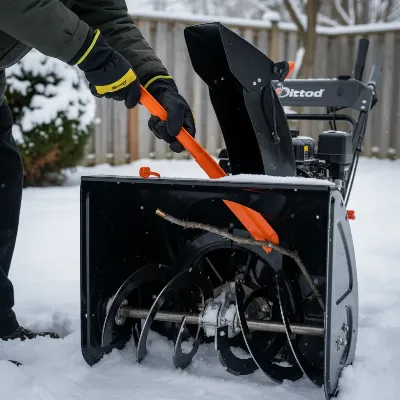 A person safely clearing a snow blower auger housing with a clean-out tool, emphasizing safety gear and caution.
Removing the Broken Pin
Once the area is clear and safe, you can remove the remnants of the broken shear pin.
- Locate the Broken Pin: Identify the shear pin holes in the center of each auger section. There will be a hole in the auger blade hub and a matching hole in the auger shaft. If the pin is broken, these holes will likely not be aligned.
- Remove Fragments:
- Loose Fragments: Often, when a pin breaks, half of it falls out, and the other half remains lodged.
- Stuck Fragments: If pieces are still stuck, you’ll need to push them out. Rotate the auger by hand until the remaining fragment is visible and accessible. Use a punch tool, a thin screwdriver, or even a nail (smaller in diameter than the pin) and a hammer to gently tap out the broken piece.
- Rust/Corrosion: If rust is making it difficult, apply some penetrating oil and let it sit for a few minutes before trying again.
- Clean the Pin Holes: Ensure the pinholes are clear of any debris or rust to allow the new pin to slide in smoothly.
Aligning the Auger and Shaft
For the new shear pin to be installed, the holes in the auger and the auger shaft must perfectly align.
- Manually Rotate the Auger: Gently turn the auger by hand. You may need to wiggle it slightly. As you rotate, observe the holes in the auger hub and the internal shaft.
- Achieve Perfect Alignment: Continue turning until the holes in the auger and the shaft line up perfectly. A flashlight can be very helpful here to confirm alignment. If the auger is stiff due to rust, penetrating oil can help, or a light tap with a rubber mallet.
Installing the New Shear Pin
With the holes aligned, it’s time to insert the replacement.
- Insert the New Shear Pin: Slide the new shear pin through the aligned holes in both the auger and the shaft. It should slide in without excessive force.
- Secure the Pin:
- Cotter Pin: If your shear pin uses a cotter pin (often a “bow tie” style), push it through the small hole at the end of the shear pin to secure it in place.
- Nut: If your shear pin is a shear bolt with a threaded end, attach the corresponding nut. Tighten it securely, but do not overtighten. Overtightening can stress the pin and cause it to fail prematurely. There should be a slight amount of play, allowing the auger to wiggle slightly, while the nut remains tight against its shoulder or the shaft.
- Repeat for All Augers: Most two-stage snow blowers have two auger sections, each requiring its own shear pin. Ensure both are checked and replaced if necessary.
Testing the Repair
Before reconnecting the spark plug and starting the engine, perform a manual check.
- Manual Rotation Check: With the spark plug still disconnected, manually rotate the auger blades by hand. They should now turn with the auger shaft, indicating a solid connection. Ensure they spin freely and that the new pins are properly seated.
- Reconnect Spark Plug: Once you’re confident in the repair, reconnect the spark plug wire firmly to the spark plug.
- Start and Test: Start the snow blower and engage the auger. Listen for any unusual noises and visually confirm that the augers are spinning and throwing snow effectively.
Preventing Future Shear Pin Breakage
While shear pins are designed to break, frequent replacements can be frustrating. Adopting good practices and regular maintenance can significantly reduce the likelihood of repeated breakages.
Pre-Season Checks
- Inspect Shear Pins: Before the first snowfall, inspect your shear pins for any signs of wear, bending, or damage. Replace any pins that look compromised.
- Check Pin Holes: Examine the holes in the auger and shaft for elongation or irregular shapes. If they are significantly worn, it might be worth considering replacing the auger or having it professionally repaired to prevent consistent shear pin failures.
- Lubricate: A little anti-seize compound applied to the shear pin before installation can help prevent it from corroding and getting stuck, making future replacements easier.
Operational Best Practices
- Survey the Area: Before you start clearing snow, walk through the area and remove any potential obstructions like rocks, garden hoses, toys, doormats, or hidden debris. This is the most effective way to prevent impacts.
- Pace Yourself: Avoid trying to clear excessively deep or heavy snow too quickly. Take smaller passes, allowing the snow blower to work efficiently without overloading the augers.
- Be Aware of Ice: Wet snow often creates layers of ice underneath, especially after snow plows have passed. These hidden ice chunks are notorious for breaking shear pins.
- Use the Right Machine for the Job: Ensure your snow blower is suited for the typical snow conditions and area size you clear. Pushing a single-stage machine beyond its limits in heavy, wet snow will inevitably lead to more shear pin issues.
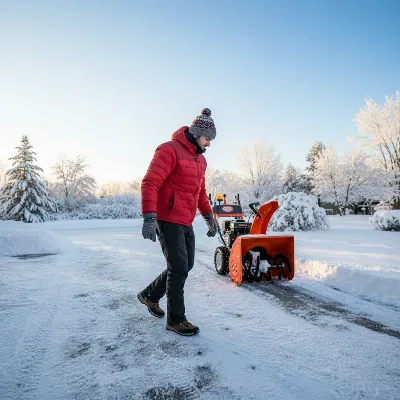 A person carefully surveying a snowy driveway before using a snow blower, highlighting proactive prevention of shear pin breakage.
Proper Maintenance
- Regular Cleaning: After each use, especially when clearing wet or slushy snow, clean out the auger housing thoroughly to prevent ice and snow buildup from freezing and becoming an obstruction.
- Store Spares: Always keep a few sets of the correct OEM shear pins in your workshop or garage so you’re ready for immediate replacement when needed.
Common Mistakes to Avoid
Even with the best intentions, certain errors can undermine your shear pin replacement efforts or lead to bigger problems down the line.
- Using Standard Bolts: As mentioned, this is the most dangerous mistake. A standard bolt won’t shear, transferring the destructive force directly to your gearbox or engine.
- Ignoring Safety Precautions: Failing to disconnect the spark plug wire can lead to accidental engine startup and severe injury.
- Using Hands to Clear Jams: Never reach into the auger housing with your hands, even if the engine is off and the spark plug is disconnected. Stored tension can cause the auger to “spring” forward, resulting in serious harm.
- Overtightening the Nut: If your shear pin uses a nut, overtightening it can weaken the pin, causing it to break prematurely.
- Using the Wrong Size Pin: An incorrect shear pin size (too small or too large in diameter or length) can either break too easily or not at all, both leading to issues. Always refer to your manual for the correct part.
- Ignoring Elongated Holes: If the pin holes are worn, simply replacing the pin without addressing the worn holes will likely result in continued premature shear pin breakage.
Conclusion
A broken shear pin on your snow blower is an inevitable part of winter maintenance, but it doesn’t have to be a major setback. By understanding the purpose of these small yet vital components, having the right tools on hand, and following a few simple steps, you can quickly and safely replace a broken shear pin yourself. Moreover, by adopting proactive measures such as surveying your clearing area and performing regular checks, you can significantly reduce the frequency of future breakages, extending the life of your snow blower and ensuring you’re always ready to tackle whatever winter throws your way. What other proactive maintenance tasks do you prioritize to keep your snow blower running smoothly all season?
Frequently Asked Questions
What exactly is a snow blower shear pin and why is it important?
A snow blower shear pin is a safety device, essentially a small bolt, designed to break when the auger encounters an obstruction. This controlled breakage protects more expensive components like the gearbox and engine from damage, acting as a sacrificial part. Its importance lies in preventing costly repairs to the main drive system.
How do I know if my snow blower’s shear pin is broken?
The most common sign is when the snow blower’s engine is running, but the auger blades are not spinning and no snow is being thrown. You can also manually turn the auger by hand (with the engine off and spark plug disconnected); if it spins freely, the shear pin is likely broken.
Can I use a regular bolt if I don’t have a specific shear pin?
No, absolutely not. Regular bolts are designed for strength and will not break under impact. Using a standard bolt instead of a shear pin will transfer the force of an obstruction directly to the gearbox or engine, causing severe and expensive damage to your snow blower. Always use OEM-recommended shear pins.
How often should I check or replace my snow blower shear pins?
You should visually inspect your shear pins before each snow clearing season and periodically during heavy snowfall. Replace them immediately upon breakage. It’s also a good practice to keep several spare shear pin kits on hand to avoid downtime during a snowstorm.
What causes shear pins to break frequently?
Frequent shear pin breakage can be caused by repeatedly hitting hidden objects, clearing heavy snow too quickly, using incorrect shear pin sizes, or worn/elongated pin holes in the auger or shaft. Regularly surveying your clearing area and proper maintenance can help mitigate these issues.
How do I ensure I get the correct replacement shear pin for my snow blower?
The best way to ensure you get the correct shear pin is to consult your snow blower’s owner’s manual for the exact part number. Alternatively, you can typically find model-specific shear pins from your Snow Blower’s manufacturer or authorized dealers. Using OEM parts is highly recommended.