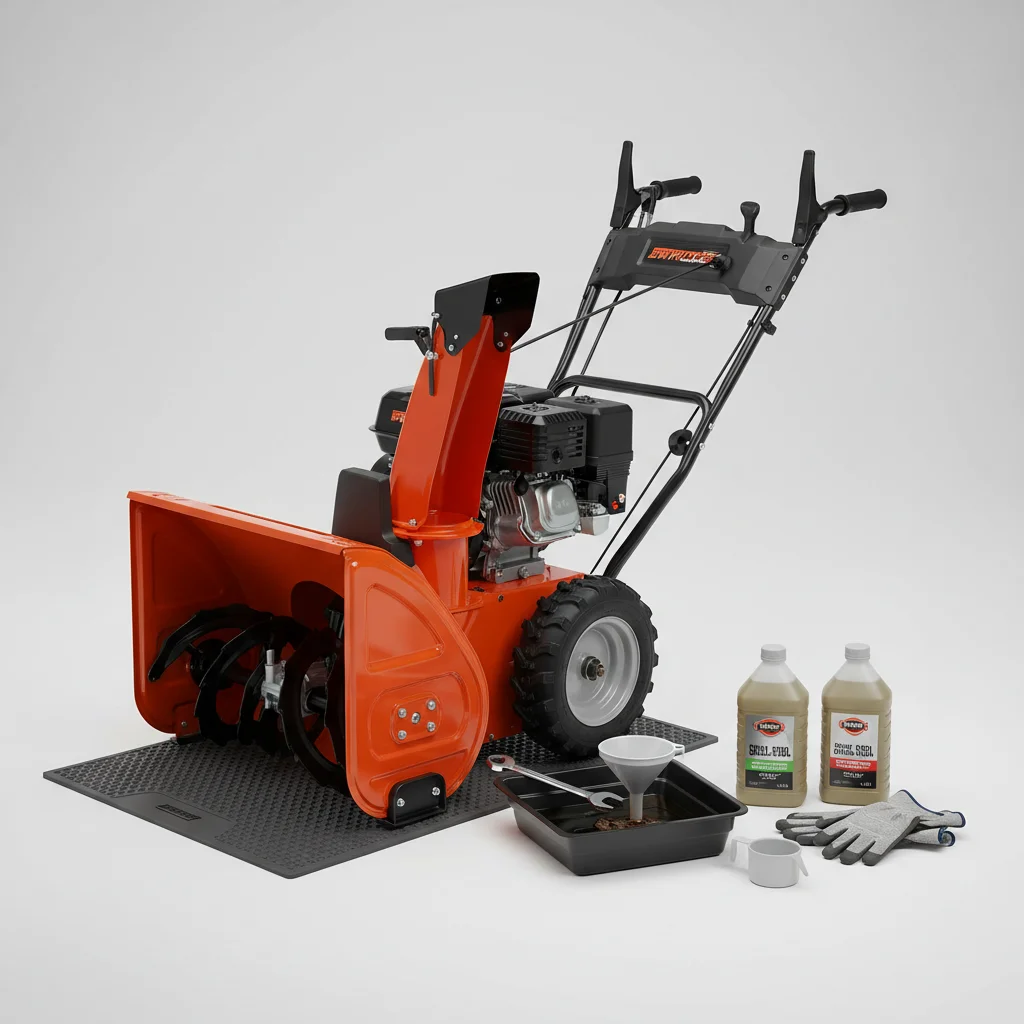
Changing your snow blower oil is a crucial maintenance task that should be performed annually, or after every 25-50 hours of operation, to ensure optimal performance and extend the life of your machine. This simple DIY guide will walk you through the process, which typically takes about 20-30 minutes to complete.
Gather Your Tools and Supplies
Before you begin, make sure you have all the necessary items on hand. You’ll need a wrench or socket set, an oil drain pan, a funnel, a rag, and the correct type and amount of new engine oil. Consult your snow blower’s owner’s manual for the specific oil type and capacity recommended for your model. Most snow blowers use SAE 5W-30 or 10W-30 oil, especially in colder climates.
Prepare Your Snow Blower for the Oil Change
To make the oil change easier and safer, run your snow blower for a few minutes to warm up the engine. Warm oil flows more easily, ensuring a more complete drain. Once warmed, turn off the engine, disconnect the spark plug wire to prevent accidental starting, and position the snow blower on a level surface. Place the oil drain pan directly beneath the oil drain plug, which is usually located at the bottom of the engine block.
Drain the Old Oil
Using your wrench or socket, carefully remove the oil drain plug. Allow all the old oil to drain completely into the pan. This may take several minutes. Once the oil flow has slowed to a drip, tilt the snow blower slightly to ensure every last drop is removed. Be mindful of any hot oil. Once drained, clean the drain plug and its surrounding area, then reinsert and tighten the drain plug securely. Do not overtighten.
Add New Engine Oil
|
Our Picks for the Best Snow Blower in 2026
As an Amazon Associate I earn from qualifying purchases.
|
||
| Num | Product | Action |
|---|---|---|
| 1 | Brushless Cordless Electric Snow Shovel for use with Makita 21V Battery, 12” Snow Thrower with Adjustable Direction, Lightweight Snow Removal Tool for Driveway,Patio,Walkways |

|
| 2 | VOLTASK Cordless Snow Shovel, 48V | 13.5-Inch Cordless Snow Blower, Battery Snow Blower with Directional Plate (2 * 24V Battery & Dual Quick Charger Included) |
|
| 3 | SuperHandy Electric Snow Thrower Walk-Behind Blower Corded AC 120V 15A 18 x 10 Inch Clearing Path 25 Feet Throwing Distance 720 lbs/Min LED Headlights for Driveway Walking Path Yards |
|
| 4 | EGO Power+ SNT2110 Peak Power 21-Inch 56-Volt Cordless Snow Blower with Steel Auger Battery and Charger Not Included,Black |
|
| 5 | EGO Power+ Electric Snow Shovel Attachment, Use with Cordless Power Head Multi-Head System, Battery, Charger and Power Head Not Included - SSA1200 |
|
| 6 | Westinghouse WSnow11S AC Corded Electric Snow Shovel, 11-inches Wide with 20 ft. Throwing Distance, Plows 300 lbs/min for Driveway/Steps/Sidewalk/Porch |
|
| 7 | SuperHandy Electric Snow Thrower Adjustable Angle 17" Clearing Width 5.7" Intake Height 23' ft Throw Curved Serrated Blade 48V-2Ah Battery Portable Wheels Easy Maneuver Safety Switches Comfort Handle |
|
| 8 | EWORK Corded Snow Shovel 11-Inch 1200W 10A Powerful Electric Snow Shovels, 6-Inch Clearing Depth, 23-Foot Max Throw Distance, Power Snow Blower for Driveway, Steps, Sidewalk, Porch |
|
| 9 | Westinghouse WSnow13S AC Corded Electric Snow Shovel, 13-inches Wide with 20 ft. Throwing Distance, Plows 300 lbs/min for Driveway/Steps/Sidewalk/Porch |
|
| 10 | Cordless Snow Blower(No Battery), Compatible with Dewalt 20V Max Battery, 20" Brushless Snow Thrower with Directional Plate & LED Lights, Electric Snow Blower Ideal for Walkways and Driveways |
|
With the drain plug resecured, it’s time to add the fresh oil. Locate the oil fill cap, usually marked with an oil can symbol. Remove the cap and insert your funnel into the opening. Slowly pour the recommended amount of new engine oil into the fill port. Regularly check the dipstick to avoid overfilling. The oil level should be between the ‘add’ and ‘full’ marks. Once filled, remove the funnel, replace the oil fill cap, and reconnect the spark plug wire.
Dispose of Used Oil Responsibly
Never pour used engine oil down the drain or into the ground. It is a hazardous waste and must be disposed of properly. Many auto parts stores, service stations, and municipal recycling centers accept used motor oil for recycling. Transfer the old oil from your drain pan into a sealable container for transport to a recycling facility.
- Always consult your owner’s manual for specific instructions.
- Use only the recommended type and viscosity of oil.
- Ensure the engine is warm for a more complete drain.
- Never overfill the oil reservoir.
- Dispose of used oil responsibly at a designated facility.
Final Checks and Tips
After changing the oil, start your snow blower and let it run for a few minutes. Check for any leaks around the drain plug and oil fill cap. Turn off the engine and recheck the oil level on the dipstick. Adjust if necessary. Regular oil changes are a small investment that can prevent costly repairs and keep your snow blower running smoothly for many winters to come. Consider keeping a log of your maintenance activities to stay on top of your schedule.
