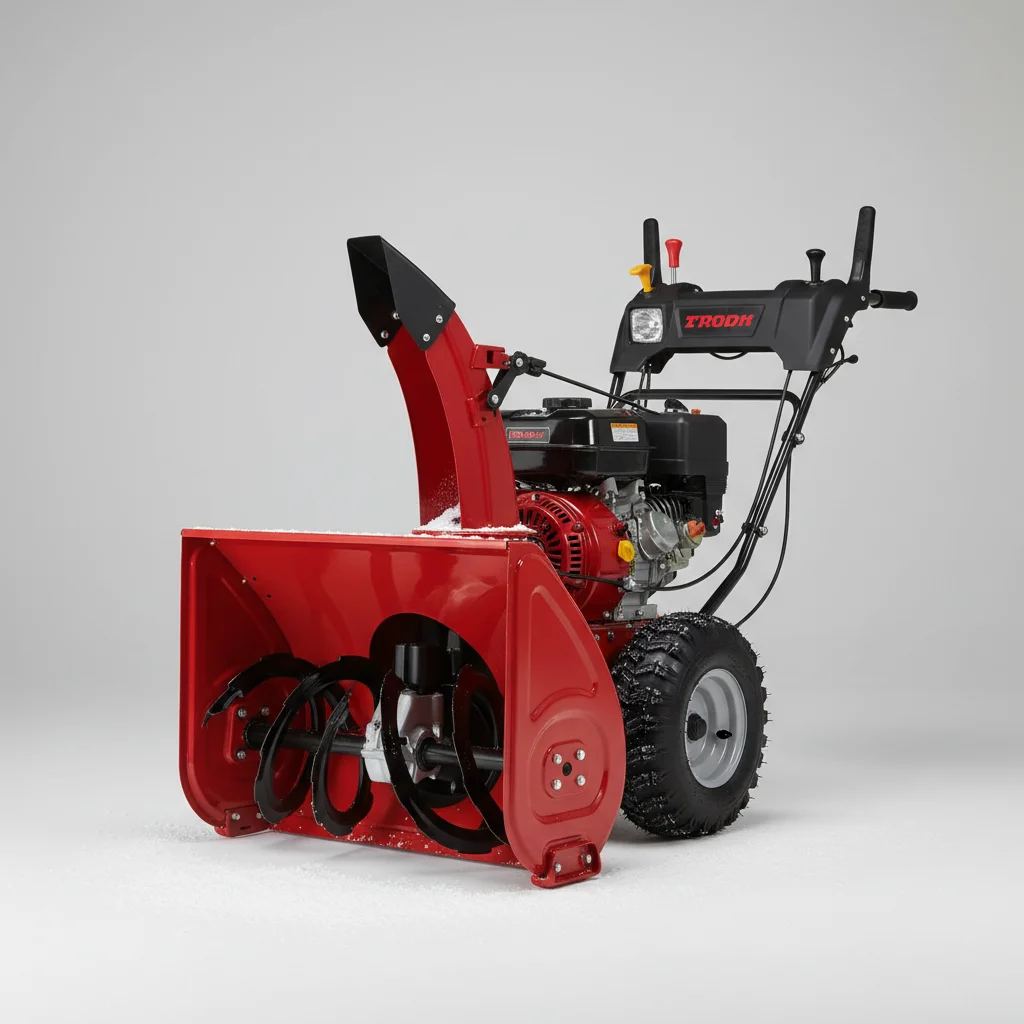
Choosing the right snow blower for a paved driveway involves considering several key factors, primarily the type of snow you typically receive, the size of your driveway, and your budget. For most paved driveways, a single-stage or two-stage snow blower will be the most suitable option, with single-stage models being ideal for lighter, less frequent snowfalls and two-stage models excelling in heavier, deeper snow conditions.
Understanding Single-Stage Snow Blowers for Paved Surfaces
Single-stage snow blowers are generally lighter, more compact, and more affordable, making them an excellent choice for smaller paved driveways with light to moderate snow accumulation, typically up to 8 inches. These machines use a rubber auger that contacts the ground, scooping up snow and propelling it out of the chute in one motion. This direct contact with the pavement helps to clear snow down to the surface, leaving a cleaner finish than most two-stage models. However, their rubber augers are not designed for gravel or uneven surfaces, and they can struggle with very wet or icy snow.
Two-Stage Snow Blowers: Power and Versatility for Paved Driveways
Two-stage snow blowers are more powerful and versatile, making them suitable for larger paved driveways or areas that experience heavy, deep, or icy snowfalls, often exceeding 8 inches. These machines feature a metal auger that collects the snow and feeds it into an impeller, which then forcefully expels it through the chute. Unlike single-stage models, the auger on a two-stage snow blower does not typically touch the ground, relying on adjustable skid shoes to maintain a small gap. This design prevents damage to both the machine and the paved surface, while still providing excellent clearing capabilities. They are also self-propelled, reducing user effort.
Key Considerations When Selecting Your Snow Blower
|
Our Picks for the Best Snow Blower in 2026
As an Amazon Associate I earn from qualifying purchases.
|
||
| Num | Product | Action |
|---|---|---|
| 1 | EGO Power+ SNT2110 Peak Power 21-Inch 56-Volt Cordless Snow Blower with Steel Auger Battery and Charger Not Included,Black |

|
| 2 | SuperHandy Electric Snow Thrower Walk-Behind Blower Corded AC 120V 15A 18 x 10 Inch Clearing Path 25 Feet Throwing Distance 720 lbs/Min LED Headlights for Driveway Walking Path Yards |
|
| 3 | Brushless Cordless Electric Snow Shovel for use with Makita 21V Battery, 12” Snow Thrower with Adjustable Direction, Lightweight Snow Removal Tool for Driveway,Patio,Walkways |
|
| 4 | EGO Power+ Electric Snow Shovel Attachment, Use with Cordless Power Head Multi-Head System, Battery, Charger and Power Head Not Included - SSA1200 |
|
| 5 | SuperHandy Electric Snow Thrower Adjustable Angle 17" Clearing Width 5.7" Intake Height 23' ft Throw Curved Serrated Blade 48V-2Ah Battery Portable Wheels Easy Maneuver Safety Switches Comfort Handle |
|
| 6 | VOLTASK Cordless Snow Shovel, 48V | 13.5-Inch Cordless Snow Blower, Battery Snow Blower with Directional Plate (2 * 24V Battery & Dual Quick Charger Included) |
|
| 7 | Westinghouse WSnow13S AC Corded Electric Snow Shovel, 13-inches Wide with 20 ft. Throwing Distance, Plows 300 lbs/min for Driveway/Steps/Sidewalk/Porch |
|
| 8 | Cordless Snow Blower(No Battery), Compatible with Dewalt 20V Max Battery, 20" Brushless Snow Thrower with Directional Plate & LED Lights, Electric Snow Blower Ideal for Walkways and Driveways |
|
| 9 | EWORK Corded Snow Shovel 11-Inch 1200W 10A Powerful Electric Snow Shovels, 6-Inch Clearing Depth, 23-Foot Max Throw Distance, Power Snow Blower for Driveway, Steps, Sidewalk, Porch |
|
| 10 | Westinghouse WSnow11S AC Corded Electric Snow Shovel, 11-inches Wide with 20 ft. Throwing Distance, Plows 300 lbs/min for Driveway/Steps/Sidewalk/Porch |
|
When making your decision, consider the average snowfall in your region. If you frequently get more than 8 inches of snow, a two-stage model will save you significant time and effort. For lighter, fluffy snow, a single-stage might be sufficient. The size of your driveway is also crucial; a larger driveway warrants a wider clearing path and a more powerful engine, typically found in two-stage models. Finally, think about storage space and maintenance requirements. Electric single-stage blowers are easier to store and require less maintenance than their gas-powered counterparts.
- Snow Depth: Single-stage for up to 8 inches, two-stage for over 8 inches.
- Driveway Size: Small to medium for single-stage, large for two-stage.
- Snow Type: Light/fluffy for single-stage, heavy/wet/icy for two-stage.
- Power Source: Electric for convenience, gas for power and run time.
- Budget: Single-stage is generally more affordable.
Engine Power and Clearing Width for Optimal Performance
For paved driveways, matching the engine power and clearing width to your specific needs is essential for efficient snow removal. A wider clearing width means fewer passes, saving you time, but also requires a more powerful engine to handle the increased volume of snow. For single-stage electric models, look for at least a 15-amp motor or 80V battery system with a clearing width of 18-21 inches for typical suburban driveways. Gas-powered single-stage units often have engines around 200cc. For two-stage models, engines ranging from 200cc to 300cc are common, offering clearing widths from 24 to 30 inches, suitable for larger properties and heavier snow.
Maintenance Tips for Paved Driveway Snow Blowers
Proper maintenance ensures your snow blower performs optimally and lasts for many seasons. For single-stage models, regularly inspect the rubber auger for wear and tear, replacing it when it becomes worn to ensure effective clearing down to the pavement. For two-stage models, check the skid shoes and scraper blade for wear; these components protect your driveway and the auger housing. Always ensure the oil is changed according to the manufacturer’s recommendations for gas models, and keep the fuel fresh with a stabilizer. After each use, clear any remaining snow and debris from the auger and chute to prevent freezing and blockages.

Living in a place with frequent, moderate snowfalls, I needed something reliable for my paved driveway. The advice about single-stage blowers being good for up to 8 inches was spot on. My new machine makes quick work of the snow, and I love how compact it is for storage in my garage.
I’ve got a pretty long paved driveway and usually get about 6-8 inches of snow here in Ohio. My old single-stage just wasn’t cutting it anymore. After reading up on the differences, I went with a two-stage model and it’s been a game changer. It handles the heavier, deeper snow so much better than I expected.
I bought a single-stage for my average-sized paved driveway, and it works okay for light snow. My main issue is when we get that really wet, heavy stuff, even if it’s only a few inches. It tends to clog up the chute pretty easily, and I have to stop and clear it out a lot. Wish I’d considered that more before buying.
I was really torn between a single-stage and a two-stage for my smaller paved driveway. We don’t get super heavy snow often, maybe 4-5 inches at most. I ended up getting a single-stage, and it’s perfect for what I need. It clears right down to the pavement, which is awesome, and it’s so much easier to maneuver than the big ones.