The crisp air of winter heralds heavy snowfall, a challenging season for driveways and walkways alike. When your trusty snow blower sputters, stalls, or refuses to start, a dirty carburetor is often the culprit behind this seasonal frustration. This vital component, responsible for precisely mixing fuel and air for your engine, can become clogged with varnish and debris from old gasoline, leading to a range of performance issues. Don’t let a gummed-up carburetor leave you out in the cold; this comprehensive DIY guide will walk you through the essential steps to clean your snow blower carburetor quickly and efficiently, restoring its power and ensuring it’s ready to tackle even the heaviest drifts. With a few basic tools and a bit of patience, you can bring your snow blower back to life and reclaim your winter mornings.
Understanding Your Snow Blower Carburetor
A snow blower’s carburetor is the heart of its engine’s fuel system, meticulously blending gasoline with air to create the combustible mixture needed for operation. This critical process ensures smooth starting, consistent power, and efficient fuel consumption. However, over time, this precision instrument can fall victim to the very fuel it processes.
Why Carburetors Get Dirty
The primary reason a snow blower carburetor becomes dirty is the breakdown of fuel, especially during periods of inactivity. Modern gasoline, particularly ethanol-blended varieties, can degrade rapidly, attracting moisture and forming sticky varnish and gum deposits. These residues clog the tiny passages and jets within the carburetor, obstructing the flow of fuel and air. Storing your snow blower for extended periods, especially in varying temperatures, accelerates this process, turning what was once liquid fuel into a troublesome sludge that prevents your engine from running correctly. For more snow blower guides on this site.
Symptoms of a Dirty Carburetor
Recognizing the signs of a clogged carburetor can save you time and frustration. If your snow blower exhibits any of these symptoms, it’s likely time for a cleaning:
- Difficulty Starting or No Start: The engine turns over but struggles to ignite or won’t fire up at all, indicating a lack of proper fuel delivery.
- Engine Runs Roughly, Sputters, or Surges: The engine speeds up and slows down erratically, or cuts out unexpectedly, a classic sign of inconsistent fuel supply.
- Runs Only on Choke: If your snow blower only operates with the choke engaged, it often means the main jet is partially blocked, and the choke is compensating by restricting airflow.
- Black Smoke from Exhaust: An overly rich fuel-to-air mixture, potentially caused by partial clogs, can lead to dark, sooty exhaust.
- Reduced Performance or Poor Fuel Efficiency: Your snow blower may struggle to throw snow effectively or consume more fuel than usual, signaling the engine isn’t receiving optimal fuel.
Essential Tools and Safety Precautions
Before you embark on cleaning your snow blower’s carburetor, gathering the right tools and prioritizing safety are paramount. A well-prepared workspace ensures a smoother process and minimizes risks.
Tools Needed
|
Our Picks for the Best Snow Blower in 2026
As an Amazon Associate I earn from qualifying purchases.
|
||
| Num | Product | Action |
|---|---|---|
| 1 | EWORK Corded Snow Shovel 11-Inch 1200W 10A Powerful Electric Snow Shovels, 6-Inch Clearing Depth, 23-Foot Max Throw Distance, Power Snow Blower for Driveway, Steps, Sidewalk, Porch |

|
| 2 | SuperHandy Electric Snow Thrower Adjustable Angle 17" Clearing Width 5.7" Intake Height 23' ft Throw Curved Serrated Blade 48V-2Ah Battery Portable Wheels Easy Maneuver Safety Switches Comfort Handle |
|
| 3 | EGO Power+ SNT2110 Peak Power 21-Inch 56-Volt Cordless Snow Blower with Steel Auger Battery and Charger Not Included,Black |
|
| 4 | VOLTASK Cordless Snow Shovel, 48V | 13.5-Inch Cordless Snow Blower, Battery Snow Blower with Directional Plate (2 * 24V Battery & Dual Quick Charger Included) |
|
| 5 | Cordless Snow Blower(No Battery), Compatible with Dewalt 20V Max Battery, 20" Brushless Snow Thrower with Directional Plate & LED Lights, Electric Snow Blower Ideal for Walkways and Driveways |
|
| 6 | SuperHandy Electric Snow Thrower Walk-Behind Blower Corded AC 120V 15A 18 x 10 Inch Clearing Path 25 Feet Throwing Distance 720 lbs/Min LED Headlights for Driveway Walking Path Yards |
|
| 7 | Westinghouse WSnow11S AC Corded Electric Snow Shovel, 11-inches Wide with 20 ft. Throwing Distance, Plows 300 lbs/min for Driveway/Steps/Sidewalk/Porch |
|
| 8 | EGO Power+ Electric Snow Shovel Attachment, Use with Cordless Power Head Multi-Head System, Battery, Charger and Power Head Not Included - SSA1200 |
|
| 9 | Westinghouse WSnow13S AC Corded Electric Snow Shovel, 13-inches Wide with 20 ft. Throwing Distance, Plows 300 lbs/min for Driveway/Steps/Sidewalk/Porch |
|
| 10 | Brushless Cordless Electric Snow Shovel for use with Makita 21V Battery, 12” Snow Thrower with Adjustable Direction, Lightweight Snow Removal Tool for Driveway,Patio,Walkways |
|
You’ll find that most of the tools required are common household items or readily available at a hardware store.
- Screwdrivers: Flat-head and Phillips for various fasteners.
- Socket or Nut Driver Set: Typically 8mm, 10mm, or 1/2-inch sizes for carburetor mounting bolts and bowl screws.
- Needle-Nose Pliers: Useful for disconnecting small hoses and removing pins.
- Carburetor Cleaner Spray: A dedicated carburetor cleaner is crucial. Avoid using brake cleaner, as it may not effectively dissolve fuel varnish and can damage certain components.
- Thin Wire or Small Brushes: Such as a strand from a wire brush, guitar string, or specific jet cleaning wires, to clear tiny passages without damaging them.
- Clean Rags: For wiping parts and soaking up spills.
- Drip Container: To safely collect drained fuel.
- Carburetor Repair Kit (Optional): Contains new gaskets and O-rings, recommended if existing ones are brittle or torn.
- Compressed Air (Optional): For blowing out passages and drying components.
- Ultrasonic Cleaner (Optional): For heavily fouled carburetors, this can be highly effective.
Safety First
Working with fuel and engine components requires diligence. Always prioritize your safety.
- Disconnect Spark Plug Wire: This is non-negotiable. Always remove the spark plug wire to prevent any accidental engine starts while you’re working.
- Work in a Well-Ventilated Area: Gasoline fumes are flammable and harmful. Ensure your workspace is outdoors or very well-ventilated, away from any open flames, sparks, or heat sources.
- Eye Protection: Carburetor cleaner can splash back. Safety goggles are not optional.
- Gloves: Protect your hands from harsh chemicals and fuel.
- Allow Engine to Cool: Ensure the engine is completely cool before starting work to prevent burns.
- Proper Fuel Drainage and Disposal: Have a designated container for old fuel and dispose of it responsibly according to local regulations.
- Consult Owner’s Manual: Your snow blower’s manual provides specific instructions and diagrams for your model. Always refer to it if available.
- Take Photos: As you disassemble, take pictures with your phone. This provides a valuable visual guide for reassembly, especially if it’s your first time.
Step-by-Step Guide to Cleaning Your Snow Blower Carburetor
Cleaning a dirty snow blower carburetor can seem intimidating, but by following these detailed steps, you can tackle the task with confidence and get your machine back in peak condition.
Preparation
Proper preparation is the key to a smooth and safe cleaning process.
- Disconnect the Spark Plug Wire: Locate the spark plug and pull off the rubber boot connected to it. This prevents accidental ignition.
- Drain Fuel: Use a siphon pump or open the fuel tank cap and tilt the snow blower (if safe and stable) to drain all gasoline into an approved container. Next, locate the carburetor’s float bowl (usually at the bottom of the carburetor) and unscrew the drain plug or bowl screw to drain any remaining fuel.
- Clear Your Workspace: Lay down old rags or newspapers to catch any spills. Organize your tools so they are easily accessible.
- Take Reference Photos: Snap pictures of the carburetor from various angles before you start removing components. This will be invaluable during reassembly.
Removal and Disassembly
The specific steps for removing the carburetor can vary slightly by snow blower model, so consult your owner’s manual if needed.
- Access the Carburetor: You may need to remove an engine cover or air filter housing to expose the carburetor. This usually involves unscrewing a few mounting bolts.
- Disconnect Fuel Lines: Identify the fuel line leading to the carburetor. You might need to use pliers to pinch off the fuel line to prevent excessive leakage, then carefully disconnect it. Have your drip container ready.
- Disconnect Primer Line and Linkages: Gently pry off the primer line (a smaller hose) from the carburetor. Detach any throttle or choke linkages that connect the carburetor to the engine controls. Again, take photos!
- Remove Carburetor from Engine: Unscrew the mounting bolts holding the carburetor to the engine. Carefully pull the carburetor away, ensuring no small parts are lost.
- Disassemble the Carburetor: Place the carburetor on a clean work surface with a drip tray underneath.
- Remove the Float Bowl: Unscrew the single bolt or nut at the bottom of the float bowl and carefully remove the bowl. Be mindful of the gasket or O-ring.
- Remove Float and Needle Valve: Use needle-nose pliers to gently slide out the hinge pin that holds the float. Lift the float and the attached metering needle away. Inspect the needle’s rubber tip for wear.
- Remove Main Jet: The main jet is often found threaded inside the emulsion tube at the bottom of the carburetor’s central bore. Use a flat-head screwdriver to carefully unscrew and remove it. Some models may have a second jet.
- Remove Emulsion Tube (if applicable): In some carburetors, the emulsion tube (also called the nozzle) can be pushed out from the venturi side (the carburetor’s throat) using a small screwdriver or pick.
- Remove Gaskets and O-rings: Carefully peel off any gaskets or O-rings around the bowl and other sections. Inspect them for damage and replace them if they appear brittle or torn.
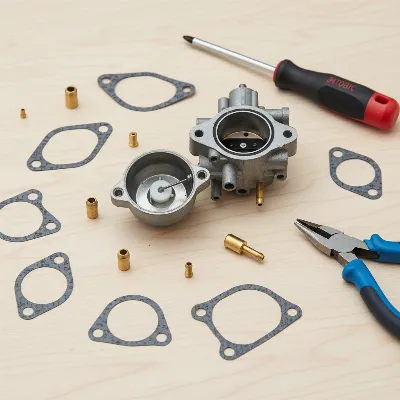 A detailed view of a snow blower carburetor disassembled into its main components for cleaning, laid out on a clean workbench with tools.
Cleaning Process
Now comes the critical part: dissolving the fuel varnish and clearing the clogs.
- Spray Carburetor Cleaner: Generously spray the outside of the carburetor to remove any initial grime. Then, spray the cleaner into every small passage, hole, and orifice you can access. Focus particularly on the main jet, emulsion tube, float area, and the venturi (the air passage in the carburetor body). Do not spray directly onto rubber or plastic parts unless the cleaner specifies it’s safe for them.
- Clear Stubborn Clogs: For the tiny, hard-to-reach holes, especially in the main jet and emulsion tube, use a thin wire or a small brush to gently poke and dislodge any stubborn deposits. Exercise extreme caution here; never use anything that could scratch or widen the precision-machined holes, as this can permanently alter the fuel mixture.
- Soak (Optional): If the carburetor is heavily gummed up, you can soak metal components (excluding any plastic or rubber parts) in a dedicated carburetor cleaning solution (like “Chem-Dip”) for the recommended time (e.g., three hours). An ultrasonic cleaner, if available, can also be highly effective for heavy buildup, running multiple short cycles.
- Rinse and Dry: After cleaning, rinse the metal components with water (if using a soak) and then thoroughly dry all parts. Use compressed air to blow out all passages and ensure no cleaner residue or debris remains. All components must be completely dry before reassembly.
Inspection and Reassembly
Before putting everything back together, a final inspection is crucial.
- Inspect Components: Carefully examine all removed parts. Look for any cracks, corrosion, excessive wear, or deformation on the float, needle tip, O-rings, and gaskets. If any part looks questionable, replace it. A carburetor repair kit often includes new gaskets and O-rings.
- Reassemble the Carburetor: Working in reverse order of disassembly, carefully put the carburetor back together. Refer to your photos frequently.
- Install new gaskets or O-rings if replacing.
- Reinsert the emulsion tube, then thread in the main jet.
- Place the metering needle into its slot and reattach the float with its hinge pin.
- Attach the float bowl, ensuring its gasket or O-ring is properly seated and the bowl screw is tightened securely but not overtightened.
- Reattach to Engine: Mount the carburetor back onto the engine, securing it with its mounting bolts. Reconnect all linkages, the primer line, and the fuel line.
- Reconnect Spark Plug Wire: Once everything is securely reassembled, reconnect the spark plug wire.
- Refuel and Test: Add fresh fuel to the tank. Start your snow blower and test its operation. It may take a few pulls or presses of the primer bulb to get fuel flowing consistently.
Troubleshooting and Common Mistakes to Avoid
Even with the best intentions, cleaning a carburetor can present challenges. Knowing what to look for and what to avoid can prevent further issues.
Troubleshooting After Cleaning
If your snow blower still isn’t running perfectly after cleaning, consider these possibilities:
- No Spark: Double-check that the spark plug wire is securely connected and that your spark plug is clean and functioning correctly.
- Fuel Flow Issues: Ensure the fuel valve is open (if present) and that fuel is indeed flowing from the tank to the carburetor. A clogged fuel filter could still be an issue.
- Air Leaks: A pinched or improperly seated gasket during reassembly can cause air leaks, leading to a lean fuel mixture and rough running.
- Internal Carburetor Damage: If components were severely corroded or damaged by aggressive cleaning, they might need replacement.
- Adjustment Issues: Some carburetors have idle or mixture screws that might need minor adjustments after a
