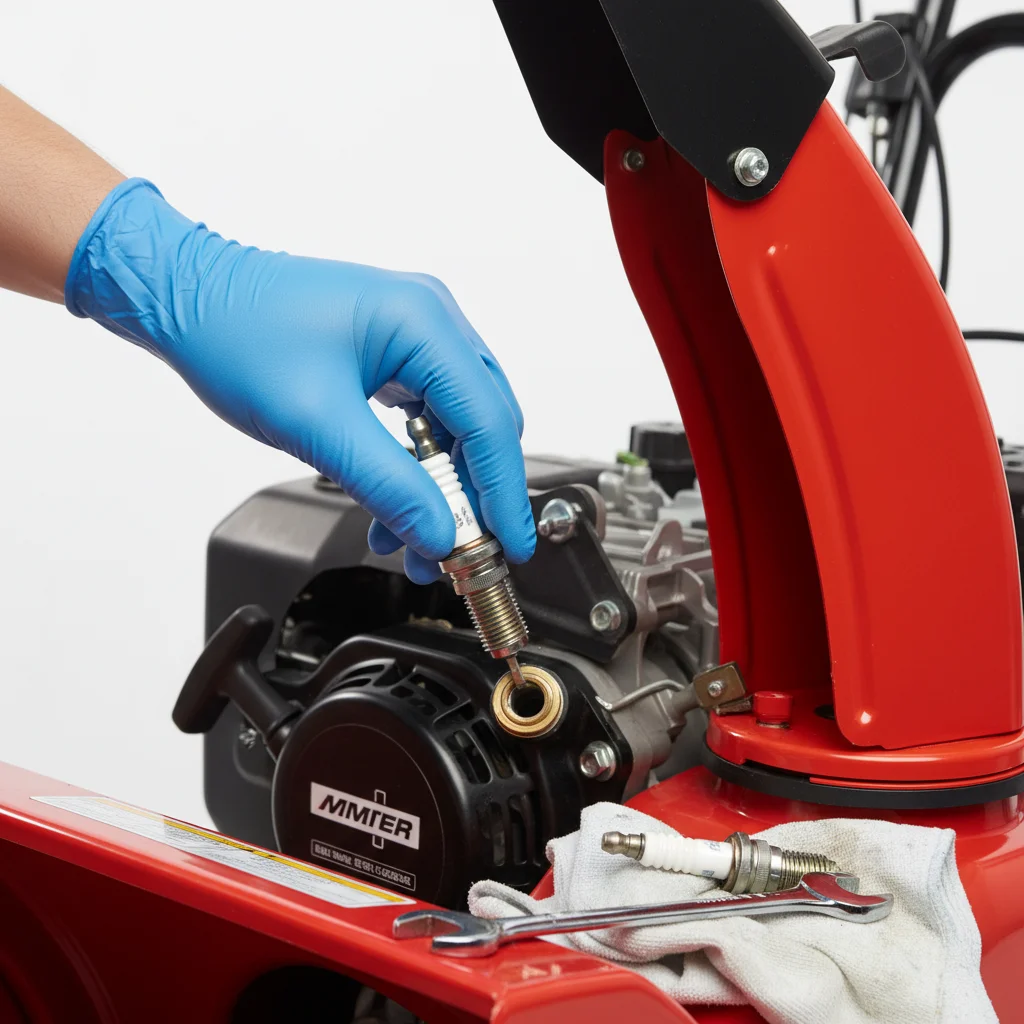
Replacing a snow blower spark plug is a straightforward maintenance task that can significantly improve your machine’s performance and starting reliability. You should aim to replace your spark plug at least once per season, or every 25 hours of operation, to ensure optimal ignition and fuel efficiency. This simple DIY guide will walk you through the process, which typically takes less than 15 minutes.
Why a Healthy Spark Plug Matters for Your Snow Blower
The spark plug is a critical component in your snow blower’s engine, responsible for igniting the air-fuel mixture that powers the machine. Over time, carbon deposits can build up on the spark plug, or the electrode can wear down, leading to a weaker spark. This can result in hard starting, misfires, reduced power, and increased fuel consumption. A new, properly gapped spark plug ensures a strong, consistent spark, promoting efficient combustion and reliable operation, especially in cold weather.
Tools and Materials You’ll Need
Before you begin, gather the necessary tools and materials. Having everything on hand will make the replacement process quick and smooth. You’ll need a new spark plug (check your snow blower’s manual for the correct type and gap specification), a spark plug wrench (often included with your snow blower or available at any auto parts store), a spark plug gapping tool (if your new plug isn’t pre-gapped), and a clean rag. Safety glasses and gloves are also recommended for protection.
- New spark plug (correct model for your snow blower)
- Spark plug wrench or socket
- Spark plug gapping tool
- Clean rag
- Safety glasses and gloves
Step-by-Step Spark Plug Replacement Guide
|
Our Picks for the Best Snow Blower in 2026
As an Amazon Associate I earn from qualifying purchases.
|
||
| Num | Product | Action |
|---|---|---|
| 1 | SuperHandy Electric Snow Thrower Walk-Behind Blower Corded AC 120V 15A 18 x 10 Inch Clearing Path 25 Feet Throwing Distance 720 lbs/Min LED Headlights for Driveway Walking Path Yards |

|
| 2 | EGO Power+ SNT2110 Peak Power 21-Inch 56-Volt Cordless Snow Blower with Steel Auger Battery and Charger Not Included,Black |
|
| 3 | SuperHandy Electric Snow Thrower Adjustable Angle 17" Clearing Width 5.7" Intake Height 23' ft Throw Curved Serrated Blade 48V-2Ah Battery Portable Wheels Easy Maneuver Safety Switches Comfort Handle |
|
| 4 | VOLTASK Cordless Snow Shovel, 48V | 13.5-Inch Cordless Snow Blower, Battery Snow Blower with Directional Plate (2 * 24V Battery & Dual Quick Charger Included) |
|
| 5 | Cordless Snow Blower(No Battery), Compatible with Dewalt 20V Max Battery, 20" Brushless Snow Thrower with Directional Plate & LED Lights, Electric Snow Blower Ideal for Walkways and Driveways |
|
| 6 | EGO Power+ Electric Snow Shovel Attachment, Use with Cordless Power Head Multi-Head System, Battery, Charger and Power Head Not Included - SSA1200 |
|
| 7 | Westinghouse WSnow11S AC Corded Electric Snow Shovel, 11-inches Wide with 20 ft. Throwing Distance, Plows 300 lbs/min for Driveway/Steps/Sidewalk/Porch |
|
| 8 | EWORK Corded Snow Shovel 11-Inch 1200W 10A Powerful Electric Snow Shovels, 6-Inch Clearing Depth, 23-Foot Max Throw Distance, Power Snow Blower for Driveway, Steps, Sidewalk, Porch |
|
| 9 | Brushless Cordless Electric Snow Shovel for use with Makita 21V Battery, 12” Snow Thrower with Adjustable Direction, Lightweight Snow Removal Tool for Driveway,Patio,Walkways |
|
| 10 | Westinghouse WSnow13S AC Corded Electric Snow Shovel, 13-inches Wide with 20 ft. Throwing Distance, Plows 300 lbs/min for Driveway/Steps/Sidewalk/Porch |
|
First, ensure your snow blower is turned off and completely cool. Disconnect the spark plug wire to prevent accidental starting. Locate the spark plug, which is usually on the side of the engine cylinder. Firmly pull the spark plug boot to remove it from the plug. Use your spark plug wrench to loosen the old spark plug by turning it counter-clockwise. Once loose, you can unscrew it by hand and remove it from the engine. Inspect the old plug for signs of wear or fouling; this can offer clues about your engine’s health.
Next, if your new spark plug isn’t pre-gapped, use your gapping tool to set the gap according to your snow blower’s specifications (found in the owner’s manual). Carefully thread the new spark plug into the engine by hand to avoid cross-threading. Once it’s finger-tight, use your spark plug wrench to tighten it an additional 1/2 to 3/4 turn. Do not overtighten, as this can damage the engine head. Finally, firmly push the spark plug boot back onto the new spark plug until it clicks into place. You should feel a secure connection. Your snow blower is now ready for improved performance.
Post-Replacement Check and Maintenance Tips
After replacing the spark plug, start your snow blower to confirm it runs smoothly. You should notice easier starting and potentially more consistent engine performance. To extend the life of your snow blower and its components, consider these additional maintenance tips: regularly check and change the oil, inspect and replace the fuel filter if necessary, and ensure the air filter is clean. Proper storage during the off-season, including fuel stabilization, also plays a crucial role in preventing issues. For high-quality replacement parts, consider checking out.
Regular maintenance, including timely spark plug replacement, is key to ensuring your snow blower is always ready to tackle winter’s challenges. By following this guide, you can confidently perform this essential task yourself, saving time and money. For other essential snow blower parts and accessories, browse the selection at.
