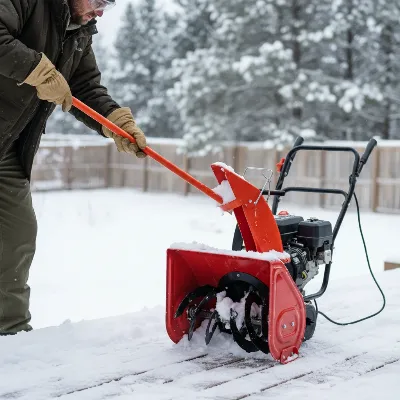
The crisp air of winter often brings with it the unwelcome task of snow removal. For many homeowners, a snow blower is an indispensable tool, transforming hours of back-breaking shoveling into a manageable chore. Yet, a common frustration arises when your trusty machine leaves behind a stubborn, thin layer of snow, denying you that perfectly clear, pavement-level finish. This lingering snow can become an icy hazard, and understanding why it happens is the first step to reclaiming your perfectly cleared paths. Whether it’s a worn-out component, an adjustment issue, or simply the type of snow you’re tackling, achieving a truly clean sweep is within reach with the right knowledge and a few practical steps.
Understanding Why Your Snow Blower Leaves Snow Behind
Before you can fix the problem, it’s essential to diagnose why your snow blower isn’t clearing snow down to the pavement. Several factors can contribute to this frustrating issue, ranging from routine wear and tear to operational nuances.
Worn Scraper Bar or Auger Paddles
Table is empty.At the very front of your snow blower’s housing, a crucial component is responsible for scraping snow directly off the ground. In single-stage snow blowers, this task falls to rubber auger paddles that contact the surface. Over time, these rubber paddles naturally wear down due to friction, reducing their ability to effectively clear snow. If they’re worn past their indicator holes, they simply won’t make sufficient contact to scoop up the last layer.
Two-stage and three-stage snow blowers, conversely, utilize a dedicated metal scraper bar (sometimes called a shave plate) at the bottom rear of the auger housing. This metal bar is designed to scrape the surface clean. Constant contact with pavement, gravel, and ice causes this bar to wear thin, bend, or crack. A compromised scraper bar cannot achieve the tight clearance needed, leaving behind that unwanted layer of snow.
Incorrect Skid Shoe Adjustment
Skid shoes are metal or polymer plates located on each side of the snow blower’s auger housing. Their primary function is to support the housing and control the height of the scraper bar and auger above the ground, protecting both your machine and your driveway surface. If the skid shoes are set too low, they can elevate the scraper bar too high, preventing it from making sufficient contact with the ground and leaving a noticeable layer of snow. Conversely, if they’re set too high without proper consideration for your surface, you risk excessive wear on the scraper bar or even damaging the pavement or the auger housing itself. Proper adjustment is a delicate balance, ensuring maximum snow removal efficiency without causing undue wear or damage.
Heavy, Wet Snow & Clogging Issues
Not all snow is created equal, and some conditions pose a greater challenge for snow blowers. Heavy, wet, or slushy snow is particularly notorious for being difficult to clear completely. Its sticky nature causes it to cling to the augers, impeller, and discharge chute, slowing down the snow ejection process. This reduced efficiency means the snow blower struggles to process the volume of snow, often leading to it falling back down and accumulating in a thin layer. A clogged chute or an auger struggling to spin through dense snow will inevitably result in a less-than-perfect clear.
Engine Performance and Drive System Problems
For the augers and impeller to effectively grab and throw snow, the engine needs to operate at its peak performance. If your snow blower’s engine isn’t running optimally—perhaps due to a dirty spark plug, stale fuel, or a clogged carburetor—it may not provide enough power to spin the auger and impeller at the necessary speed. Similarly, issues within the drive system, such as worn or loose belts, or broken shear pins, can prevent the auger from turning efficiently or at all. When the augers can’t spin with adequate force, they lose their ability to lift and propel snow, resulting in a residual layer.
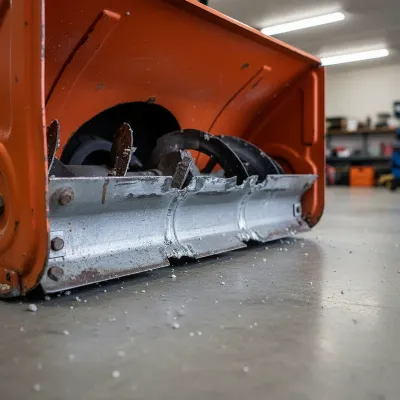 A close-up of a worn metal scraper bar on a snow blower, showing significant wear and unevenness near the edge
Step-by-Step Guide to Achieve a Clear Surface
Addressing the root causes of residual snow requires a systematic approach. By carefully inspecting and adjusting key components, and by understanding how to operate your machine effectively in various snow conditions, you can significantly improve your snow blower’s clearing performance.
Inspect and Replace Worn Components
Regular inspection of your snow blower’s wear parts is critical for maintaining optimal performance. These components bear the brunt of snow removal and will degrade over time.
Scraper Bar
The scraper bar is the leading edge that sweeps the pavement clean. If your snow blower is leaving a thin layer, this is often the first place to look.
- Inspection: Turn off your snow blower and disconnect the spark plug for safety. Tilt the machine back or onto its side to access the bottom of the auger housing. Examine the metal scraper bar for signs of excessive wear, bending, or cracking. A new scraper bar typically has a uniform thickness across its entire length. If yours is significantly thinner in spots, unevenly worn, or visibly damaged, it’s time for a replacement.
- Replacement: Consult your owner’s manual for specific instructions, as the process can vary slightly by model. Generally, you’ll need a socket wrench to remove the bolts, spring washers, and nuts securing the old bar. Attach the new scraper bar, ensuring it’s oriented correctly (often with a shiny surface facing inwards), and securely fasten it with new hardware if recommended.
Auger Paddles (Single-Stage)
For single-stage electric or gas snow blowers, the rubber auger paddles are the primary contact with the ground.
- Inspection: Check the rubber paddles for deep cracks, chunks missing, or wear down to their wear indicator holes (small holes molded into the rubber). If they are significantly worn, they won’t be able to effectively scoop snow from the surface.
- Replacement: Replacement kits are available and usually involve unbolting the old paddles from the auger drum and attaching new ones. This is a straightforward task that can dramatically improve clearing performance for single-stage units.
Adjusting Skid Shoes for Optimal Clearance
Properly adjusted skid shoes are paramount for both effective snow removal and machine longevity. They dictate how close the scraper bar sits to the ground.
Preparation & Safety
Before making any adjustments, always prioritize safety:
- Ensure the snow blower is turned completely off.
- Remove the key if it’s a gas model, or disconnect the power cord if it’s electric.
- Disconnect the spark plug wire on gas models to prevent accidental starting.
- Move the snow blower to a flat, level surface, such as a garage floor or paved driveway, to ensure accurate measurements.
Setting Clearance for Paved vs. Gravel Surfaces
The ideal clearance depends on the surface you’re clearing.
- Paved Surfaces (Asphalt, Concrete): For a “down to pavement” clear, aim for a minimal gap. Typically, a clearance of 1/8 inch to 1/2 inch (3–13 mm) between the scraper bar and the ground is recommended. Some professionals may even adjust it to just barely skim the surface for the cleanest possible finish, but be aware this increases wear on the scraper bar.
- Gravel or Irregular Surfaces: To prevent picking up and throwing gravel or damaging the machine on uneven ground, a higher clearance is necessary. A setting of 3/4 inch to 1 inch (19–25 mm) is usually appropriate. Always refer to your snow blower’s owner’s manual for precise recommendations.
Adjustment Procedure
- Support the Scraper Bar: Place a sturdy spacer (e.g., a thin piece of wood, cardboard, or specialized shim) of the desired thickness directly under the scraper bar. This spacer should span the width of the scraper bar to ensure even support.
- Loosen Skid Shoe Bolts: Locate the bolts that secure the skid shoes on both sides of the auger housing. Use a socket wrench to loosen these bolts, allowing the skid shoes to move freely.
- Position Skid Shoes: Slide the skid shoes downward until they firmly rest on the ground surface (or the spacer, if using one). Ensure both skid shoes are at the same height to prevent uneven wear and an unbalanced clear.
- Tighten Bolts: While holding the skid shoes firmly in place, re-tighten the bolts securely. Double-check that they are snug and that the skid shoes cannot shift during operation.
- Final Check: Remove the spacer (if used) and gently push the snow blower forward to verify the scraper bar’s clearance. It should glide smoothly across your desired surface at the correct height.
Optimizing Engine and Drive System Performance
Even with perfectly adjusted wear parts, a snow blower can leave snow if its core components aren’t functioning correctly.
Check Belts and Shear Pins
- Belts: Over time, the belts that drive the auger and impeller can stretch, fray, or become worn. A loose or damaged belt will slip, reducing the power transferred to the auger and impeller, making them spin slower and clear less effectively. Inspect all belts for signs of wear, cracks, or looseness. Replace any belts that show damage or cannot be tightened properly.
- Shear Pins: These small, sacrificial bolts are designed to break if the auger hits an obstruction, protecting the gearbox and engine from damage. If a shear pin breaks, the affected auger section will stop spinning, leaving a strip of snow behind. Regularly check all auger sections for broken shear pins and replace them immediately if found. Always use OEM-specified shear pins.
Engine Tune-Up and Fuel
An engine that’s not running smoothly won’t deliver the power needed for efficient snow clearing.
- Spark Plug: A fouled or worn spark plug can lead to misfires and reduced engine power. Inspect your spark plug annually and replace it if it’s corroded or has heavy carbon buildup.
- Fuel: Stale gasoline can cause a myriad of engine problems, including reduced power and stalling. Always use fresh, high-octane fuel and consider adding a fuel stabilizer, especially if the machine will sit unused for extended periods. Drain old fuel at the end of the season.
- Air Filter: A clogged air filter can restrict airflow to the engine, causing it to run “rich” and lose power. Clean or replace the air filter as part of your annual maintenance.
- Carburetor: If the engine struggles to maintain a consistent RPM, the carburetor might be clogged with fuel deposits. This often requires professional cleaning or adjustment.
Tackling Different Snow Conditions
How you operate your snow blower can also impact how cleanly it clears, especially with challenging snow types.
Dealing with Wet, Heavy Snow
Wet, heavy snow is the arch-nemesis of many snow blowers, often leading to incomplete clearing and frequent clogs.
- Slow Down: Resist the urge to rush. Push the snow blower at a slower pace than you would with light, fluffy snow. This allows the augers and impeller more time to process the dense material and eject it efficiently. Overloading the machine is a primary cause of snow being left behind.
- Take Smaller Bites: Instead of trying to clear the full width of the auger housing, consider overlapping passes or taking narrower strips. This reduces the volume of snow the machine needs to handle at once.
- Pre-Treat the Chute: Applying a non-stick spray, like silicone spray or a light oil (e.g., WD-40 or cooking spray), to the inside of the discharge chute and auger housing can significantly reduce snow buildup and clogging, helping the snow eject more smoothly. Do this before you start working in wet conditions.
Preventing Chute Clogs
A clogged chute not only stops snow ejection but also causes snow to back up and fall back onto the cleared path.
- Clean Regularly: If you notice a drop in throwing distance or snow piling up, immediately turn off the machine, disconnect the spark plug, and use a clearing tool (most snow blowers come with one) to safely remove any packed snow or ice from the chute and auger. Never use your hands.
- Avoid Excessive Speed: As mentioned, pushing too fast through dense snow is a common cause of clogging.
- Optimal Chute Angle: Adjust the chute deflector to a higher angle when dealing with wet snow. This can help prevent the snow from sticking and increase the throwing distance.
> “Many users overlook the simple act of slowing down in wet snow. Giving the machine time to process the material is often the single most effective way to prevent clogging and achieve a cleaner finish.” – John Davis, Master Mechanic, Outdoor Power Equipment Specialist
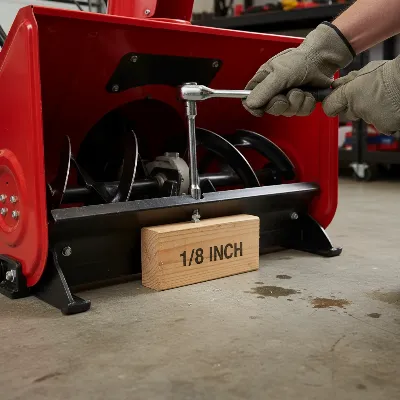 A person adjusting the skid shoes on a two-stage snow blower using a wrench, with a wooden block under the scraper bar for proper spacing
Maintenance Tips for Consistent Clearing Performance
Beyond immediate adjustments, regular maintenance is key to ensuring your snow blower consistently clears snow down to the pavement, season after season. Neglecting maintenance can lead to premature wear, reduced efficiency, and costly repairs.
Regular Cleaning
After each use, especially when working in wet or salty conditions, take a few minutes to clean your snow blower thoroughly.
- Remove Snow and Ice: Use a brush or clearing tool to remove all snow, ice, and debris from the auger housing, impeller, and discharge chute. Lingering moisture can freeze and create problems for your next use.
- Wipe Down: Wipe down the exterior of the machine to remove dirt, grime, and salt residue. Salt is corrosive and can accelerate rust formation on metal components.
- Lubricate: After cleaning and drying, apply a silicone spray to non-painted metal surfaces (like the auger spiral and impeller blades) to create a slick surface that helps shed snow and prevents rust.
Lubrication
Moving parts need lubrication to operate smoothly and prevent seizing, especially in freezing temperatures.
- Auger Shaft Bearings: Lubricate the auger shaft bearings according to your owner’s manual. This ensures the auger spins freely and efficiently.
- Chute Controls: Grease or lubricate the gears and pivot points of the discharge chute control mechanism. This keeps the chute rotating smoothly and prevents it from sticking.
- Wheel Axles: If your snow blower has power-assisted wheels, apply a thin layer of grease to the axle shafts annually to prevent rust and ensure easy wheel removal.
End-of-Season Storage
Proper storage during the off-season is vital for preventing issues in the next winter.
- Fuel Stabilization/Drainage: For gas models, either add a fuel stabilizer to a full tank of fresh fuel or drain the fuel system completely to prevent fuel degradation and carburetor clogging.
- Oil Change: Perform an oil change at the end of the season. Clean oil protects internal engine components during storage.
- Spark Plug: Remove and inspect the spark plug. If it’s worn, replace it. Store the old spark plug or keep a spare for next season.
- General Inspection: Take this opportunity to inspect all belts, cables, and other components for wear or damage. Address any issues before putting the machine away.
- Cover and Store: Store your clean and serviced snow blower in a dry, protected area, ideally covered with a breathable cover, to shield it from dust, moisture, and pests.
Snow Blower Types and Their Clearing Nuances
The type of snow blower you own also influences how it clears and what issues might cause it to leave snow behind. Understanding these differences can help you troubleshoot more effectively.
Single-Stage Snow Blowers
Single-stage snow blowers are typically lighter, more compact, and designed for lighter snowfalls on paved surfaces. They feature rubber auger paddles that directly contact the ground, scooping up snow and propelling it out of the chute in a single motion.
- Clearing Nuance: Because the rubber auger paddles are the only mechanism touching the ground, their condition is paramount. As they wear, they lose their ability to scrape the pavement clean, directly leading to a thin snow layer.
- Maintenance Focus: Regular inspection and replacement of these rubber paddles are crucial for maintaining optimal clearing performance. There are no adjustable skid shoes on most single-stage models; the auger height is determined by the paddle wear.
Two-Stage and Three-Stage Snow Blowers
These more powerful machines are built for heavier snowfalls, larger areas, and can handle various surfaces, including gravel. They use an auger to feed snow into a high-speed impeller, which then forcefully ejects it through the chute. A separate metal scraper bar on the bottom of the auger housing handles the final clear.
- Clearing Nuance: The combination of a scraper bar and adjustable skid shoes allows for precise control over the clearing height. This design makes them highly effective at clearing down to the pavement when properly adjusted.
- Maintenance Focus: Both the scraper bar and the skid shoes are critical wear items that require regular inspection and adjustment. Belts and shear pins are also vital to ensure the auger and impeller operate effectively. The engine’s power output is especially important for these machines to handle heavy, dense snow without bogging down.
Troubleshooting Common Issues
Here’s a quick reference guide to common snow blower issues and their solutions when dealing with residual snow.
| Issue | Cause | Solution |
|---|---|---|
| Leaves thin snow layer | Worn scraper bar or auger paddles | Inspect and replace worn scraper bar or rubber paddles. |
| Leaves thin snow layer | Skid shoes set too high | Adjust skid shoes for proper clearance (1/8″-1/2″ for paved). |
| Snowblower bogs down | Heavy, wet snow; overloading machine | Slow down, take narrower passes; apply non-stick spray to chute. |
| Auger not spinning or slow | Worn or loose belts | Inspect, tighten, or replace auger and drive belts. |
| Auger not spinning or slow | Broken shear pins | Inspect and replace all broken shear pins. |
| Chute frequently clogs | Wet, heavy snow; operating too fast | Slow down, clear clogs safely with a tool; spray chute. |
| Engine lacks power | Stale fuel, dirty spark plug | Use fresh fuel, change spark plug, consider a tune-up. |
| Leaves lines behind | Skid shoes leaving marks | Ensure skid shoes are set to proper height; consider non-abrasive shoes. |
Conclusion
Achieving a perfectly clear, pavement-level finish with your snow blower isn’t an elusive dream. It’s a tangible goal that comes from understanding your machine, performing regular maintenance, and knowing how to adapt to different snow conditions. From inspecting and replacing worn scraper bars and auger paddles to precisely adjusting your skid shoes for optimal clearance, each step contributes to your machine’s peak performance. Don’t underestimate the impact of proper engine care, healthy belts, and smart operational techniques, especially when faced with challenging wet snow.
By taking a proactive approach to maintenance and troubleshooting, you’ll not only clear snow more efficiently but also extend the life of your valuable equipment. Imagine the satisfaction of looking back at a driveway entirely free of snow, knowing your hard work has paid off. What’s one adjustment or maintenance task you plan to tackle this season to ensure your snow blower performs flawlessly?
Frequently Asked Questions
Why does my new snow blower still leave a layer of snow?
Even a new snow blower can leave snow if its skid shoes are not properly adjusted for your specific surface, or if you’re operating it too quickly through heavy snow. Always check the skid shoe settings and adjust them according to your owner’s manual and driveway type.
How often should I replace the scraper bar or auger paddles?
The replacement frequency depends heavily on usage and the surfaces cleared. Inspect these components annually or after every few major snowfalls. If you notice significant wear, bending, or if your machine starts leaving snow behind, it’s a good indicator that they need replacing.
Can I adjust my snow blower to clear snow completely down to gravel?
While you can adjust your snow blower to clear very close to the ground, it’s generally not recommended for gravel surfaces. Setting the skid shoes too low on gravel increases the risk of picking up and throwing stones, which can damage the Snow Blower, shatter windows, or injure bystanders. A small layer of snow is safer on gravel.
What is the ideal clearance height for a paved driveway?
For paved driveways, a common recommendation is to set the scraper bar to have a clearance of 1/8 to 1/2 inch (3–13 mm) from the ground. This allows the machine to clear most of the snow without excessive wear on the scraper bar or damage to the pavement.