As the last flakes of winter melt away, it’s tempting to simply wheel your trusty gas snow blower into the garage and forget about it until next season. However, neglecting proper summerization and storage can lead to frustrating starting issues, costly repairs, and a significantly shortened lifespan for your machine. Just like any seasonal equipment, your snow blower needs a little attention before its long slumber to ensure it’s ready to tackle the heaviest snowfalls when winter returns. By following a few straightforward steps, you can protect your investment and guarantee smooth operation for years to come.
Understanding Snow Blower Summerization
Summerization refers to the essential maintenance tasks performed on a gas snow blower before it’s stored for the off-season. These procedures are critical for preventing common issues like fuel degradation, corrosion, and engine wear that can occur during prolonged periods of inactivity. You’re preparing the machine to withstand months of sitting idle, protecting its internal components from the detrimental effects of moisture, stale fuel, and environmental factors. This proactive approach not only saves you headaches in the fall but also extends the overall durability and reliability of your equipment.
Gas snow blowers typically fall into single-stage, two-stage, or three-stage categories. While the core summerization principles remain similar, larger, more complex two-stage and three-stage machines might require a bit more attention to detail, especially concerning lubrication and tire pressure. Single-stage blowers, often lighter and less powerful, may have simpler engines but still benefit immensely from fuel stabilization and spark plug inspection. Regardless of the type, ensuring all fuel is treated or drained and moving parts are protected is universal for off-season storage. For snow blower buying guides on this site.
Essential Steps for Safe Gas Snow Blower Storage
Storing your gas snow blower properly is a multi-step process that safeguards its engine, fuel system, and other critical components from the damaging effects of disuse. Each step plays a vital role in preventing corrosion, fuel issues, and general deterioration, ensuring your machine starts reliably when the snow falls again. Skipping any of these steps could lead to frustrating repairs and a shorter lifespan for your equipment.
1. Fuel System Preparation
The most critical step in summerizing a gas snow blower is addressing the fuel system. Gasoline left untreated in the tank and carburetor can degrade, forming gummy deposits that clog fuel lines and jets, making it difficult or impossible to start the engine next season. This degradation is accelerated by ethanol, a common additive in modern gasoline, which can attract moisture and corrode metal components.
There are two primary methods for preparing the fuel system for storage:
- Draining the Fuel: The safest method is to completely drain all gasoline from the fuel tank and then run the engine until it starves of fuel and stops. This ensures no old fuel is left in the carburetor bowl. Use a siphon pump or the fuel shut-off valve (if available) to empty the tank into an approved gasoline container. Dispose of old fuel responsibly.
- Using a Fuel Stabilizer: If draining is not practical, add a high-quality fuel stabilizer to a full tank of fresh gasoline. Run the engine for 5-10 minutes to circulate the stabilized fuel throughout the system, including the carburetor. Fuel stabilizers prevent gasoline from breaking down and forming varnish over time, protecting the engine from deposits. Always follow the manufacturer’s instructions for the correct stabilizer-to-fuel ratio.
> “Ignoring the fuel system before storage is the number one reason snow blowers fail to start in winter. Stabilizing or draining the fuel is non-negotiable for engine longevity.” – David P. Smith, Master Mechanic, Outdoor Power Equipment
2. Engine and Spark Plug Care
|
Our Picks for the Best Snow Blower in 2026
As an Amazon Associate I earn from qualifying purchases.
|
||
| Num | Product | Action |
|---|---|---|
| 1 | SuperHandy Electric Snow Thrower Adjustable Angle 17" Clearing Width 5.7" Intake Height 23' ft Throw Curved Serrated Blade 48V-2Ah Battery Portable Wheels Easy Maneuver Safety Switches Comfort Handle |

|
| 2 | SuperHandy Electric Snow Thrower Walk-Behind Blower Corded AC 120V 15A 18 x 10 Inch Clearing Path 25 Feet Throwing Distance 720 lbs/Min LED Headlights for Driveway Walking Path Yards |
|
| 3 | Westinghouse WSnow13S AC Corded Electric Snow Shovel, 13-inches Wide with 20 ft. Throwing Distance, Plows 300 lbs/min for Driveway/Steps/Sidewalk/Porch |
|
| 4 | Cordless Snow Blower(No Battery), Compatible with Dewalt 20V Max Battery, 20" Brushless Snow Thrower with Directional Plate & LED Lights, Electric Snow Blower Ideal for Walkways and Driveways |
|
| 5 | EGO Power+ SNT2110 Peak Power 21-Inch 56-Volt Cordless Snow Blower with Steel Auger Battery and Charger Not Included,Black |
|
| 6 | Brushless Cordless Electric Snow Shovel for use with Makita 21V Battery, 12” Snow Thrower with Adjustable Direction, Lightweight Snow Removal Tool for Driveway,Patio,Walkways |
|
| 7 | EWORK Corded Snow Shovel 11-Inch 1200W 10A Powerful Electric Snow Shovels, 6-Inch Clearing Depth, 23-Foot Max Throw Distance, Power Snow Blower for Driveway, Steps, Sidewalk, Porch |
|
| 8 | EGO Power+ Electric Snow Shovel Attachment, Use with Cordless Power Head Multi-Head System, Battery, Charger and Power Head Not Included - SSA1200 |
|
| 9 | Westinghouse WSnow11S AC Corded Electric Snow Shovel, 11-inches Wide with 20 ft. Throwing Distance, Plows 300 lbs/min for Driveway/Steps/Sidewalk/Porch |
|
| 10 | VOLTASK Cordless Snow Shovel, 48V | 13.5-Inch Cordless Snow Blower, Battery Snow Blower with Directional Plate (2 * 24V Battery & Dual Quick Charger Included) |
|
Proper engine care extends beyond just the fuel. The spark plug is essential for ignition and should be inspected and, if necessary, replaced. A worn or fouled spark plug can lead to poor performance and difficult starting.
- Remove and Inspect the Spark Plug: Disconnect the spark plug wire and carefully remove the spark plug using a spark plug wrench. Inspect it for signs of wear, carbon buildup, or damage. If it looks fouled or excessively worn, replace it with a new one of the correct type and gap.
- Add Engine Oil to Cylinder: Before reinstalling the spark plug (or installing a new one), pour approximately one teaspoon of fresh engine oil directly into the spark plug hole. Gently pull the starter rope a few times (without the plug installed) to distribute the oil and coat the cylinder walls. This “fogging” prevents rust and corrosion on internal engine components during storage. Reinstall and tighten the spark plug, then reattach the spark plug wire.
3. Oil Change (If Applicable)
Check your snow blower’s owner’s manual for recommended oil change intervals. If an oil change is due or approaching, performing it before storage is an excellent practice. Old, dirty oil can contain contaminants that promote corrosion within the engine.
- Drain Old Oil: Warm up the engine for a few minutes to allow the oil to flow more easily. Turn off the engine, ensure it’s cool enough to handle, and place a drain pan beneath the oil drain plug. Remove the plug and allow all the old oil to drain completely.
- Refill with Fresh Oil: Replace the drain plug and refill the crankcase with the manufacturer-recommended type and amount of fresh engine oil. Avoid overfilling. Check the dipstick to ensure the oil level is correct.
4. Cleaning and Lubrication
A thorough cleaning and lubrication protect the exterior and moving parts of your snow blower from rust and deterioration.
- Clean the Machine: Use a stiff brush or scraper to remove any caked-on snow, ice, dirt, and debris from the auger housing, chute, and underside of the machine. A pressure washer can be used cautiously, but avoid spraying directly into electrical components or the engine air intake. Allow the machine to dry thoroughly.
- Lubricate Moving Parts: Apply a generous amount of grease to all grease fittings (usually found on the auger shaft bearings) using a grease gun. Lubricate the chute rotation mechanism, cables, and any other pivot points or linkages with a light machine oil or silicone spray. This prevents rust and ensures smooth operation next season.
5. Inspect and Adjust
Before putting your snow blower away, a quick inspection can identify potential issues that can be addressed now rather than when the first snowfall hits.
- Check Belts and Tires: Inspect all drive belts and auger belts for cracks, fraying, or excessive wear. Replace any damaged belts. Check tire pressure and inflate to the recommended PSI. If tires are severely cracked or worn, consider replacing them.
- Examine Shear Pins and Scraper Bar: Ensure shear pins are intact and replace any that are bent or broken. Inspect the scraper bar at the bottom of the auger housing; if it’s worn down, flip it or replace it to ensure efficient snow removal.
- Secure Cables and Controls: Ensure all control cables are properly tensioned and lubricated. Check that all levers and switches move freely.
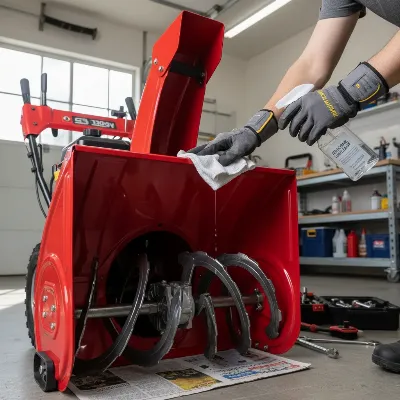 A person meticulously cleaning and lubricating a gas snow blower before storage, focusing on the auger and chute mechanism with a spray bottle and cloth.
6. Storage Location
The environment where you store your snow blower significantly impacts its condition over the summer months.
- Choose a Dry, Protected Location: Store your snow blower in a dry, well-ventilated area, such as a garage, shed, or basement. Avoid damp areas where moisture can promote rust.
- Cover the Machine: Use a breathable cover designed for outdoor power equipment to protect the snow blower from dust, dirt, and incidental moisture. Avoid non-breathable plastic tarps that can trap condensation.
- Elevate the Tires (Optional): If possible, raise the snow blower slightly off the ground to take pressure off the tires and prevent flat spots, especially if storing for a very long period. This can be done with blocks of wood or specialized dollies.
Top Snow Blower Storage Accessories
Investing in the right storage accessories can further simplify the summerization process and enhance your snow blower’s longevity. These tools and products are designed to make off-season care more effective and convenient.
| Accessory | Description | Benefits |
|---|---|---|
| Fuel Stabilizer | Chemical additive mixed with gasoline to prevent degradation and ethanol-related issues during storage. | Prevents carburetor clogs, ensures easy starting next season, extends fuel shelf life. |
| Grease Gun | Tool used to apply grease to fittings on moving parts, ensuring proper lubrication. | Reduces friction, prevents rust in bearings, extends the life of mechanical components. |
| Fogging Oil | Aerosol spray or liquid added to the engine cylinder to coat internal parts and prevent corrosion. | Protects cylinder walls, piston rings, and valves from rust during long-term storage. |
| Snow Blower Cover | Durable, breathable cover designed to fit snow blowers, protecting them from dust, dirt, and moisture. | Keeps machine clean, prevents sun damage to plastic components, deters pests. |
| Fuel Can | Approved container for safely storing or disposing of gasoline. | Ensures safe handling of fuel, prevents spills, available in various sizes. |
| Oil Drain Pan | Receptacle for collecting old engine oil during changes. | Facilitates clean oil changes, prevents environmental contamination, easy disposal of used oil. |
| Tire Blocks/Dollies | Wedges or wheeled platforms used to elevate snow blower tires off the ground. | Prevents flat spots on tires, allows for easier maneuvering in storage. |
Frequently Asked Questions
What happens if I don’t summerize my gas snow blower?
If you don’t summerize your gas snow blower, the most common issue is that old gasoline will degrade and clog the carburetor, making it difficult or impossible to start the engine next season. Internal engine components can rust, and external parts may corrode, leading to costly repairs and a shorter lifespan for the machine.
Is it better to drain the fuel or use a stabilizer?
Draining the fuel completely and running the engine dry is generally considered the best method for long-term storage, as it eliminates any possibility of fuel degradation. However, using a high-quality fuel stabilizer with a full tank of fresh gas is an acceptable and often more convenient alternative, especially for shorter storage periods or if you prefer not to handle old fuel.
How often should I change the oil in my snow blower?
Most manufacturers recommend changing the oil in your snow blower annually or after a certain number of operating hours, typically 25-50 hours, whichever comes first. It’s a good practice to change the oil before summer storage, ensuring clean oil protects the engine during its idle period.
Can I store my snow blower outdoors?
It is strongly discouraged to store a gas snow blower outdoors, even with a cover. Outdoor storage exposes the machine to extreme temperature fluctuations, humidity, rain, and snow, which can accelerate rust, corrosion, and damage to electrical components and engine parts. Always opt for a dry, protected indoor space.
What should I do if my snow blower won’t start after summer storage?
If your snow blower won’t start after summer storage, the most likely culprit is fuel-related. Check the fuel tank for stale gas, and inspect or clean the carburetor. The spark plug may also be fouled or worn. Ensure the oil level is correct and all safety switches are engaged. If issues persist, consult your owner’s manual or a qualified technician.
Conclusion
Properly summerizing and storing your gas snow blower is a small investment of time that yields significant returns in reliability and longevity. By taking the proactive steps of preparing the fuel system, caring for the engine, performing thorough cleaning and lubrication, and choosing an optimal storage location, you’re not just putting your snow blower away; you’re safeguarding its future performance. These simple maintenance routines prevent common issues like engine corrosion and carburetor clogs, ensuring that when the first snowfall arrives, your machine will fire up without a hitch. Don’t let your valuable equipment fall victim to off-season neglect—give it the care it deserves now for effortless snow removal later. How prepared will your snow blower be for the next winter season?
