Winter’s heavy snowfall brings both beauty and the demanding chore of clearing pathways. For many homeowners, a snow blower is an indispensable tool, transforming hours of back-breaking shoveling into a manageable task. However, few things are as frustrating, or potentially dangerous, as a snow blower chute that becomes jammed with packed snow and ice. When your machine sputters and stops throwing snow, it’s a clear sign of a clog, and knowing how to address it safely and efficiently is crucial for both your machine’s longevity and your personal well-being. This comprehensive guide will walk you through the proper steps to unclog your snow blower chute, highlight essential safety measures, and provide valuable tips to prevent future blockages, ensuring you can tackle even the toughest winter conditions with confidence.
Understanding Snow Blower Chute Clogs
A clogged snow blower chute is a common occurrence, often caused by the specific type of snow you’re trying to clear or your operational technique. Heavy, wet snow, which is dense and sticky, is a primary culprit. Unlike light, powdery snow, this high-moisture snow compacts easily, building up within the auger and discharge chute and hindering its flow. Additionally, operating your snow blower too slowly can contribute to clogs. When snow moves through the machine at a reduced speed, it has more time to adhere to surfaces and accumulate, leading to blockages.
The internal components of a snow blower, particularly the auger and impeller, rotate at high speeds, making a clogged chute an extremely hazardous situation. Attempting to clear a jam while the engine is running or with your bare hands can result in severe injuries, including lacerations or even amputation. Understanding these risks is the first step toward approaching any clog with the necessary caution and employing safe, deliberate methods.
Essential Safety Precautions Before Unclogging
Safety is paramount when dealing with a clogged snow blower chute. The rotating auger and impeller can cause serious harm if not handled correctly. Always adhere to these critical safety precautions before attempting to clear any blockage:
- Turn Off the Engine Immediately: This is the most crucial step. Never attempt to clear a clog while the engine is running, even if the auger isn’t currently engaged.
- Remove the Ignition Key: For gasoline-powered models, remove the ignition key to ensure the engine cannot accidentally restart.
- Wait for All Moving Parts to Stop: After shutting off the engine, allow ample time—at least 10 seconds—for the auger and impeller to completely cease all motion. These parts can continue to spin due to inertia even after power is cut.
- Disconnect the Spark Plug Wire: As an additional safety measure, especially for gasoline models, disconnect the spark plug wire and secure it away from the spark plug. This eliminates any possibility of the engine unexpectedly firing.
- Never Use Your Hands or Feet: Under no circumstances should you ever use your hands or feet to clear a clogged chute. Always use a proper cleaning tool.
- Maintain a Safe Stance: When performing any maintenance or unclogging, stand in the operator’s position, behind the handles, whenever possible.
Tools for Safe Chute Unclogging
Every snow blower typically comes equipped with a dedicated clean-out tool designed specifically for safely clearing blockages. This tool is often a shovel-shaped plastic or composite stick, conveniently clipped to the rear of the auger housing or another accessible location on the machine. Its design allows you to reach into the chute and auger housing without exposing your hands to moving parts.
If your snow blower didn’t come with one or you’ve misplaced it, alternatives can be used, but extreme caution is advised. A sturdy broom handle or a long stick made of wood or hard plastic can serve as a substitute. The key is to use a non-metal object to avoid damaging the auger or impeller blades, which can be expensive to repair. Avoid using any metal objects, as they can cause significant damage to the machine’s components or even create dangerous sparks.
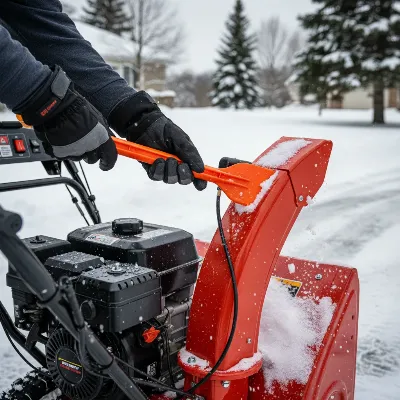 A person safely using a dedicated snow blower chute cleaning tool to remove snow from the discharge chute.
Step-by-Step DIY Guide to Unclog a Snow Blower Chute
When your snow blower chute jams, follow these steps meticulously to clear it safely and get back to work:
Step 1: Shut Down and Secure the Machine
Immediately release both the auger and drive controls. Turn off the engine by removing the ignition key (if applicable). Wait for at least 10 seconds to ensure all moving parts, including the auger and impeller, have come to a complete stop. For an extra layer of safety, locate and disconnect the spark plug wire, keeping it away from the spark plug to prevent accidental starts.
Step 2: Locate the Clean-Out Tool
Retrieve the snow clearing tool that usually comes with your snow blower. It’s often clipped to the rear of the auger housing or another easy-to-reach spot on the machine. If you don’t have the original tool, select a suitable non-metal alternative like a broom handle.
Step 3: Carefully Dislodge Snow and Ice
Using the shovel-shaped end of the clean-out tool, begin to dislodge and scoop out any packed snow and ice from both the discharge chute and the auger housing. Work carefully, pushing the snow downwards and outwards. Ensure your hands remain on the handle of the tool, maintaining a safe distance from any internal components. Pay particular attention to areas where snow tends to accumulate, such as bends in the chute or around the impeller.
Step 4: Re-Secure the Tool
Once the blockage is cleared, refasten the clean-out tool to its mounting clip on the snow blower. This ensures it’s readily available for future use and won’t become lost or forgotten.
Step 5: Restart and Clear Remaining Debris
Reconnect the spark plug wire and reinsert the ignition key. Start the snow blower’s engine. While standing firmly behind the operator’s handles, engage the auger control for a few seconds. This action will help clear any small, remaining pieces of snow or ice that might still be lodged in the chute assembly, ensuring it’s completely clear before you resume snow blowing.
Preventing Future Snow Blower Chute Clogs
While knowing how to clear a clog is essential, preventing them in the first place can save you time and frustration. Incorporate these strategies into your snow blowing routine:
- Apply Non-Stick Spray: Before you start clearing snow, generously apply a non-stick spray to the inside of your snow blower’s chute, auger, and impeller blades. Products specifically designed for snow blowers are available, but silicone spray, WD-40, or even cooking spray can work effectively. This creates a slippery surface that makes it harder for wet, sticky snow to adhere and build up. Reapply as needed, especially during prolonged use in heavy snow.
- Adjust Clearing Speed: Rather than rushing or moving too slowly, maintain an appropriate, consistent speed. Moving too slowly allows snow to pack, while moving too fast can overwhelm the machine. In heavy or wet snow, taking smaller, overlapping passes can be more effective than trying to clear a wide swath at once.
- Take Smaller Bites: When faced with deep or very wet snow, don’t try to clear the entire depth in one pass. Instead, adjust the height of your snow blower or take partial passes, clearing the top layer first, then going back for the bottom. This reduces the volume of snow entering the chute at any given time, minimizing the risk of a jam.
- Regular Maintenance and Cleaning: After each use, take a few minutes to clear any residual snow and ice from the chute, auger housing, and other components. A dry cloth can be used to wipe down plastic parts. Storing your snow blower in a dry, covered area will also prevent rust and corrosion, which can create rough surfaces that encourage snow to stick.
“A proactive approach with non-stick sprays and careful operating techniques is your best defense against frustrating snow blower clogs. It’s not just about efficiency; it’s about minimizing risk and extending the life of your equipment.” – John Miller, Master Small Engine Technician
Conclusion
A jammed snow blower chute can be a significant setback during winter snow removal. However, by understanding the causes, prioritizing safety above all else, and following a clear, step-by-step process for unclogging, you can resolve the issue efficiently and get your machine back to optimal performance. Remember to always turn off the engine, remove the ignition key, wait for all moving parts to stop, and utilize the proper clean-out tool. Furthermore, adopting preventive measures like applying non-stick sprays and adjusting your clearing technique can significantly reduce the frequency of clogs.
With these guidelines, you’re well-equipped to tackle any unexpected chute blockages safely and effectively. What are your go-to strategies for preventing snow blower clogs in challenging conditions?
Frequently Asked Questions
Can I use a metal object to clear a jammed snow blower chute?
Table is empty.No, you should never use a metal object to clear a clogged snow blower chute. Metal can damage the auger or impeller blades, which can be costly to repair, and it poses a significant risk of sparking or kickback, leading to injury. Always use the manufacturer-provided clean-out tool or a non-metal alternative like a sturdy broom handle.
Why does my snow blower chute keep getting clogged?
Chute clogs are most commonly caused by heavy, wet snow, which is prone to sticking. Other factors include moving too slowly while clearing snow, which allows accumulation, or not applying a non-stick spray to the chute and auger. Regularly cleaning the machine and adjusting your clearing speed can help prevent recurrent clogs.
What kind of spray should I use to prevent snow blower clogs?
Specialized non-stick sprays for snow blowers are highly effective. Alternatively, you can use silicone spray, WD-40, or even cooking spray. These products create a slick surface that helps shed snow and ice, preventing it from sticking to the chute and auger. Apply generously before use and reapply as needed.
How often should I clean my snow blower chute?
It is best practice to clean your Snow Blower chute, auger, and impeller after each use, especially when dealing with wet or heavy snow. This prevents buildup from drying and hardening, which can make future clogs more likely and reduce the machine’s efficiency. Regular cleaning also helps in preventing rust and extending the life of your equipment.