When winter arrives, the thought of shoveling heavy snow can fill anyone with dread. While high-end snow blowers offer impressive power, many homeowners only need a reliable, efficient machine that won’t break the bank. Finding the best budget snow blower under $500 requires careful consideration, balancing cost with performance to ensure your driveway and walkways are clear without exhaustive manual labor. This guide will help you navigate the options, focusing on models that offer exceptional value, ease of use, and dependable snow-clearing capabilities, ensuring you choose the right tool for your winter chores.
General Overview of Snow Blowers
Snow blowers are motorized devices designed to clear snow efficiently from various surfaces, saving time and effort compared to manual shoveling. They are indispensable tools for homeowners in snowy regions, allowing for quick and effective snow removal from driveways, sidewalks, and patios.
There are several types of snow blowers, each suited for different snow conditions and area sizes:
- Single-Stage Snow Blowers: These are typically electric or smaller gas-powered models. They use a single auger that scoops up snow and propels it out of the chute in one motion.
- Pros: Lightweight, easy to maneuver, more affordable, effective on light to moderate snow (up to 8-10 inches), require less storage space.
- Cons: Not ideal for heavy, wet, or icy snow; the auger makes contact with the ground, which isn’t suitable for gravel driveways; smaller clearing width.
- Two-Stage Snow Blowers: These are generally gas-powered and feature an auger that collects snow and feeds it into an impeller, which then powerfully discharges it through the chute.
- Pros: Can handle heavy, wet, and deep snow (over 12 inches); do not touch the ground, making them suitable for gravel; wider clearing paths and longer throwing distances.
- Cons: More expensive, heavier, require more maintenance, larger storage footprint.
- Three-Stage Snow Blowers: These are the most powerful, typically gas-powered, and designed for extreme snow conditions. They add an accelerator to the two-stage system, breaking down and consuming large volumes of snow even faster.
- Pros: Unmatched power for very deep, heavy, and icy snow; extremely wide clearing paths.
- Cons: Most expensive, largest and heaviest, overkill for most residential needs.
- Electric Snow Blowers (Corded & Cordless): These fall primarily into the single-stage category. Corded models require an extension cord, limiting range, while cordless models run on rechargeable batteries, offering greater mobility.
- Pros: Quiet, eco-friendly, less maintenance, easy to start, no gas/oil mixing.
- Cons: Less powerful than gas models, shorter throwing distance, limited by battery life (cordless) or cord length (corded), not suitable for heavy snow.
For a budget under $500, you will primarily find single-stage and electric snow blowers, which are excellent for typical residential driveways and sidewalks with light to moderate snowfall.
Buying Guide: How to Choose Your Snow Blower
Selecting the right snow blower involves understanding your specific needs and matching them with the machine’s capabilities. A snow blower is an investment that should simplify, not complicate, your winter routine.
Determine Your Usage Needs
|
Our Picks for the Best Snow Blower in 2026
As an Amazon Associate I earn from qualifying purchases.
|
||
| Num | Product | Action |
|---|---|---|
| 1 | EWORK Corded Snow Shovel 11-Inch 1200W 10A Powerful Electric Snow Shovels, 6-Inch Clearing Depth, 23-Foot Max Throw Distance, Power Snow Blower for Driveway, Steps, Sidewalk, Porch |

|
| 2 | Cordless Snow Blower(No Battery), Compatible with Dewalt 20V Max Battery, 20" Brushless Snow Thrower with Directional Plate & LED Lights, Electric Snow Blower Ideal for Walkways and Driveways |
|
| 3 | SuperHandy Electric Snow Thrower Walk-Behind Blower Corded AC 120V 15A 18 x 10 Inch Clearing Path 25 Feet Throwing Distance 720 lbs/Min LED Headlights for Driveway Walking Path Yards |
|
| 4 | VOLTASK Cordless Snow Shovel, 48V | 13.5-Inch Cordless Snow Blower, Battery Snow Blower with Directional Plate (2 * 24V Battery & Dual Quick Charger Included) |
|
| 5 | Westinghouse WSnow13S AC Corded Electric Snow Shovel, 13-inches Wide with 20 ft. Throwing Distance, Plows 300 lbs/min for Driveway/Steps/Sidewalk/Porch |
|
| 6 | Westinghouse WSnow11S AC Corded Electric Snow Shovel, 11-inches Wide with 20 ft. Throwing Distance, Plows 300 lbs/min for Driveway/Steps/Sidewalk/Porch |
|
| 7 | EGO Power+ SNT2110 Peak Power 21-Inch 56-Volt Cordless Snow Blower with Steel Auger Battery and Charger Not Included,Black |
|
| 8 | Brushless Cordless Electric Snow Shovel for use with Makita 21V Battery, 12” Snow Thrower with Adjustable Direction, Lightweight Snow Removal Tool for Driveway,Patio,Walkways |
|
| 9 | SuperHandy Electric Snow Thrower Adjustable Angle 17" Clearing Width 5.7" Intake Height 23' ft Throw Curved Serrated Blade 48V-2Ah Battery Portable Wheels Easy Maneuver Safety Switches Comfort Handle |
|
| 10 | EGO Power+ Electric Snow Shovel Attachment, Use with Cordless Power Head Multi-Head System, Battery, Charger and Power Head Not Included - SSA1200 |
|
Before looking at models, assess your unique snow-clearing requirements. This foundational step ensures you don’t overspend on features you won’t use or underspend on a machine that can’t handle your conditions.
- Area Size: How large is the area you need to clear? A small urban sidewalk and a long suburban driveway have very different demands. For small to medium driveways (up to 2-3 car lengths) and sidewalks, a single-stage electric or small gas model is often sufficient. Larger areas might push the limits of budget models, potentially requiring multiple passes.
- Frequency of Use: Do you experience occasional light dustings or frequent heavy blizzards? If you only clear snow a few times a season after light snowfalls, a basic electric model will suffice. For weekly or bi-weekly clearing of moderate snow, a more robust single-stage gas model might be a better fit for durability and consistent power.
- Typical Snow Type: Is the snow in your region usually light and fluffy, or heavy, wet, and slushy? Single-stage machines excel with light, powdery snow. Heavy, wet snow, often referred to as “heart attack snow,” can challenge smaller machines and might require more passes or a slightly more powerful single-stage gas model within the budget. Icy conditions are generally too much for any machine under $500 and typically require manual chipping before blowing.
Essential Features
Once you understand your needs, look for specific features that enhance performance, safety, and convenience. These details can significantly impact your experience.
- Engine Power (for Gas) / Amperage (for Electric): For gas models, engine displacement (cc) indicates power. Higher cc generally means more power. For electric models, higher amperage (e.g., 13-15 amps) or voltage (e.g., 40V, 80V for cordless) translates to better performance. Within the under $500 range, you’ll find effective single-stage gas engines typically around 90-200cc, and electric models in the 13-15 amp range.
- Clearing Width and Height: The clearing width determines how wide a path the snow blower can clear in one pass (typically 18-22 inches for single-stage). Clearing height indicates the maximum depth of snow it can handle (usually 8-12 inches). Match these dimensions to your typical snowfall and area size to minimize clearing time.
- Starting System: Electric start (push-button) is a major convenience, especially for gas models in cold weather, as it eliminates the need for repeated pull-starts. Many electric and some budget gas models offer this feature. Recoil (pull-cord) starts are common on gas models and require a bit more effort.
- Support Features:
- Headlights: Invaluable for clearing snow in the early morning or late evening. Some budget models include basic LED lights.
- Heated Handgrips: A premium feature rarely found under $500, but for comfort if you ever upgrade.
- Remote Chute Control: Allows you to change the direction and angle of snow discharge without stopping the machine, a significant time-saver and safety feature. This is increasingly common on single-stage models.
Budget Considerations
Setting a realistic budget is crucial for any purchase. For snow blowers, it helps narrow down your choices to models that offer the best value within your price range.
- Maximum Spend: Clearly define your absolute maximum budget. Under $500, you’re primarily looking at single-stage electric and gas models.
- Feature vs. Price: Compare models based on their features relative to their price. Sometimes, a slightly more expensive model within your budget might offer a crucial feature (like remote chute control or a more powerful motor) that significantly enhances its usability and durability, providing better long-term value. Don’t just pick the cheapest option; consider the best performance for your dollar.
Snow Blower Price Segments
Understanding what to expect in different price brackets can help manage expectations and identify the best value within your budget. For machines under $500, we’ll focus on the budget to mid-range options.
Budget-Friendly Segment (Typically Under $250)
Snow blowers in this segment are designed for light-duty tasks, perfect for minimal snowfall and smaller areas.
- Characteristics: These are predominantly corded electric or smaller, less powerful cordless electric models. They are lightweight, compact, and easy to store. Clearing widths are usually 10-15 inches, and they can handle snow depths up to 6-8 inches. They often have manual chute control.
- Pros: Very affordable, environmentally friendly (electric), low maintenance, quiet operation, easy to start.
- Cons: Limited power, restricted by extension cord (corded), shorter battery life (cordless), not suitable for wet or heavy snow, smaller clearing path.
- Ideal User: Homeowners with small driveways or patios, those who experience light, infrequent snowfalls, or who prefer an eco-friendly option for quick clean-ups.
Mid-Range Segment ($250 – $500)
This is the sweet spot for many budget-conscious buyers, offering a significant upgrade in power and features without breaking the bank.
- Characteristics: You’ll find more powerful corded electric models (15 amps), more capable cordless electric options (40V-80V systems), and entry-level single-stage gas snow blowers in this price range. Clearing widths typically range from 18-22 inches, handling snow depths of 8-12 inches. Many models will feature electric start, remote chute control, and sometimes LED headlights. Gas models offer more power and freedom from cords.
- Pros: Better performance for moderate snow, wider clearing paths, longer throwing distances, more convenient features like remote chute control and electric start, increased durability (especially gas models).
- Cons: Gas models require fuel and more maintenance; cordless electric models’ battery run time can still be a limiting factor for larger jobs; still not designed for very heavy, wet snow or icy conditions.
- Ideal User: Homeowners with medium-sized driveways (up to 3-4 car lengths), those who receive moderate snowfalls regularly, or anyone looking for a reliable balance of power, features, and affordability. This segment offers the best value for most residential users.
High-End Segment (Above $500)
While outside our budget focus, it’s useful to know what higher-priced machines offer. These include powerful two-stage gas models and advanced cordless electric systems. They handle deep, heavy snow with ease, often featuring wider clearing paths, heated handgrips, self-propelled drives, and more robust construction. These are for those with large properties, heavy snowfall, or commercial needs.
Top Snow Blowers Under $500
Finding a reliable and effective snow blower under $500 requires balancing performance with cost. Here are some of the top-rated models that consistently deliver value and meet the needs of most residential users within this budget. These models typically excel in clearing moderate snowfalls from small to medium-sized areas.
- Greenworks Pro 80V Cordless Snow Blower: This is a strong contender for its battery power and convenience. It typically features an 80V brushless motor and a 20-22 inch clearing width, capable of handling snow up to 10 inches deep.
- Performance: Delivers impressive power for a cordless unit, comparable to smaller gas models. Starts instantly with a push-button.
- Features: Often includes a high-capacity battery and charger, LED lights, and remote chute control. Very quiet operation and zero emissions.
- Durability: Sturdy plastic construction, but the brushless motor contributes to longevity.
- Price: Often found closer to the $400-$500 mark, sometimes requiring a separate battery/charger purchase which might push it slightly over, but kits often fall within budget during sales.
- Toro Power Clear 721 E Single-Stage Gas Snow Blower: A popular choice for its reliability and power, often available just under the $500 mark. It typically boasts a 21-inch clearing width and can clear snow up to 12 inches deep.
- Performance: Powerful Toro 212cc OHV engine, excellent for wet, heavy snow. The Power Curve® Technology prevents clogging.
- Features: Electric start is usually standard, along with a zip deflector for easy chute adjustment. Compact design for easy storage.
- Durability: Robust steel frame and auger system ensure longevity.
- Price: Usually ranges from $450-$500, making it one of the most powerful gas options in this budget.
- Troy-Bilt Squall 2100 Single-Stage Gas Snow Blower: This model offers a solid combination of performance and features at a competitive price. It typically has a 21-inch clearing width and an 11-inch intake height.
- Performance: Powered by a 123cc Troy-Bilt engine, it handles moderate snow with ease. It’s known for being relatively lightweight for a gas model.
- Features: Comes with electric start for reliable cold-weather ignition and a compact folding handle for easy storage.
- Durability: Features a sturdy auger and durable construction typical of Troy-Bilt.
- Price: Frequently found in the $350-$450 range, offering excellent value.
- Ryobi 40V HP Brushless Cordless Snow Blower: Another strong cordless option, particularly for those already invested in Ryobi’s 40V battery system. Often features a 21-inch clearing width and can handle up to 12 inches of snow.
- Performance: The HP (High Performance) brushless motor provides efficient power delivery, making it capable of clearing significant snow.
- Features: LED headlights, variable speed auger, and a convenient push-button start. Battery and charger are usually included in the kit.
- Durability: Built with durable materials, and the brushless motor contributes to its lifespan.
- Price: Kits are generally available in the $400-$500 range.
- Snow Joe iON100V-21SB 100-Volt Max iONPRO Cordless Snow Blower: A powerful electric cordless option from a brand known for snow removal. This model typically features a 21-inch clearing width and can clear up to 12 inches deep.
- Performance: The 100V system provides substantial power, making it effective for medium-duty tasks and deeper snowfalls.
- Features: Comes with dual LED headlights, a push-button start, and a 180-degree auto-rotate chute for precise snow placement.
- Durability: Robust construction for an electric model, built to withstand winter conditions.
- Price: Often found in the higher end of the sub-$500 budget, usually around $450-$500 for the kit.
These models represent the best blend of performance, features, and affordability, making them excellent choices for most homeowners facing typical winter snows.
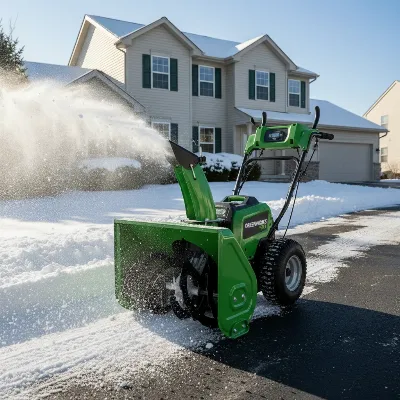 An 80V cordless electric snow blower clearing light, fluffy snow from a residential driveway, with a quiet, efficient operation.
Comparison Table of Top Snow Blower Models Under $500
Choosing the right snow blower means comparing the specifics. This table highlights key attributes of popular budget-friendly models, helping you quickly identify which machine aligns best with your needs.
| Tiêu Chí | Greenworks Pro 80V Cordless | Toro Power Clear 721 E Gas | Troy-Bilt Squall 2100 Gas | Ryobi 40V HP Brushless Cordless | Snow Joe iON100V-21SB Cordless |
|---|---|---|---|---|---|
| Power Source | 80V Battery | 212cc Gas Engine | 123cc Gas Engine | 40V Battery | 100V Battery |
| Clearing Width | 20-22 inches | 21 inches | 21 inches | 21 inches | 21 inches |
| Max Snow Depth | 10 inches | 12 inches | 11 inches | 12 inches | 12 inches |
| Starting System | Push-button | Electric Start | Electric Start | Push-button | Push-button |
| Price Range (Approx.) | $400-$500 | $450-$500 | $350-$450 | $400-$500 | $450-$500 |
| Pros | Quiet, eco-friendly, powerful for cordless, instant start. | Excellent for wet/heavy snow, reliable gas power, durable. | Good value, relatively lightweight gas, electric start. | Strong power for cordless, part of Ryobi 40V ecosystem. | Very powerful cordless, dual LED lights, auto-rotate chute. |
| Cons | Limited battery run time, best for moderate snow. | Requires fuel/oil, more maintenance, louder. | Less powerful than Toro 721, gas maintenance. | Battery run time, might need extra battery for large areas. | Battery run time, higher price for cordless. |
Usage and Maintenance Guide for Your Snow Blower
Proper usage and regular maintenance are critical for maximizing the life and performance of your snow blower, ensuring it’s ready when the snow falls.
Safe Operating Practices
Safety should always be your top priority when operating a snow blower. These powerful machines can cause serious injury if not handled correctly.
- Pre-Operation Check: Always inspect your snow blower before each use. Check for loose parts, damaged components, and ensure all safety guards are in place. Verify fuel (for gas models) or battery charge (for electric) levels.
- Appropriate Attire: Wear sturdy, waterproof boots with good traction. Avoid loose clothing that could get caught in moving parts. Always wear eye protection (safety glasses or goggles) to shield against thrown debris and hearing protection, especially for gas models.
- Clear the Area: Before starting, walk the area you plan to clear and remove any obstacles like rocks, toys, doormats, or hidden extension cords that could be picked up by the auger and thrown, potentially causing damage or injury.
- Maintain a Safe Distance: Keep hands, feet, and any foreign objects away from the auger and discharge chute at all times. Never reach into the chute to clear clogs. Always use a clean-out tool (often provided) or a stick to clear blockages with the engine off and spark plug wire disconnected (for gas).
- Operate on Appropriate Surfaces: Single-stage snow blowers are best for paved surfaces. If you have a gravel driveway, be extremely cautious as the auger can pick up and throw gravel. Consider adjusting the scraper blade height if possible, or opt for a two-stage model if feasible.
- Proper Fueling (Gas Models): Refuel outdoors on a non-combustible surface, with the engine off and cool. Avoid spilling fuel, and clean up any spills immediately.
- Manage Extension Cords (Corded Electric): Be mindful of the cord’s location to prevent tripping or cutting it. Use an outdoor-rated extension cord of the correct gauge for the length required.
Routine Maintenance for Longevity
Regular upkeep will keep your snow blower running efficiently and prevent costly repairs.
- Clean After Each Use: Once the machine is off and cool, clear any snow or ice from the auger, chute, and engine housing. This prevents freeze-ups and corrosion. A brush or a cloth can be used.
- Check and Change Oil (Gas Models): Refer to your owner’s manual for specific recommendations, but typically, engine oil should be checked before each season and changed annually, or every 25-50 hours of operation. Using the correct type and weight of oil is essential for cold-weather performance.
- Inspect Spark Plug (Gas Models): Annually, inspect the spark plug for wear or carbon buildup. Replace it if it’s dirty or corroded to ensure reliable starting.
- Examine Scraper Blade and Skid Shoes: For single-stage models, the rubber scraper blade wears down over time. Check its condition and replace it when it no longer makes good contact with the ground. For two-stage models, check the skid shoes and replace them when worn to prevent damage to the auger housing.
- Lubricate Moving Parts: Apply grease or oil to any moving parts as indicated in your manual, such as chute rotation mechanisms, to ensure smooth operation.
- Inspect Belts (Gas Models): Check belts for signs of wear, cracking, or stretching. Worn belts can lead to reduced performance and should be replaced.
- Proper Storage: When storing your snow blower for the off-season:
- Gas Models: Add a fuel stabilizer to the gas tank or drain the fuel completely to prevent carburetor issues. Run the engine until it dies if draining to ensure all fuel is used. Remove the spark plug and add a small amount of oil into the cylinder, then pull the rope a few times to coat the cylinder walls before reinstalling the plug. Clean the exterior.
- Electric Models: Remove and fully charge batteries before storing them in a cool, dry place. Clean the unit thoroughly.
- Store in a dry, covered area to protect it from elements.
Following these guidelines will help ensure your snow blower remains a dependable tool for many winters to come.
> “Many people underestimate the importance of clearing obstacles before starting their snow blower. A simple rock can turn into a dangerous projectile, costing you a new shear pin at best, or a trip to the emergency room at worst.” – John Smith, Senior Snow Blower Technician
Conclusion
Choosing the best budget snow blower under $500 means making smart choices without compromising on essential performance. While high-end models offer advanced features, the market for affordable snow blowers has never been stronger, providing reliable electric and gas-powered options perfectly suited for most residential snow-clearing needs. By understanding your specific requirements for area size, snow type, and frequency of use, and by carefully evaluating features like clearing width, engine power, and ease of use, you can confidently select a machine that keeps your property clear without straining your wallet. that proper maintenance and safe operation are just as crucial as the initial purchase, ensuring your snow blower remains a dependable ally against winter’s demands for years to come. What kind of snow conditions do you typically face, and how might that influence your choice for a new snow blower?
Frequently Asked Questions
What type of snow blower is best for light, fluffy snow on a paved driveway?
For light, fluffy snow on a paved driveway, a single-stage electric snow blower (either corded or cordless) is often the best choice. They are lightweight, quiet, easy to start, and perfectly capable of clearing up to 8-10 inches of light snow without the hassle of gas and oil.
Can a snow blower under $500 handle wet, heavy snow?
Snow blowers under $500, especially single-stage gas models, can handle moderate wet, heavy snow, typically up to 8-10 inches, but they may require more passes and work harder. Electric models might struggle more with very heavy, wet snow. For consistently heavy or icy conditions, a two-stage snow blower (usually above $500) is generally recommended.
How long does a cordless snow blower battery last?
The battery life of a cordless snow blower varies significantly depending on the battery voltage (40V, 80V, 100V), amp-hours (Ah), and the snow conditions (depth, wetness). On average, you can expect 30-60 minutes of run time, which is sufficient for many small to medium-sized driveways on a single charge. Consider having a spare battery for larger areas or prolonged use.
What maintenance is required for an electric snow blower?
Electric snow blowers require less maintenance than gas models. Key tasks include cleaning the unit after each use to prevent snow and ice buildup, inspecting the scraper blade and auger for wear, and properly storing the battery (charging it and keeping it in a cool, dry place) during the off-season. There’s no oil to change or fuel to stabilize.
Is an electric start necessary on a gas snow blower?
While not strictly “necessary” as most gas models also have a recoil (pull-cord) start, an electric start is highly recommended for gas snow blowers, especially in cold weather. It provides a much easier and more reliable startup with just the push of a button, saving effort and frustration compared to repeated pull-starts.
