Clearing snow from city sidewalks and small driveways can be a daunting chore, especially after a heavy winter storm. While a shovel might suffice for a dusting, significant snowfall demands a more efficient solution. This guide cuts through the noise, offering expert insights to help you navigate the myriad of options and choose the ideal compact snow blower to keep your paths clear and safe this winter.
Understanding Snow Blower Types
Snow blowers are specialized machines designed to efficiently remove snow from surfaces, significantly reducing the time and physical strain compared to manual shoveling. These tools come in various configurations, each suited for different snowfall conditions and property sizes.
The most common types are categorized by their “stages” of operation: single-stage, two-stage, and occasionally, three-stage. A single-stage snow blower uses a rotating auger to scoop up snow and propel it out of a chute in one motion. These are typically lighter, more compact, and best for paved surfaces with lighter, fluffier snow up to 8-10 inches deep. Two-stage snow blowers, more powerful and versatile, employ an auger to feed snow into an impeller, which then forcefully discharges it through the chute. This two-step process allows them to handle deeper, heavier, and even icy snow, and they are suitable for various surfaces, including gravel. Three-stage snow blowers add an accelerator to move snow even faster, tackling the most extreme conditions and heaviest snowfall.
Beyond stages, snow blowers are also distinguished by their power source: electric or gas. Electric models can be corded or battery-powered (cordless). Corded electric snow blowers are lightweight, quiet, and emit no fumes, ideal for smaller areas with easy access to an outdoor power outlet. Cordless battery-powered units offer greater mobility without the restriction of a cord, maintaining the quiet and eco-friendly benefits, though their runtime is limited by battery life. Gas-powered snow blowers typically offer the most power and runtime, making them suitable for larger areas and heavier snow, but they require more maintenance, produce emissions, and are generally louder. For city sidewalks and smaller residential areas, compact electric or smaller single-stage gas models are often the most practical choice due to their maneuverability and ease of storage.
How to Choose the Right Compact Snow Blower (Buying Guide)
Selecting the perfect compact snow blower involves a careful assessment of your specific needs, the typical winter conditions in your area, and the features that matter most to you. Getting the right fit will ensure efficient snow removal without unnecessary effort or expense.
Determine Your Needs
Table is empty.First, consider the area size you need to clear. For city sidewalks, small patios, or short single-car driveways, a compact model is essential for easy maneuverability and storage. Larger machines can be cumbersome in tight urban spaces. Next, evaluate the snowfall frequency and type you typically encounter. If your region experiences light, fluffy snow a few times a season, a single-stage electric blower might be perfectly adequate. However, if you deal with frequent, heavy, wet, or icy snow, even on a smaller area, a more robust single-stage gas or compact two-stage electric model could be more effective. Finally, think about your user preference. Are you looking for the quietest, lowest-maintenance option, or do you prioritize raw power and unlimited runtime? Your personal comfort with noise, fumes, and the effort of starting and maintaining a machine will guide your choice.
Key Features to Look For
When shopping for a compact snow blower, several features can significantly impact its performance and your user experience. The clearing width dictates how wide a path the blower clears in a single pass; for sidewalks, models with 18-22 inches are usually ideal. The intake height is also crucial, indicating the maximum depth of snow the machine can handle, typically around 10-12 inches for compact models.
Engine power is measured in cubic centimeters (cc) for gas models and volts/amps for electric ones; higher numbers generally mean more power. A reliable starting system is key, with many gas models now offering push-button electric starts in addition to pull cords, and electric models simply starting with a button or plug-in.
Consider additional features that enhance convenience and safety: LED headlights are invaluable for clearing snow in low-light conditions, while heated handles provide comfort in freezing temperatures. Easy-to-use chute controls allow you to direct the snow throw precisely, and a self-propelled system can reduce physical strain, especially on slightly sloped surfaces.
Budget Considerations
Your budget will naturally influence your options, but it’s possible to find an excellent compact snow blower across various price points. Understanding the value proposition within each segment can help you make an informed decision.
Consider the initial purchase price, but also factor in potential long-term costs like fuel, oil, and maintenance for gas models, or replacement batteries for cordless electric units. Sometimes, investing a little more upfront for a machine with better durability or more desirable features can save money and frustration in the long run. Compare prices and features across different brands and models to ensure you’re getting the best value for your specific needs.
Price Segments for Compact Snow Blowers
Compact snow blowers are available across a spectrum of prices, each segment offering a different balance of power, features, and convenience. Your budget, combined with your specific snow clearing requirements, will help narrow down the ideal category for you.
Budget-Friendly (Under $500)
This segment typically includes corded electric snow blowers and some entry-level cordless electric or very basic single-stage gas models.
- Characteristics: These machines are often lightweight, easy to store, and feature clearing widths usually under 20 inches. Corded electric options require an extension cord, limiting their range, but offer consistent power without battery runtime concerns. Battery models at this price point might have smaller batteries or require separate purchases of batteries/chargers. Gas models here are generally small, single-stage, and lack advanced features.
- Pros: Very affordable, low maintenance (especially electric), quiet operation (electric), easy to start. Good for light, fluffy snow.
- Cons: Limited power for heavy or wet snow, range limitations (corded), shorter battery runtimes (cordless), minimal features. Gas models can be noisy and require fuel.
- Ideal User: Homeowners with small, paved areas (e.g., short city sidewalks, small patios) who experience light to moderate snowfall and value economy and ease of storage.
Mid-Range ($500 – $1000)
The mid-range offers a sweet spot between affordability and enhanced performance, featuring more robust cordless electric options and capable single-stage gas models.
- Characteristics: You’ll find more powerful battery-powered units with longer runtimes and wider clearing widths (up to 22 inches), often including the battery and charger. Compact gas single-stage blowers in this range may offer better engines, self-propulsion, or electric start. Some lighter two-stage electric models might also fall into this category.
- Pros: Better power for moderate to heavier snow, increased mobility (cordless electric, self-propelled gas), more durable construction, and often include convenient features like LED headlights.
- Cons: Higher upfront cost than budget models. Battery life still a consideration for very large tasks on cordless electrics. Gas models still require fuel and more maintenance.
- Ideal User: Homeowners with longer city sidewalks, small to medium-sized driveways, or those who frequently deal with moderate to occasionally heavy snow and desire a good balance of features, power, and value.
Premium Compact (Over $1000)
While compact in size, these blowers offer features and performance rivaling larger machines, often driven by advanced electric technology or high-quality gas engines.
- Characteristics: This segment includes high-voltage cordless electric two-stage snow blowers that boast exceptional power, extended battery life, and often self-propelled drives. Compact gas models here are typically premium single-stage or high-end two-stage units with larger engines, commercial-grade components, and comfort features like heated grips and advanced chute controls.
- Pros: Outstanding performance for heavy and wet snow, long battery runtimes (cordless electric), superior durability, and a full suite of comfort and convenience features. Quiet and emission-free for electric models.
- Cons: Significant investment. Gas models still require maintenance and are louder.
- Ideal User: Those who experience frequent, heavy snowfall on city sidewalks and small driveways, demand top-tier performance and features, or prefer the lowest possible maintenance and noise with battery power, and are willing to invest accordingly.
Top Compact Snow Blowers for City Sidewalks 2026
When facing winter’s chill on urban sidewalks, a compact yet capable snow blower is invaluable. Here are some of the top models that stand out for their suitability for city dwellers and their snow-clearing needs.
The Snow Joe 48V 18″ Ionmax Single-Stage Snow Blower is an economical and lightweight cordless electric option, perfect for light to moderate snow. It provides ample power for smaller areas and runs quietly without fumes, offering up to 40 minutes of runtime with its dual 24-volt batteries. Its 18-inch clearing path and easy maneuverability make it a practical choice for clearing sidewalks and small driveways without straining.
For those preferring gas power in a compact form, the Toro Power Clear 38753 721 E 21-Inch Gas Snow Blower is a strong contender. This single-stage, self-propelled unit is remarkably lightweight and powerful for its size, making quick work of light jobs on sidewalks, pathways, and small driveways. Its 21-inch clearing width ensures productivity, and the self-propelled mechanism minimizes effort.
The Greenworks 40V Cordless Snow Blower is celebrated for its lightweight design and compact storage. Though its clearing width is slightly narrower than some competitors, it compensates with strong pushing power, making it efficient for clearing snow in small spaces like decks and patios. It’s incredibly easy to transport, weighing just 27.9 pounds.
Another impressive cordless electric option is the Worx Nitro 40V Power Share. This machine utilizes two 20-volt batteries to deliver 40 volts of power, boasting one of the widest clearing paths among single-stage blowers at 20 inches. It can efficiently clear snow up to 10 inches deep and has impressive throwing power, handling even foot-deep banks with ease.
Rounding out the top picks for compact electrics is the DeWalt 60-Volt Max Cordless Electric Single-Stage Snow Blower. Known for delivering significant power in a compact design, it’s best suited for lighter snowfall, typically up to five inches at a time, but can throw snow up to 40 feet. It includes dual LED headlights for visibility and a steel auger to break up packed snow.
> “For city sidewalks and smaller driveways, the key is balancing power with maneuverability. You need a machine that can handle the snow without being overly cumbersome or difficult to store.” – Joe Palumbo, President, Ice Dam Guys
Comparison Table: Top Compact Snow Blowers
| Criterion | Snow Joe 48V 18″ Ionmax | Toro Power Clear 38753 721 E | Greenworks 40V Cordless | Worx Nitro 40V Power Share | DeWalt 60V Max Cordless |
|---|---|---|---|---|---|
| Power Source | Cordless Electric | Gas | Cordless Electric | Cordless Electric | Cordless Electric |
| Clearing Width | 18 inches | 21 inches | ~16-18 inches | 20 inches | 18-21 inches (estimated) |
| Engine/Voltage | 48V (2x24V) | 212cc | 40V | 40V (2x20V) | 60V |
| Price Segment | Budget/Mid | Mid-Range | Budget/Mid | Mid-Range | Mid-Range/Premium |
| Pros | Lightweight, easy to push, quiet, no fumes, good runtime for its class | Self-propelled, powerful for its size, wide clearing width, no battery concerns | Compact, very lightweight, powerful for its size, easy to store | Wide clearing path for single-stage, good throwing power, dual batteries | Powerful voltage, steel auger, LED headlights, strong throwing up to 40ft |
| Cons | No self-propel, limited by battery runtime, best for light-moderate snow | Gas maintenance, louder, requires fuel, heavier than electrics | Smaller clearing width, lacks advanced features like headlights/chute control | Battery life/overheating concerns on heavy use, may struggle with very deep snow (over 10″) | Best for lighter snowfall (DeWalt suggests max 5 inches at a time), battery and charger often sold separately |
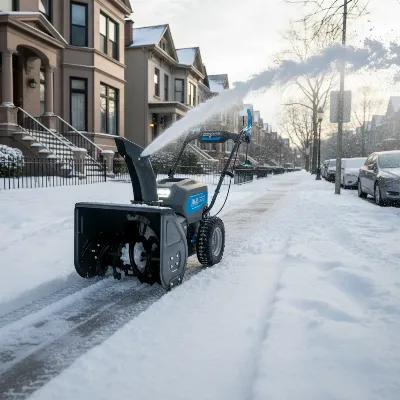 A compact electric snow blower clearing a city sidewalk in front of residential homes, early morning light, snow flying from the chute.
Safe Operation and Maintenance of Your Snow Blower
To ensure your compact snow blower operates efficiently and safely for many seasons, proper usage and regular maintenance are critical. Neglecting these aspects can lead to breakdowns, reduced performance, or even accidents.
Safe Usage Guidelines
Safety should always be your top priority when operating any snow blower. Before each use, conduct a thorough pre-use check: ensure the area is clear of debris like rocks, toys, or branches that could be picked up and thrown by the machine. Always wear appropriate safety gear, including eye protection, sturdy footwear with good traction, and hearing protection, especially for gas models. Familiarize yourself with all controls, particularly the emergency stop.
When operating, maintain a firm grip on the handles and always direct the snow discharge chute away from people, windows, and cars. Never operate the machine without good visibility. If the chute becomes clogged, NEVER use your hands to clear it. Always turn off the engine, remove the key (for gas models), or disconnect the power source (for electric models), and wait for all moving parts to come to a complete stop before using a clean-out tool to remove the obstruction.
Regular Maintenance Tips
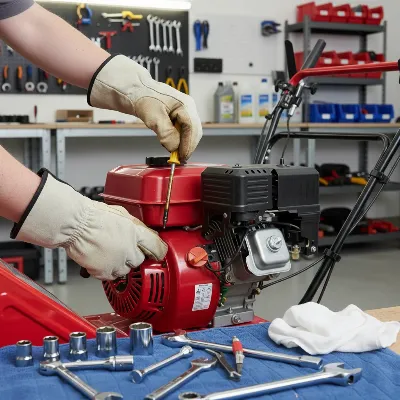
Consistent maintenance will extend the life of your snow blower and ensure it’s ready when you need it most. After each use, run the machine briefly to clear any remaining snow from the auger or impeller to prevent freezing and corrosion. Then, sweep off the exterior and dry it with a cloth to combat rust from melting snow and ice.
For gas-powered models, check the oil level before each use and change it once a season or every 25 hours of operation. Replace the spark plug every 100 hours or annually, and periodically inspect and clean the air filter. It’s also crucial to use fuel stabilizers or drain the fuel completely before long storage periods to prevent issues with stale gas.
Cordless electric models require less maintenance, focusing mainly on battery care. Charge batteries fully before use and store them according to the manufacturer’s recommendations, often in a temperate environment to preserve their life. Avoid storing batteries fully discharged or fully charged for extended periods without use.
For all snow blowers, regularly inspect moving parts like belts, augers, and scraper bars for wear or damage, replacing them as needed. Lubricate bearings and chute controls to ensure smooth operation, especially those designed for low temperatures. Check tire pressure and examine skid shoes for wear, adjusting or replacing them to protect your machine and surfaces. When preparing for off-season storage, thoroughly clean the machine, perform all seasonal maintenance, and store it in a dry, covered area to prevent rust and ensure it’s ready for the next winter season.
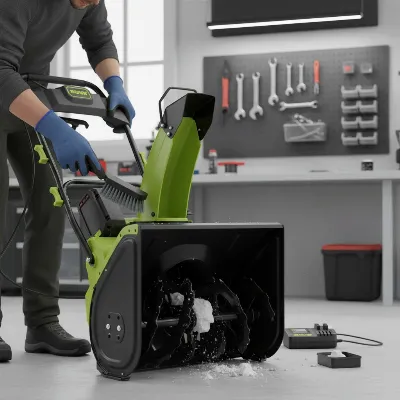 A person performing maintenance on a compact electric snow blower in a clean garage, checking the auger and cleaning components.
Conclusion
Choosing the best compact snow blower for city sidewalks in 2026 comes down to understanding your specific needs—the size of your area, the type of snow you face, and your personal preferences for power and maintenance. Whether you opt for a lightweight, quiet electric model or a more robust gas-powered unit, the market offers excellent choices designed for urban environments. Prioritizing essential features like clearing width, power source, and ease of use, alongside consistent safety practices and regular maintenance, will ensure your snow blower remains a reliable ally against winter’s demands.
Which features are most important to you when considering a new compact snow blower?
Frequently Asked Questions
Are electric snow blowers powerful enough for heavy snow on city sidewalks?
While electric snow blowers, particularly single-stage models, are generally best for light to moderate, fluffy snow, advanced cordless two-stage electric models in the premium segment can handle heavier and wetter snow more effectively. For consistently deep or icy conditions, a compact gas model or a higher-voltage electric might be necessary.
What clearing width is ideal for city sidewalks?
For typical city sidewalks and narrow pathways, a clearing width between 18 to 22 inches is generally considered ideal. This size allows for efficient snow removal in fewer passes while maintaining maneuverability in tight urban spaces.
How often should I perform maintenance on my compact snow blower?
Maintenance frequency depends on the type. Gas snow blowers require more regular checks, including oil changes (annually or every 25 hours), spark plug replacement (annually), and fuel stabilization. Electric models need less upkeep, but it’s crucial to clean them after each use, store batteries properly, and inspect moving parts seasonally.
Can compact snow blowers handle icy snow?
Single-stage compact snow blowers, both electric and gas, are generally not designed for heavy, icy snow, as the auger can struggle and clog. For icy conditions, a compact two-stage snow blower, even if it’s electric, with its impeller system, will be more effective at breaking up and throwing denser snow and ice.
Is a corded or cordless electric snow blower better for city use?
For very short sidewalks and patios where an outdoor outlet is easily accessible, a corded electric Snow Blower is budget-friendly and offers unlimited runtime. For longer city sidewalks or areas without direct outlet access, a cordless battery-powered model provides superior mobility and convenience, albeit with limited runtime per charge.