When winter arrives, blanketing your driveway and walkways in a thick layer of snow, the thought of shoveling can be daunting. Thankfully, cordless electric snow blowers have revolutionized winter clean-up, offering a powerful, eco-friendly, and convenient alternative to traditional methods. These innovative machines combine robust clearing capabilities with the freedom of battery power, eliminating the need for gas, oil, or restrictive cords. By 2026, advancements in battery technology and motor design have made these tools more efficient and capable than ever, allowing homeowners to tackle even substantial snowfall with ease.
An Overview of Snow Blowers
A snow blower is a motorized machine designed to remove snow from surfaces like driveways, sidewalks, and patios. Unlike manual shoveling, which is labor-intensive and time-consuming, a good snow blower makes quick work of heavy accumulation, creating safe paths while reducing physical strain. Electric snow blowers, in particular, have gained immense popularity for their quieter operation and zero emissions.
Historically, gas-powered models were the go-to for serious snow removal, known for their brute force and continuous runtime. However, they come with drawbacks like noise, fumes, and extensive maintenance. Corded electric models offered a cleaner, lighter alternative but were limited by the length of an extension cord. Today’s cordless electric snow blowers strike a perfect balance, delivering impressive power without the hassle of fuel or cords.
Cordless electric snow blowers typically fall into two main categories:
- Single-Stage Snow Blowers: These models use a rapidly spinning auger to scoop up snow and propel it out of the discharge chute in a single motion. They are lighter, more compact, and ideal for light to moderate snowfalls (up to 12 inches deep) on paved surfaces. Many excellent single-stage cordless electric snow blowers are available.
- Two-Stage Snow Blowers: Designed for heavier, deeper, and even icy snow, these machines feature an auger that collects the snow and feeds it into a high-speed impeller, which then powerfully discharges it. Two-stage cordless electric snow blowers offer superior clearing power and are better suited for larger areas, gravel driveways, or regions that experience significant snowfall. While traditionally gas-dominated, battery-powered two-stage models are now rivaling gas performance. Three-stage snow blowers also exist, but they are almost exclusively gas-powered for extreme conditions and not typically found in the cordless electric category.
> “The basic mechanics are the same whether the blowers are battery-powered or gas-fueled,” says Jason Swanson, Vice President of Global Product Development & Management for Greenworks. “An electric blower is easy to use: simply load your fully-charged battery, push start and begin clearing your driveway in seconds. There’s no need to mix gas and oil or deal with a pull cord like you do with a gas snow blower. Plus, there’s no gas smell and no maintenance required, and you never have to worry about bad gas or winterization.”
The shift towards battery-powered options is also driven by advancements in lithium-ion battery technology, offering longer operating times, improved durability, and stronger snow-clearing capabilities than earlier generations. These advances reinforce confidence in battery-powered systems, even during heavier snowfall, accelerating the move away from gas-powered equipment.
Your Ultimate Cordless Snow Blower Buying Guide
Choosing the right cordless electric snow blower can feel overwhelming with the variety of options available. The key is to match the machine’s capabilities with your specific needs. What should you consider to make an informed decision?
Assess Your Needs
Before diving into features, consider your property and typical winter conditions:
- Area Size: How large is the area you need to clear? A small single-stage unit is perfect for decks, short walkways, or a one-car driveway. For a two to four-car driveway or larger, a more powerful single-stage or a two-stage cordless electric snow blower will be more efficient.
- Frequency of Use: Do you get occasional light dustings or frequent, heavy snowfalls? If you deal with persistent deep snow, investing in a robust model with longer runtime and greater clearing capacity is advisable.
- Type of Snow: Different machines handle different snow types. Light, fluffy snow is easy for most single-stage models. Wet, heavy, or icy snow demands more power, often found in two-stage designs or single-stage models with high-efficiency brushless motors and robust augers.
Essential Features to Look For
Once you understand your needs, you can evaluate the cordless electric snow blower features that matter most:
- Motor Power: Look for higher voltage batteries (e.g., 40V, 56V, 80V) combined with high-torque brushless motors. Brushless motors are more efficient, quieter, and offer longer tool life and better performance in challenging conditions. Many top models in 2026 utilize innovative peak power technology, combining two high-voltage batteries for truly gas-like performance.
- Clearing Width & Depth: These specs indicate how much snow the blower can clear in a single pass. Widths typically range from 18 to 24 inches for single-stage and up to 28 inches for two-stage models. Depth can range from 8 to 20 inches. A wider and deeper clearing path reduces the number of passes required, saving you time.
- Throw Distance: This refers to how far the snow is propelled from the chute. Greater throw distance means you can clear larger areas without having to re-clear previously thrown snow. Top cordless models can throw snow up to 40-50 feet.
- Battery System:
- Amp-Hours (Ah): Higher Ah ratings mean longer runtime. Consider having a second battery charged and ready, especially for larger properties or extended clearing sessions.
- Charge Time: How quickly can the battery recharge? Fast chargers are a significant convenience.
- Dual-Battery Ports: Many 2026 models feature dual-battery ports, allowing two batteries to work in tandem, effectively doubling runtime and maintaining consistent power. Some even support hot-swapping.
- Starting System: Cordless electric snow blowers generally offer effortless push-button starts, a significant advantage over gas models’ pull cords.
- Convenience Features:
- LED Headlights: Essential for clearing snow in low-light conditions, common during early mornings or late evenings.
- Heated Handgrips: Provide comfort during extended use in cold weather.
- Chute Control: Easy-to-adjust chute direction (often 180-degree rotation) and deflectors allow precise control over where the snow is thrown. Some systems are joystick or trigger-controlled.
- Self-Propelled: Available on some two-stage and higher-end single-stage models, self-propulsion reduces physical effort, especially on inclines or deep snow.
- Adjustable Handle Height and Skid Shoes: Customization for user comfort and protecting various surfaces.
Budgeting for Your Snow Blower
Cordless electric snow blowers offer a range of price points, but considering the long-term value is crucial. While the initial investment might be comparable to or slightly higher than some gas models, the savings on fuel, oil, and significantly reduced maintenance can quickly make them more economical over time. When determining your budget, factor in the cost of extra batteries if extended runtime is a priority.
Cordless Electric Snow Blower Price Segments
The cordless electric snow blower market offers solutions for every budget and need, from compact units for quick jobs to powerful machines designed for heavy-duty clearing.
Entry-Level / Budget-Friendly (Typically under $500)
These models are excellent for homeowners with smaller areas, light to moderate snowfall, and those looking for an affordable, easy-to-store option.
- Characteristics: Often single-stage, with clearing widths around 18-21 inches and depths up to 10-12 inches. They usually run on 24V or 40V battery systems and may have more basic features.
- Pros: Lightweight, highly maneuverable, compact for storage, and very affordable. Minimal maintenance required.
- Cons: Limited power and runtime compared to higher-end models. Best suited for fluffy to moderately wet snow.
- Suitable Users: Ideal for homeowners with small driveways, sidewalks, decks, and patios who experience light or infrequent snowfall. Examples include some Greenworks 40V models or the Snow Joe 48V Cordless Snow Blower Kit.
Mid-Range (Typically $500 – $1000)
This segment offers a significant step up in power and features, balancing performance with affordability for most suburban homeowners.
- Characteristics: Many powerful single-stage models and some entry-level two-stage options fall here. They often feature 40V or 56V battery systems, brushless motors, wider clearing paths (20-22 inches), and depths up to 12-16 inches. Expect enhanced features like LED lights and improved chute control.
- Pros: Excellent performance for moderate to heavy snowfalls. Better runtime and throwing distance than budget models. Good balance of power, features, and price.
- Cons: May still struggle with extremely heavy, wet, or icy snow compared to premium two-stage units.
- Suitable Users: Perfect for homeowners with medium-sized driveways (two to four cars) and those who encounter consistent moderate to heavy snow. Examples include many Ryobi 40V models or certain EGO Power+ single-stage blowers.
Premium / High-Performance (Typically over $1000)
These are the workhorses of the cordless electric snow blower world, designed to rival gas-powered performance for demanding conditions.
- Characteristics: Predominantly two-stage designs or high-power single-stage units. Feature robust 56V or 80V (or dual-battery systems like 2x40V or 2x56V) power, advanced brushless motors, and self-propulsion. Clearing widths can be 24 inches or more, with depths up to 20 inches. Loaded with premium features like heated grips, advanced chute controls, and heavy-duty construction.
- Pros: Exceptional power and runtime, capable of tackling deep, wet, and icy snow on large properties. Often come with longer warranties and superior durability. Zero emissions and quiet operation with gas-level performance.
- Cons: Higher initial investment and heavier weight.
- Suitable Users: Homeowners with large driveways, long paths, or properties in regions with very heavy, frequent snowfall. These are also suitable for commercial applications or property managers. Top models like the EGO Power+ two-stage blowers or DeWalt 60V offerings are found here.
Top Cordless Electric Snow Blowers for 2026
The market for cordless electric snow blowers continues to innovate, with several brands leading the charge. Here are some of the most highly-rated models for 2026:
- EGO Power+ SNT2400/SNT2416 (Two-Stage): Widely regarded as a performance king, this EGO Power+ model leverages “Peak Power” technology, combining two 56-volt ARC Lithium batteries to deliver gas-like power. It boasts a 24-inch clearing width, a 20-inch intake height, and can throw snow up to 50 feet. It features a self-propelled drive, variable speed auger control, and a durable steel auger that cuts through ice. This makes it a beast for large driveways and heavy, wet snow.
- EGO Power+ SNT2112 (Single-Stage): Our top pick for single-stage battery-powered snow blowers, this model excels at clearing heavy, wet snow and throwing it up to 40 feet. It runs on two 56-volt ARC Lithium batteries and has a high-efficiency brushless motor, a 21-inch steel auger, and two bright LED headlights. It offers enough power to quickly clear a 12-car driveway.
- Ryobi 40V Brushless Whisper Series (Two-Stage): This model stands out for its quiet operation and robust clearing capabilities, making it an excellent choice for those who value powerful performance without excessive noise. It effectively tackles significant snowfall and is a strong contender in the two-stage category.
- Greenworks Pro 2605902 (Single-Stage): A heavy-duty option with a 22-inch clearing width and 13-inch clearing depth. This Greenworks Pro model is known for its strong performance and ability to handle challenging snow conditions, making it a reliable choice for many homeowners.
- Worx Nitro 40V Power Share (Single-Stage): Utilizing two 20-volt batteries for 40 volts of power, the Worx Nitro offers one of the widest clearing paths at 20 inches among single-stage blowers. It delivers impressive throwing power and is suitable for clearing up to 10 inches of snow, often exceeding that in tests.
- Snow Joe 24V-X2-SB22 (Single-Stage): An excellent budget-friendly choice for smaller to moderate areas. This model uses two 24-volt batteries, has a 21-inch clearing width and 13-inch clearing depth, and can clear up to 840 pounds of snow per minute. It includes practical features like LED headlights and 180-degree chute rotation.
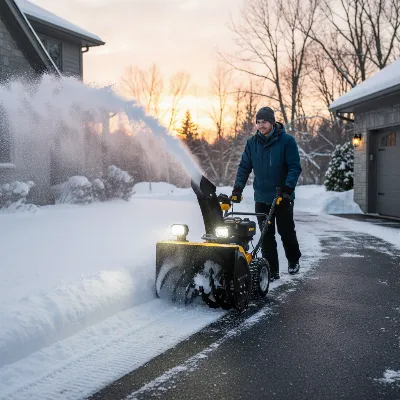 A cordless electric snow blower powerfully clearing a snowy driveway in the early morning, with bright LED headlights illuminating the path.
Comparison Table: Top Cordless Electric Snow Blowers
| Criteria | EGO Power+ SNT2400 (Two-Stage) | EGO Power+ SNT2112 (Single-Stage) | Ryobi 40V Brushless Whisper Series (Two-Stage) | Greenworks Pro 2605902 (Single-Stage) | Worx Nitro 40V Power Share (Single-Stage) | Snow Joe 24V-X2-SB22 (Single-Stage) |
|---|---|---|---|---|---|---|
| Power | 2x56V (Peak Power) | 2x56V | 40V | 80V | 2x20V (40V) | 2x24V (48V) |
| Clearing Width | 24 inches | 21 inches | 24 inches | 22 inches | 20 inches | 21 inches |
| Clearing Depth | 20 inches | 12 inches | 20 inches | 13 inches | 10 inches | 13 inches |
| Throw Distance | Up to 50 ft | Up to 40 ft | Up to 40 ft | Up to 25 ft | Up to 30 ft | Up to 25 ft |
| Battery (Ah) | 2×7.5 Ah (or larger) | 2×5.0 Ah | 2×6.0 Ah | 2×4.0 Ah | 2×5.0 Ah | 2×4.0 Ah |
| Runtime (est.) | Up to 45-60 min | Up to 45 min | Up to 45-60 min | Up to 45 min | Up to 30 min | Up to 30 min |
| Key Features | Self-propelled, LED lights, heated grips, steel auger | LED lights, steel auger, variable speed auger control | Quiet operation, self-propelled, LED lights | Heavy-duty construction, LED lights | Wide clearing path, powerful throw | LED lights, 180-degree chute rotation |
| Pros | Gas-equivalent power, handles heavy/wet snow, self-propelled | Powerful for single-stage, good throw, durable | Exceptionally quiet, strong performance, great for heavy snow | Good clearing width/depth, robust build | Lightweight, good clearing width for single-stage | Budget-friendly, good for small-moderate jobs, maneuverable |
| Cons | Higher cost, heavier | Shorter runtime than 2-stage, may struggle with deepest snow | Heavier, higher cost | Can be heavy for its class, runtime can be limiting | Runtime can be limited with two 20V batteries | Shorter runtime, best for light-moderate snow |
Using and Maintaining Your Cordless Electric Snow Blower
Proper use and maintenance are crucial for ensuring the longevity and efficient performance of your cordless electric snow blower. These machines are generally low-maintenance, but a few simple steps can make a big difference.
Safe Operation
Safety should always be your top priority when operating any power tool.
- Pre-Use Checks: Always inspect your snow blower before each use. Check for any loose bolts, screws, or damaged parts. Ensure the chute is clear of obstructions.
- Wear Protective Gear: Always wear appropriate winter clothing, including sturdy boots with good traction, gloves, and eye protection.
- Clear the Area: Remove any potential hazards from the area to be cleared, such as rocks, toys, or extension cords, which could be thrown by the auger or damage the machine.
- Be Aware: Never direct the discharge chute towards people, animals, or property. Maintain a safe distance from rotating parts and never attempt to clear a clogged chute with your hands. Always shut off the motor and wait for all moving parts to stop completely before inspecting or clearing any blockages.
Essential Maintenance Tips
One of the significant advantages of cordless electric snow blowers is their minimal maintenance requirements compared to gas models.
- Post-Use Cleaning: After each snow removal session, run the snow blower for a few minutes to clear any remaining snow from the auger and chute, preventing freezing. Then, shut it off, remove the batteries, and wipe down the unit to remove residual snow, ice, and especially salt residue, which can cause corrosion. Let it dry completely before storing.
- Battery Care and Storage: Battery life and performance are critical for cordless tools. Always store batteries indoors in a dry, room-temperature environment, especially when not in regular use. Fully charge batteries before storing them for extended periods and periodically check battery terminals for corrosion, cleaning them if necessary. Avoid exposing batteries to extreme heat or cold.
- Lubrication: While electric models require less lubrication than gas, it’s still important to ensure all moving parts are well-oiled. Periodically inspect the auger bearings and chute control mechanisms for wear and apply a suitable lubricant as needed to keep components running smoothly.
- Seasonal Storage: For off-season storage, perform a thorough cleaning, lubricate moving parts, and store the blower in a dry, protected area. Remove the batteries and store them separately according to manufacturer recommendations. This will protect your investment and ensure it’s ready for the next winter season.
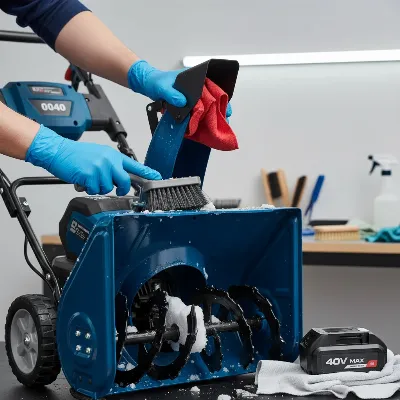 Hands cleaning a cordless electric snow blower after use, with a battery visible, emphasizing proper maintenance.
Conclusion
The evolution of cordless electric snow blowers has made winter snow removal cleaner, quieter, and far more convenient than ever before. With impressive advancements in battery technology, motor efficiency, and user-friendly features, these machines offer a powerful alternative to gas models, capable of tackling various snow conditions and property sizes. From compact, lightweight units perfect for quick jobs to robust, self-propelled two-stage behemoths that rival gas-powered performance, there’s a cordless electric snow blower designed to meet your specific needs in 2026. By choosing the right model and following simple maintenance practices, you can enjoy a hassle-free winter and reclaim your weekends from shoveling.
What winter challenges will you conquer with the freedom of a cordless electric snow blower this year?
Frequently Asked Questions
Are cordless electric snow blowers powerful enough for heavy snow?
Absolutely. While earlier models had limitations, modern cordless electric snow blowers, especially premium two-stage units or high-voltage single-stage models with brushless motors, are designed to handle deep, wet, and even icy snow, often rivaling the performance of many gas-powered counterparts.
How long do cordless snow blower batteries last on a single charge?
Battery runtime varies significantly based on battery voltage (V) and amp-hours (Ah), snow conditions (depth, wetness), and the model’s efficiency. Many models offer 30-60 minutes of runtime, with higher-capacity batteries or dual-battery systems extending this significantly to clear multi-car driveways.
What is the difference between single-stage and two-stage cordless snow blowers?
A single-stage snow blower uses one auger to collect and discharge snow, ideal for lighter snow on paved surfaces. A two-stage model uses an auger to feed snow into a separate impeller, which then throws it, making it more powerful and effective for deep, wet snow, and uneven terrain.
How much maintenance do cordless electric snow blowers require?
Cordless electric snow blowers require significantly less maintenance than gas models. There’s no need for oil changes, spark plug replacements, or fuel stabilizers. Primary maintenance involves cleaning the unit after each use, proper battery care and storage, and occasional lubrication of moving parts.
Can I use a cordless electric snow blower on a gravel driveway?
Single-stage cordless electric snow blowers are generally not recommended for gravel driveways as their auger makes contact with the ground, potentially picking up and throwing gravel. Two-stage cordless models, however, are suitable for gravel because their augers do not scrape the ground, preventing damage and safely clearing the surface.

I picked up one of the models in the mid-price range, and it’s been pretty solid for clearing my patio and sidewalks. It’s so much quieter than my neighbor’s gas blower, which is a huge plus early in the morning. My only minor complaint is that the chute can sometimes get a little clogged with really wet, heavy snow, but it’s easy enough to clear. Overall, a great eco-friendly option.
This winter has been brutal, but my new cordless electric snow blower has made it so much more manageable. I love not having to deal with gas or oil anymore – it’s just grab and go. The advancements in battery technology really show; I can clear my entire driveway and walkway on a single charge, even with decent accumulation. It’s truly revolutionized my winter clean-up routine.
I finally made the switch to a cordless electric snow blower this winter, and it’s been a game changer. My old gas one was such a pain to start, but this new one fires right up every time. I was skeptical about the battery life for my long driveway, but it handled a 6-inch snowfall with no problem at all. Definitely recommend going electric for convenience and power.
I got a cordless electric blower specifically for tackling lighter snowfalls and it works well for that. However, when we got that big 10-inch dump last month, it struggled a bit more than I expected. The battery drained faster than I hoped, and I had to recharge mid-job. It’s good for convenience, but maybe not for really substantial snowfall if you have a large area.